
Which Country Is the Richest? It Depends How You Measure
The question of which country is the "richest" in the world does not have a single answer — it depends entirely on the metric used. By nominal GDP, the United States is the world's largest economy at approximately $29 trillion in 2025, a figure that represents roughly 26% of the entire global economy. By GDP per capita (total output divided by population), Luxembourg leads at approximately $135,000 per person — more than four times the US figure. By purchasing power parity (PPP), which adjusts for cost-of-living differences between countries, China has actually surpassed the United States, reflecting the enormous productive capacity of its 1.4 billion people. Understanding the full picture of global GDP growth dynamics requires examining all three dimensions.
The world's richest countries are not randomly distributed — they cluster in North America, Western Europe, East Asia, and the Gulf. These regions share common structural characteristics: stable institutions, rule of law, open international trade, strong property rights, investment in human capital (education and healthcare), and technological innovation capacity. The top 10 economies by nominal GDP account for approximately 67% of global output, despite containing less than 40% of the world's population. This concentration of economic activity reflects centuries of industrial development, colonial history, resource endowments, and geographic advantages.

The rankings are not static. China's rise from 4% of world GDP in 2000 to 17% in 2025 is the most dramatic economic shift in modern history. India is now the world's fifth-largest economy and is projected to become the third-largest by 2030, displacing Japan and Germany. The Gulf states — particularly the UAE and Saudi Arabia — are aggressively diversifying away from oil dependence, building the institutions and industries required for sustained high per-capita wealth. And the Southeast Asian economies (Vietnam, Indonesia, Philippines) are entering a phase of rapid industrialisation that echoes South Korea and Taiwan's ascent in earlier decades. The global economy is, in short, being reshuffled.
The United States, China, Germany, Japan, India, UK, France, Italy, Canada, and Brazil collectively produce approximately $74 trillion of the world's $110 trillion GDP. The remaining 180+ countries share the remaining 33%. On a per-person basis, the disparity is even more stark: Luxembourg's average resident produces 50x more economic output per year than the average resident of a low-income country.
World's Largest Economies by Nominal GDP 2025
Nominal GDP measures total economic output converted into US dollars at current exchange rates. It is the most widely cited measure of national wealth and economic power. The United States has led this ranking for over 130 years — a streak that may end within the next decade as China's economy continues its long-run convergence trajectory. Understanding the relative scale of these economies helps contextualise broader trends in GDP per capita across nations.
| # | Country | Nominal GDP | % World GDP | GDP Per Capita | GDP Growth | Region |
|---|---|---|---|---|---|---|
| 1 | 🇺🇸 United States | $29.0T | 26.4% | $85,000 | +2.8% | N. America |
| 2 | 🇨🇳 China | $19.0T | 17.3% | $13,500 | +4.8% | Asia |
| 3 | 🇩🇪 Germany | $4.7T | 4.3% | $55,000 | +0.5% | Europe |
| 4 | 🇯🇵 Japan | $4.3T | 3.9% | $34,500 | +0.9% | Asia |
| 5 | 🇮🇳 India | $4.0T | 3.6% | $2,800 | +6.5% | Asia |
| 6 | 🇬🇧 United Kingdom | $3.3T | 3.0% | $48,000 | +0.8% | Europe |
| 7 | 🇫🇷 France | $3.1T | 2.8% | $46,000 | +1.1% | Europe |
| 8 | 🇮🇹 Italy | $2.2T | 2.0% | $37,000 | +0.7% | Europe |
| 9 | 🇨🇦 Canada | $2.2T | 2.0% | $55,000 | +1.5% | N. America |
| 10 | 🇧🇷 Brazil | $2.1T | 1.9% | $9,800 | +2.2% | S. America |
| 11 | 🇦🇺 Australia | $1.8T | 1.6% | $67,000 | +1.8% | Asia-Pac |
| 12 | 🇰🇷 South Korea | $1.8T | 1.6% | $34,800 | +2.2% | Asia |
| 13 | 🇲🇽 Mexico | $1.6T | 1.5% | $11,800 | +2.5% | N. America |
| 14 | 🇷🇺 Russia | $1.9T | 1.7% | $13,200 | +1.5% | Europe |
| 15 | 🇪🇸 Spain | $1.6T | 1.5% | $33,000 | +2.3% | Europe |
| 16 | 🇮🇩 Indonesia | $1.4T | 1.3% | $5,100 | +5.1% | Asia |
| 17 | 🇳🇱 Netherlands | $1.1T | 1.0% | $61,000 | +1.4% | Europe |
| 18 | 🇸🇦 Saudi Arabia | $1.1T | 1.0% | $29,000 | +2.6% | Gulf |
| 19 | 🇨🇭 Switzerland | $900B | 0.8% | $92,000 | +1.3% | Europe |
| 20 | 🇹🇷 Turkey | $1.2T | 1.1% | $13,800 | +3.1% | Europe |
World GDP: $32 Trillion to $110 Trillion in 25 Years
Global GDP has more than tripled since 2000, driven by China's industrialisation, India's services boom, technology-led productivity gains in advanced economies, and the integration of former communist countries into the global market. The world economy is projected to reach $170 trillion by 2035.
Richest Countries by GDP Per Capita 2025 — Luxembourg Leads at $135K
GDP per capita is widely considered the best single measure of individual living standards. It captures how much economic output is generated per person — a direct proxy for average income, consumption ability, and quality of life. The per capita rankings look dramatically different from the total GDP rankings: small, highly productive economies dominate — Luxembourg, Singapore, Switzerland, Norway, Ireland — while large-population giants like China and India, despite their enormous total economic size, rank far lower on a per-person basis.
Top Countries by GDP Per Capita — Full Rankings
Richest Countries by Purchasing Power Parity (PPP) — China #1
Purchasing Power Parity adjusts GDP figures to account for price level differences across countries. A dollar in India buys significantly more goods and services than a dollar in the United States — PPP makes economies truly comparable by applying a common price level. On this basis, China overtook the United States around 2014 and now leads with approximately $35 trillion in PPP-adjusted GDP. India, the world's third-largest economy by PPP, has already surpassed Japan and Germany by this measure.
| # | Country | PPP GDP (Int$) | PPP Per Capita | Nominal GDP | PPP vs Nominal |
|---|---|---|---|---|---|
| 1 | 🇨🇳 China | $35.0T | $24,800 | $19.0T | PPP +84% |
| 2 | 🇺🇸 United States | $29.0T | $85,000 | $29.0T | Equal |
| 3 | 🇮🇳 India | $14.5T | $10,200 | $4.0T | PPP +263% |
| 4 | 🇷🇺 Russia | $6.5T | $44,800 | $1.9T | PPP +242% |
| 5 | 🇯🇵 Japan | $6.2T | $50,000 | $4.3T | PPP +44% |
| 6 | 🇩🇪 Germany | $5.8T | $68,000 | $4.7T | PPP +23% |
| 7 | 🇧🇷 Brazil | $4.2T | $19,500 | $2.1T | PPP +100% |
| 8 | 🇮🇩 Indonesia | $4.1T | $14,800 | $1.4T | PPP +193% |
| 9 | 🇫🇷 France | $4.0T | $60,000 | $3.1T | PPP +29% |
| 10 | 🇬🇧 United Kingdom | $3.9T | $56,000 | $3.3T | PPP +18% |
| 11 | 🇲🇽 Mexico | $3.2T | $23,800 | $1.6T | PPP +100% |
| 12 | 🇮🇹 Italy | $3.1T | $52,000 | $2.2T | PPP +41% |
| 13 | 🇰🇷 South Korea | $2.9T | $56,000 | $1.8T | PPP +61% |
| 14 | 🇸🇦 Saudi Arabia | $2.4T | $62,000 | $1.1T | PPP +118% |
| 15 | 🇨🇦 Canada | $2.5T | $62,000 | $2.2T | PPP +14% |
USA vs China vs India vs Germany vs Japan — GDP Growth 2000–2025
The chart below captures the most dramatic economic shift in modern history: China's rise from a $1.2 trillion economy in 2000 to $19 trillion in 2025, while India overtook Germany and Japan to become the world's 5th largest economy. The United States has maintained its lead throughout, growing from $10 trillion to $29 trillion over the same period.
USA: $29 Trillion, 26% of World GDP, 130 Years as #1
The United States became the world's largest economy sometime around 1890, displacing the British Empire, and has remained #1 ever since — a streak spanning over 130 years. In 2025, US GDP stands at approximately $29 trillion, representing 26.4% of global output despite the US having only 4.2% of the world's population. This extraordinary productivity differential reflects the combined effect of technological leadership, an entrepreneurial culture, deep capital markets, English-language dominance in global commerce, the world's reserve currency (the dollar), and military power that underwrites a global trading system from which the US disproportionately benefits. Full data on the GDP of the United States is explored in our dedicated analysis.
The US economy is driven by services (80% of GDP) — finance, healthcare, technology, professional services, retail, and entertainment. Manufacturing has declined as a share of GDP but remains technologically sophisticated, producing aerospace, defence, pharmaceuticals, and semiconductors. The technology sector alone — companies like Apple, Microsoft, Google, Amazon, Nvidia, and Meta — has created more than $15 trillion in market capitalisation, more than the entire GDP of China.
China: From 4% to 17% of World GDP in 25 Years
China's economic rise is the defining story of 21st-century economic history. In 2000, China accounted for just 4% of world GDP. By 2025, that figure has reached approximately 17% ($19 trillion nominal) — and by PPP, China has been the world's largest economy since around 2014. This transformation was driven by a unique model: market-oriented reforms within an authoritarian political system, export-led manufacturing growth, massive infrastructure investment, and an unparalleled commitment to moving hundreds of millions of people from rural poverty into urban industrial employment.
China's economic growth is now decelerating from the 10%+ rates of 2000–2010 to approximately 4–5% annually, reflecting the natural slowdown as a middle-income country, a declining working-age population, a real estate debt crisis (Evergrande etc.), and geopolitical headwinds from trade tensions with the United States and its allies. The key question for global economic rankings is whether China can cross the high-income threshold (~$15,000 per capita) before demographic decline makes further convergence difficult. China's relationship with the broader BRICS economic bloc is central to understanding its global influence.
Europe: High Per Capita Wealth, Slow Growth, World-Class Institutions
Gulf States: From Petrodollars to Knowledge Economies
The Gulf Cooperation Council (GCC) states — Saudi Arabia, UAE, Qatar, Kuwait, Bahrain, Oman — possess some of the world's highest per capita income levels thanks to massive oil and gas reserves relative to small indigenous populations. Qatar has the world's highest GDP per capita among larger nations at approximately $85,000 per person (though this figure is heavily influenced by the large expatriate workforce). The challenge for all Gulf states is economic diversification — reducing dependence on hydrocarbon revenues before either oil runs out or the global energy transition makes oil economically marginal.
The UAE has gone furthest in diversification — Dubai generates over 70% of its GDP from non-oil sectors (trade, tourism, finance, real estate, logistics). Abu Dhabi's ADNOC is simultaneously maximising oil output AND investing its returns in technology and international assets. GDP per capita ~$49,000.
MBS's Vision 2030 reform program aims to reduce oil dependence to 50% of GDP by 2030 (currently ~40%). Investments in NEOM, sports (LIV Golf, Premier League, Formula 1), tourism, and technology. GDP $1.1T nominal but ~$2.4T by PPP. Per capita ~$29,000 nominal but $62,000 PPP.
The world's largest LNG exporter by value. Qatar's $85,000+ GDP per capita (among the world's highest) reflects enormous gas revenues relative to its 300,000 native Qatari population. The 2022 FIFA World Cup was the most expensive in history ($200B+ infrastructure). Qatar Investment Authority has $450B+ in global assets.
Kuwait has among the world's highest proven oil reserves per citizen. GDP per capita ~$33,000 nominal. The Kuwait Investment Authority (est. 1953 — the world's oldest sovereign wealth fund) manages $900B+ in global assets. Low population (4.4M, mostly expatriates) + enormous oil = extraordinary per-capita resource wealth.
Japan, South Korea, Singapore & Australia: Four Models of Asian Wealth
Japan ($4.3T) was the world's second-largest economy from 1968 to 2010, when it was displaced by China. Despite two "lost decades" of stagnation in the 1990s and 2000s, Japan remains the fourth-largest economy globally with world-class technology companies (Toyota, Sony, Softbank) and a GDP per capita of ~$34,500. South Korea ($1.8T) is one of modern economic history's greatest success stories — transforming from one of the world's poorest countries in 1960 to a high-income nation in a single generation, driven by Chaebol conglomerates (Samsung, Hyundai, LG). Singapore ($88,000 per capita) punches far above its weight — a city-state of 5.8 million people that serves as Asia's premier financial center and trade hub. Australia ($1.8T, $67,000 per capita) benefits from abundant natural resources (iron ore, coal, LNG) and a stable, commodity-rich economy.
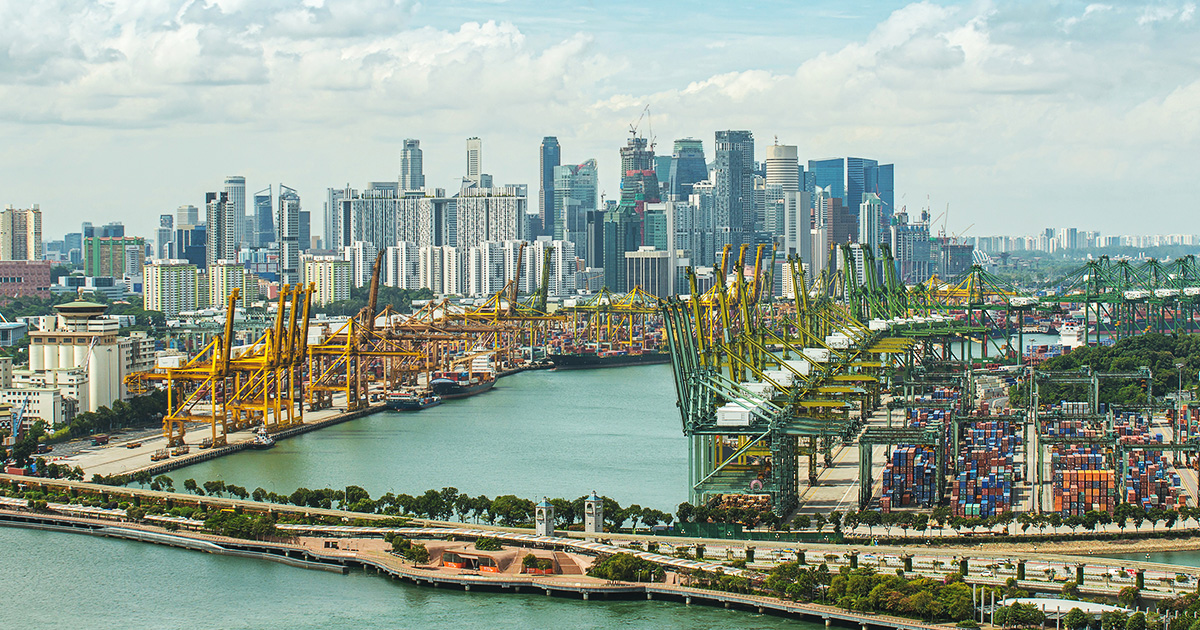
The World's Richest Countries in 2030 — Rankings Set to Shift
The rankings of the world's richest countries are not fixed. The most significant projected changes by 2030: India is expected to overtake Japan and Germany to become the world's third-largest economy by nominal GDP, driven by its young demographic, technology sector, and continued industrialisation. Indonesia is projected to break into the top 10. China may or may not overtake the USA on a nominal basis before 2030 — this depends heavily on yuan-dollar exchange rates and China's ability to manage its structural economic challenges. By PPP, China is already far ahead. Brazil and Mexico are potential breakout stories if institutional reforms continue, though both face significant governance headwinds.
On the per capita front, Luxembourg, Switzerland, Singapore, Norway, and the UAE are likely to remain dominant. The United States is projected to maintain top-5 per capita status. Notably, Ireland's headline GDP per capita figure will remain distorted by multinational corporate accounting — its actual resident living standards, while high, are better captured by GNI per capita (~$62,000 vs the inflated nominal ~$103,000).
Richest Countries — Common Questions Answered
By nominal GDP, the United States ($29 trillion) is the richest country. By GDP per capita, Luxembourg ($135,000) leads. By PPP, China ($35 trillion) is #1. The answer depends on which measure you use. Total GDP = economic power; per capita = individual living standards; PPP = real purchasing ability adjusted for cost of living.
Luxembourg leads global GDP per capita rankings at approximately $135,000 per person (2025), driven by its role as Europe's premier financial center and fund domiciliation hub. Other top per capita nations: Ireland (~$103K, though distorted by MNC accounting), Switzerland (~$92K), Singapore (~$88K), USA (~$85K), Norway (~$82K), Denmark (~$68K), Australia (~$67K).
It depends on the measure. By nominal GDP, the USA ($29T) leads China ($19T) significantly. By PPP, China (~$35T) surpassed the USA around 2014. By GDP per capita, the USA ($85,000) massively leads China ($13,500) because the US has 335 million people vs China's 1.4 billion. So China produces more total goods/services adjusted for prices, but Americans are individually far wealthier on average.
Luxembourg's ~$135,000 GDP per capita reflects three factors: (1) It is a major European financial center (investment fund domiciliation, banking); (2) It hosts EU institutions and multinational HQs generating high-value output; (3) Its GDP is boosted by 200,000+ cross-border commuters from Belgium, France, and Germany who work in Luxembourg and contribute to GDP but are not counted in the resident population. This artificially inflates the per-capita figure.
By nominal GDP, the USA is likely to remain #1 through 2030, projected at ~$38T. China ($26T projected) will remain #2. India is forecast to overtake Germany and Japan to become the world's 3rd largest economy by 2030. By PPP, China will extend its lead. By per capita, Luxembourg, Switzerland, Singapore, and Norway will remain dominant. The biggest movers in total GDP rankings will be India and Indonesia.
Primary: IMF World Economic Outlook (WEO) — April 2025 · GDP, per capita, and PPP estimates for all countries.
Primary: World Bank National Accounts Data 2025 · UN Statistics Division — National Accounts
PPP Data: World Bank International Comparison Program (ICP) 2024 · IMF WEO PPP-adjusted GDP estimates 2025.
Per Capita: OECD Statistics · UN DESA World Population Prospects 2025
Forecasts: IMF WEO 5-Year Projections · Goldman Sachs Global Investment Research 2025 · PwC World in 2050 Report
Regional Data: OECD Economic Outlook 2025 · Bank for International Settlements · Gulf Cooperation Council Secretariat Economic Bulletin 2025.