
Middle East Oil in 2026: 31% of Global Production, 48% of Reserves, and the $50 Trillion Question
The Middle East's dominance in global petroleum markets is built on a simple geological fact: the region sits atop the largest concentration of conventional oil reserves on the planet. The 836 billion barrels of proven reserves held by Middle Eastern nations represent approximately 48% of the global total and would be worth over $50 trillion at current prices if fully extracted. This geological endowment has shaped every aspect of the region's economics, politics, and international relations for nearly a century, since the discovery of commercial oil in Bahrain (1932), Saudi Arabia (1938), Kuwait (1938), and the wider Gulf states in the 1950s and 1960s. Understanding the distribution of these reserves across the world's top producing nations is essential context, explored in detailed analysis of the leading ten countries by share of global oil reserves.
In 2025, Middle Eastern nations produced approximately 31.5 million bbl/d, representing 31% of global output of 102.2 million bbl/d. This production generated approximately $1.1 trillion in petroleum export revenue, funding government budgets, sovereign wealth funds (the region's SWFs hold approximately $4 trillion in combined assets), and massive infrastructure programs. Saudi Arabia alone earned approximately $280 billion from oil exports, while Iraq ($100B), UAE ($75B), Kuwait ($60B), and Qatar ($55B, primarily LNG) represent the other major petroleum economies. The region's production economics are the most favorable in the world: Saudi Arabia's average lifting cost is approximately $3–5 per barrel (compared to $20–40 for US shale and $30–50 for deep-water projects), giving Middle Eastern producers an enormous cost advantage that will sustain their market position even in a declining demand environment. The Middle East's oil industry operates within the broader context of the $3.3 trillion global petroleum industry and its structural dynamics.
The strategic importance of Middle Eastern oil extends far beyond economics. The region's petroleum infrastructure represents a critical node in global energy security: approximately 21 million barrels per day transit the Strait of Hormuz, the narrow waterway between Iran and Oman that serves as the world's most important oil chokepoint. Any disruption to Hormuz transit would trigger an immediate global energy crisis, underscoring why the United States has maintained a continuous naval presence in the Persian Gulf since 1980. The geopolitical architecture of the modern Middle East is inseparable from oil: the US-Saudi strategic relationship, the Iran sanctions regime, the Iraq wars of 1991 and 2003, and the complex web of alliances and rivalries across the Gulf Cooperation Council (GCC) states are all fundamentally shaped by petroleum politics. In 2026, as the world debates peak oil demand and the energy transition accelerates, the Middle East faces a defining generational challenge: the nations that have built their entire economic, social, and political systems on petroleum revenue must now navigate a future in which that revenue may structurally decline.
The scale of the Middle East's petroleum endowment is difficult to overstate. The region's 836 billion barrels of proven reserves represent approximately 48% of global proven oil reserves, concentrated in just eight countries across an area smaller than the continental United States. At an average Brent crude price of $75 per barrel, these underground reserves represent a theoretical gross asset value of approximately $62.7 trillion, roughly equivalent to the combined GDP of the United States, China, and the European Union. The challenge for Middle Eastern governments is converting this underground wealth into sustainable above-ground wealth through sovereign wealth fund accumulation, economic diversification, and human capital development before the inevitable decline in global oil demand erodes the value of remaining reserves. The distribution of these reserves across the world's leading producing nations provides essential context, explored in detailed analysis of the leading ten countries by share of global oil reserves.
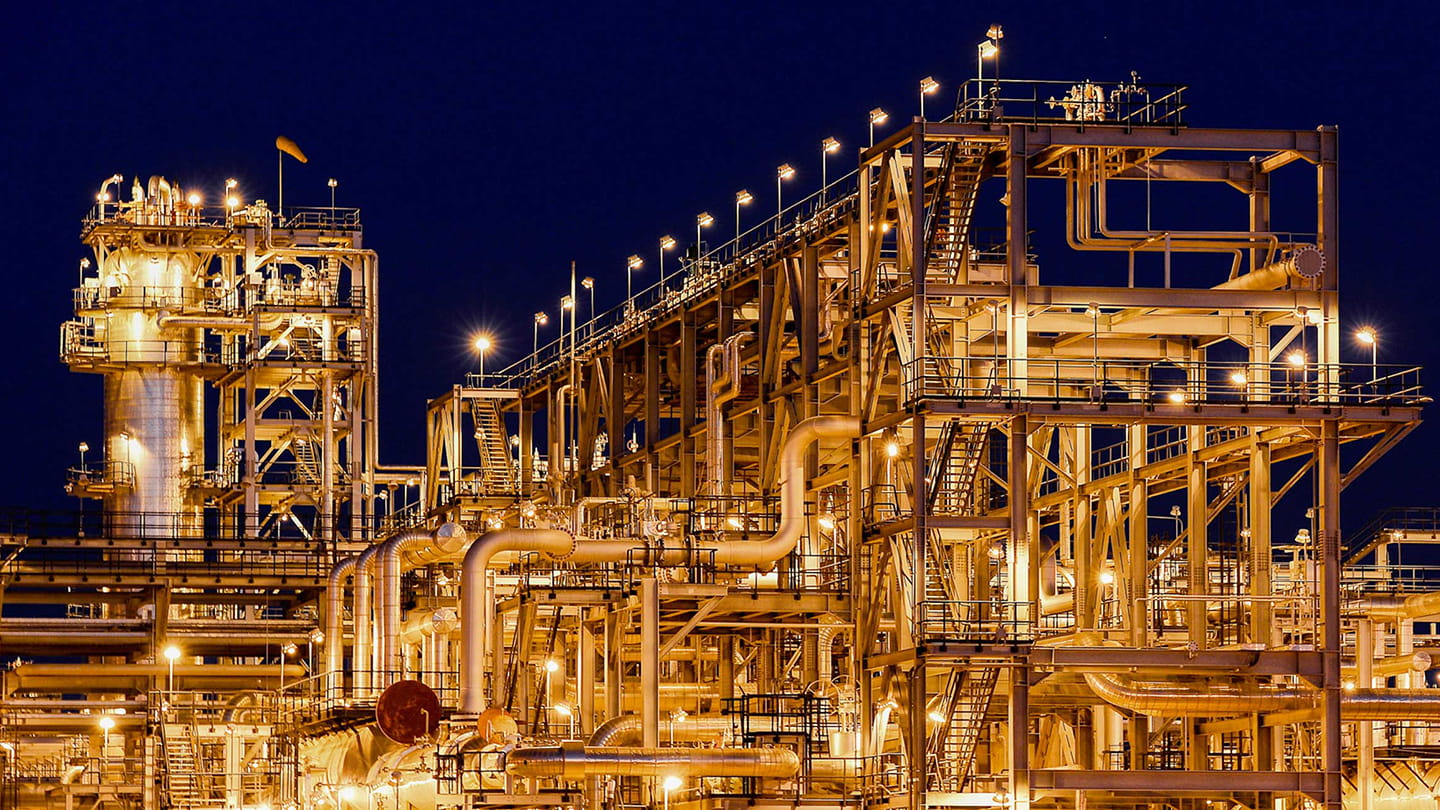
The Middle East's oil industry is not merely an economic sector; it is the foundational architecture upon which the region's entire modern civilization has been constructed. The discovery of commercial quantities of petroleum in the 1930s transformed sparsely populated desert territories into some of the wealthiest nations per capita on Earth. Saudi Arabia's GDP per capita rose from approximately $100 in the 1940s to over $30,000 by 2025. The UAE, which did not exist as a unified state until 1971, now boasts GDP per capita exceeding $50,000 and hosts two of the world's most ambitious cities (Dubai and Abu Dhabi). Qatar's citizens enjoy the highest GDP per capita in the world at approximately $88,000, entirely attributable to hydrocarbon wealth (primarily LNG, which is derived from the North Field gas reservoir that also produces significant condensate volumes counted in oil production statistics).
The geopolitical significance of Middle Eastern oil extends far beyond economics. The region's petroleum resources have been central to every major international conflict and diplomatic realignment since World War II: the 1973 OPEC oil embargo (which quadrupled oil prices and reshaped US foreign policy), the 1980–1988 Iran-Iraq War (which disrupted Gulf shipping and led to US naval intervention), the 1990–1991 Gulf War (triggered by Iraq's invasion of oil-rich Kuwait), the 2003 Iraq War (which destabilized the region's second-largest oil producer), and the ongoing US-Iran sanctions confrontation (which constrains Iranian exports and elevates regional risk premiums). The United States' "Carter Doctrine" of 1980, which declared that any attempt to gain control of the Persian Gulf region would be regarded as an assault on vital US interests, remains the strategic framework governing US military presence in the region, with approximately 45,000 US military personnel stationed across bases in Qatar, Bahrain, Kuwait, UAE, and Saudi Arabia.
The oil industry's physical infrastructure in the Middle East represents one of the largest concentrations of industrial capital anywhere on Earth. Saudi Aramco's Ras Tanura refinery complex is the world's largest integrated petroleum processing facility. The Abqaiq processing plant handles approximately 7 million bbl/d of crude oil stabilization. The East-West Pipeline (Petroline) can transport 5 million bbl/d across 1,200 kilometers of Saudi desert. Iraq's Basra Oil Terminal in the Persian Gulf handles approximately 80% of Iraq's total crude exports. The UAE's Habshan-Fujairah pipeline provides strategic bypass capability around the Strait of Hormuz. Kuwait's Mina al-Ahmadi port complex is the country's primary crude export terminal. These facilities represent hundreds of billions of dollars in accumulated capital investment and are protected by extensive military and security infrastructure.
Middle East Oil Production by Year — 2000 to 2030*
The bar chart below illustrates Middle Eastern oil production from 2000 to 2026 with projections to 2030. The trajectory reveals relative stability compared to other regions: production has fluctuated between 23 and 32 million bbl/d over 25 years, reflecting OPEC quota management rather than geological constraints. The 2020 COVID collapse (production fell to 23.5M bbl/d) and the subsequent recovery demonstrate the region's ability to both cut and restore production rapidly. The 2030 projection of 32–34 million bbl/d assumes gradual OPEC+ quota relaxation and capacity expansion in Saudi Arabia, UAE, and Iraq.
The production data reveals several important structural dynamics. First, Middle Eastern production has been artificially constrained for most of the past two decades: the region's theoretical maximum production capacity (approximately 37–38 million bbl/d if all countries produced at full capacity without OPEC quotas) significantly exceeds actual output, meaning the region deliberately leaves approximately 5–6 million bbl/d of capacity idle to manage global prices. Second, production growth has been concentrated in Iraq and the UAE, while Saudi Arabia has maintained relatively stable output as OPEC's swing producer. Iraq increased production from 2.4 million bbl/d in 2010 to 4.6 million in 2025 through foreign investment partnerships, representing the most significant production growth story in the region. Third, Iran's production remains suppressed by sanctions at approximately 2.5 million bbl/d versus its 4+ million bbl/d potential, meaning that any sanctions relief could add 1.5 million bbl/d to global supply within 6–12 months.
What makes the Middle East's production profile unique is that the region operates well below its maximum production capacity. Saudi Arabia alone maintains approximately 12.5 million bbl/d of production capacity while producing only 10.5 million, representing 2–3 million bbl/d of deliberately withheld supply. The UAE has approximately 4.2 million bbl/d of capacity while producing 3.5 million. Iraq's theoretical capacity exceeds 5 million bbl/d but infrastructure constraints and OPEC quotas limit output to 4.6 million. If all Middle Eastern producers operated at maximum capacity without OPEC constraints, regional output could reach 37–38 million bbl/d, approximately 20% higher than current levels. This spare capacity represents the region's most powerful economic and geopolitical tool: the ability to flood the market and crash prices (as Saudi Arabia demonstrated in 2014 and 2020) or restrict supply and support prices through coordinated production cuts.
Middle East Oil by Country — Production, Reserves, Revenue, and Key Metrics
The following table presents the complete breakdown of Middle Eastern petroleum data by country, including daily production, proven reserves, estimated annual oil revenue, OPEC membership status, the critical fiscal breakeven oil price (the Brent price at which government budgets balance), and reserve life at current production rates. The fiscal breakeven metric is particularly important: it reveals which countries can sustain spending at current oil prices and which face deficits. Saudi Arabia's breakeven of approximately $78–85/bbl means the kingdom requires Brent prices above this level to balance its budget, while Kuwait and Qatar have much lower breakevens due to smaller populations and lower per-capita spending.
| Country | Production (M bbl/d) | Reserves (B bbl) | Revenue ($B) | OPEC | Fiscal Breakeven | Reserve Life (Yrs) |
|---|---|---|---|---|---|---|
| Saudi Arabia | 10.5 | 267 | $280B | Yes (Leader) | ~$81 | 70 |
| Iraq | 4.6 | 145 | $100B | Yes | ~$72 | 86 |
| UAE | 3.5 | 98 | $75B | Yes | ~$60 | 77 |
| Iran | 2.5 | 157 | $45B | Yes | ~$90 | 172 |
| Kuwait | 2.7 | 102 | $60B | Yes | ~$55 | 103 |
| Qatar | 1.8 | 25 | $55B* | Left 2019 | ~$45 | 38 |
| Oman | 1.1 | 5.4 | $25B | OPEC+ ally | ~$73 | 13 |
| Bahrain | 0.2 | 0.12 | $5B | No | ~$95 | 2 |
| Yemen | 0.05 | 3 | ~$1B | No | N/A | 164 |
Middle East Oil Revenue vs. Brent Crude Price — 2005 to 2026
The line chart below tracks the direct relationship between Brent crude oil prices (gold line) and total Middle Eastern petroleum export revenue (blue line) from 2005 to 2026. The correlation is nearly perfect, illustrating the region's extreme revenue dependence on a single commodity price. The 2008 peak ($147/bbl, $850B revenue), the 2014–2016 price crash ($28/bbl low, revenue halved), the 2020 COVID collapse ($42/bbl, $450B revenue), and the 2022 Russia-Ukraine spike ($99/bbl average, $1.3T revenue) all demonstrate the volatile boom-bust cycle that defines Middle Eastern fiscal planning. The price dynamics of crude oil and their broader energy market implications are explored in comprehensive analysis of US and global energy price dynamics.
Middle East Oil Production by Country — 2025 Rankings
Saudi Arabia's production of 10.5 million bbl/d represents approximately one-third of total Middle Eastern output and makes it the world's second-largest producer after the United States (13.5M bbl/d). Iraq has steadily increased production from 2.4 million bbl/d in 2010 to 4.6 million in 2025, driven by foreign investment from ExxonMobil, BP, Shell, and TotalEnergies in southern megafields (Rumaila, West Qurna, Majnoon). The UAE is the region's most ambitious capacity expander, with ADNOC targeting 5 million bbl/d capacity by 2027 (up from current 3.5M). Iran's production remains constrained at approximately 2.5 million bbl/d by US sanctions, well below its 4 million bbl/d pre-sanctions level.
Kuwait produces approximately 2.7 million bbl/d, primarily from the massive Burgan field complex (the world's second-largest oil field with estimated original reserves exceeding 70 billion barrels). Kuwait's oil sector is entirely state-controlled through Kuwait Petroleum Corporation (KPC), and the country has some of the lowest production costs in the world at approximately $4–6 per barrel. Kuwait's fiscal breakeven oil price of approximately $55/bbl is among the lowest in the Gulf, reflecting the country's small population (4.3 million, of whom 1.4 million are citizens) and relatively conservative government spending. Qatar produces approximately 1.8 million bbl/d of crude oil and condensate, but its primary energy wealth lies in natural gas: the North Field (shared with Iran's South Pars) is the world's largest non-associated gas field, and Qatar is the world's largest LNG exporter. QatarEnergy's $30+ billion North Field Expansion project will increase LNG capacity from 77 to 126 million tonnes per annum by 2027, cementing Qatar's position as the global LNG superpower. Oman (1.1M bbl/d) relies on enhanced oil recovery techniques to maintain output from mature fields, while Bahrain (0.2M bbl/d) has the region's most depleted reserves and highest fiscal breakeven price ($95/bbl), making it the most economically vulnerable Gulf state.
The production hierarchy within the Middle East reflects both geological endowment and political stability. Kuwait punches above its small geographic size (17,818 km², roughly the size of New Jersey) with 2.7 million bbl/d of production, almost entirely from the giant Burgan field complex, which has been producing continuously since 1946. Kuwait's reserve life of 103 years at current production rates is among the longest in the world, providing the country with extraordinary long-term energy security. Qatar has strategically pivoted from oil toward liquefied natural gas (LNG), leveraging the massive North Field (the world's largest non-associated gas field, shared with Iran's South Pars field) to become the world's largest LNG exporter. Qatar's oil production of 1.8 million bbl/d includes significant condensate volumes produced alongside natural gas. Oman, the region's non-OPEC producer (it participates in OPEC+ as an ally rather than a member), produces approximately 1.1 million bbl/d primarily through enhanced oil recovery (EOR) techniques applied to mature fields, and faces the most pressing reserve depletion challenge in the GCC with only 13 years of proven reserves remaining at current rates.
Middle East Oil Production by Country — 2025
Proven Oil Reserves in the Middle East: 836 Billion Barrels and 73 Years of Supply
The Middle East's 836 billion barrels of proven reserves represent the most concentrated energy wealth on the planet. To put this in perspective: at current prices of approximately $75/bbl, these reserves represent a theoretical asset value of over $62 trillion, roughly equal to the combined GDP of the United States and China. The reserves are concentrated in a handful of giant and supergiant oil fields: Saudi Arabia's Ghawar field (the world's largest, discovered in 1948, still producing approximately 3.8 million bbl/d after 77 years), Kuwait's Burgan field (the world's second-largest, 70+ billion barrels original reserves), and Iraq's Rumaila field (17 billion barrels remaining). The geographic distribution of these reserves is analyzed in comprehensive detail through examination of the world's top ten countries by share of global proven oil reserves.
The concept of "proven reserves" deserves careful explanation, as it is frequently misunderstood. Proven reserves (also called P1 or 1P reserves) represent the quantity of petroleum that geological and engineering data demonstrate with reasonable certainty to be recoverable from known reservoirs under existing economic and operating conditions. This is a conservative estimate: probable reserves (P2) and possible reserves (P3) add significantly to the total resource base. Saudi Arabia's proven reserves of 267 billion barrels likely understate the kingdom's total recoverable resource, which Saudi Aramco estimates at 500+ billion barrels when probable and possible reserves are included. Similarly, Iraq's proven reserves of 145 billion barrels could increase substantially as exploration activity expands into the western desert and Kurdish regions, which remain relatively underexplored compared to the prolific southern basins.
The reserve-to-production (R/P) ratio provides a simplified measure of how long reserves would last at current production rates. The Middle East's average R/P ratio of approximately 73 years is significantly higher than the global average of 47 years, and dramatically higher than regions like North America (approximately 12 years for the US) and Europe (approximately 10 years for Norway and the UK North Sea). This means that even as other producing regions face declining output due to reserve depletion, Middle Eastern producers will continue to hold the world's last large-scale conventional oil reserves, giving them increasing market power as the global supply base narrows. Iran's extraordinary R/P ratio of 172 years reflects its combination of large reserves (157 billion barrels) and sanctions-constrained production (2.5 million bbl/d versus 4+ million bbl/d potential), meaning Iran possesses enormous latent production capacity that could be unleashed if the geopolitical environment shifts.
The concept of "proven reserves" is dynamic rather than static. Proven reserves represent oil that can be recovered with reasonable certainty (typically 90%+ probability) under current economic and technological conditions. As technology improves and oil prices fluctuate, the proven reserves figure changes. Saudi Arabia's proven reserves have remained remarkably stable at approximately 260–270 billion barrels for over 30 years, despite producing approximately 100 billion barrels during that period, suggesting that new discoveries, field extensions, and improved recovery rates have continually replenished the proven reserve base. Iran holds 157 billion barrels of proven reserves but produces at only a fraction of its potential due to sanctions, underinvestment, and aging infrastructure. Iraq's 145 billion barrels are widely considered an underestimate, as large portions of the western desert and Kurdistan region remain under-explored. Industry analysts at Rystad Energy and Wood Mackenzie estimate that Iraq's total recoverable resources (proven + probable + possible) may exceed 200 billion barrels, making it potentially the most under-exploited major oil province in the world.
The reserve-to-production ratio (R/P ratio) provides a measure of how long current reserves would last at current production rates. The Middle East's aggregate R/P ratio of approximately 73 years is significantly higher than the global average of 47 years, and dramatically higher than North America (approximately 12 years for the US) or the North Sea (approximately 8 years). This means Middle Eastern oil will be the last major conventional oil supply to be exhausted, giving the region a structural competitive advantage in the "last barrel" scenario: as global oil demand eventually declines due to the energy transition, higher-cost producers (US shale, Canadian oil sands, deep-water Brazil) will be forced to curtail production first, while Middle Eastern producers with their $3–5/bbl costs can continue producing profitably even at oil prices of $20–30/bbl. This "last barrel advantage" is the fundamental strategic calculus behind Saudi Arabia's and UAE's decisions to maintain and expand production capacity even as the energy transition accelerates.
Saudi Aramco: The World's Most Profitable Company and the Backbone of Saudi Arabia
Saudi Arabian Oil Company (Saudi Aramco) is not merely the world's largest oil company; it is arguably the most strategically important corporation in the global economy. Aramco's 2025 financial results illustrate its extraordinary scale: approximately $400 billion in revenue, $105 billion in net profit (approximately $288 million per day), and a $1.8 trillion market capitalization that makes it the world's second most valuable company. Aramco produces approximately 10.5 million bbl/d of crude oil (with capacity to produce 12.5M), manages 267 billion barrels of proven reserves (the world's largest corporate reserve base), and operates the world's largest refining and petrochemical complex at Ras Tanura. The company's market capitalization places it among the world's most valuable companies, exceeded only by Apple.
The Saudi government owns approximately 97.5% of Aramco following the company's historic December 2019 IPO on the Saudi Tadawul exchange (the world's largest IPO at $25.6 billion). The government relies on Aramco dividends (approximately $80 billion annually) and royalty/tax payments (approximately $180 billion) to fund the national budget and the Public Investment Fund (PIF), Saudi Arabia's $930 billion sovereign wealth fund that drives Vision 2030 investments. This fiscal dependence means that Aramco's production decisions, capital allocation, and dividend policy are fundamentally intertwined with Saudi national economic strategy. Institutional investors including BlackRock, Vanguard, and other global asset managers hold significant positions in Aramco through the company's secondary listing and index fund inclusion.
Aramco's operational scale is difficult to comprehend. The company manages approximately 100 oil and gas fields across Saudi Arabia, operates the world's largest single hydrocarbon network (spanning 20,000+ km of pipelines), and employs approximately 70,000 people directly (with an additional 300,000+ contractor personnel). Aramco's Ras Tanura refinery on the Persian Gulf coast can process 550,000 bbl/d, while its joint ventures with international partners (SASREF with Shell, SAMREF with ExxonMobil, Petro Rabigh with Sumitomo) add approximately 1.5 million bbl/d of additional refining capacity domestically. Internationally, Aramco has invested in refining capacity in China (Fujian refinery with Sinopec), South Korea (S-Oil), Japan (Showa Shell), India (proposed Ratnagiri mega-refinery), and the United States (Motiva Enterprises, which operates the 630,000 bbl/d Port Arthur refinery, the largest in North America).
Aramco's downstream and petrochemical ambitions are equally significant. The company's $69 billion acquisition of 70% of SABIC (Saudi Basic Industries Corporation) in 2020 created the world's fourth-largest petrochemical company by revenue. Aramco's strategy is to convert an increasing share of its crude oil into higher-value petrochemical products (plastics, fertilizers, specialty chemicals) rather than selling raw crude, effectively capturing more of the value chain. The company targets converting approximately 4 million bbl/d of crude oil into petrochemical feedstock by 2030 (up from approximately 1.5 million bbl/d currently), reflecting the strategic bet that petrochemical demand will continue growing even as transportation fuel demand potentially peaks. Aramco is also investing approximately $7 billion in carbon capture and storage (CCS) technology, with a target of capturing 44 million tonnes of CO2 annually by 2035, as part of its strategy to position itself as a "clean oil" producer in the energy transition era.
Middle Eastern National Oil Companies: Controlling 48% of Global Reserves
The Middle East's oil industry is dominated by state-owned national oil companies (NOCs) that control virtually all of the region's reserves and production. Unlike the Western "supermajors" (ExxonMobil, Shell, Chevron), which are publicly traded and accountable to shareholders, Middle Eastern NOCs serve as instruments of national economic and foreign policy. ADNOC (Abu Dhabi National Oil Company) is the most aggressive capacity expander, targeting 5 million bbl/d by 2027 and investing $150 billion through 2027 in upstream, downstream, and clean energy. Kuwait Petroleum Corporation (KPC) manages the Burgan field and targets 3.2 million bbl/d capacity. QatarEnergy is pivoting from oil to LNG, investing $30+ billion in the North Field Expansion to increase LNG capacity from 77 to 126 million tonnes per annum by 2027. Iraq's Basra Oil Company and the Baghdad-based Ministry of Oil manage the country's southern megafields with significant international oil company participation.
The operational and strategic differences between Middle Eastern NOCs and Western IOCs are significant. NOCs typically operate with dual mandates: maximizing petroleum revenue while simultaneously serving broader national objectives including employment of citizens, development of downstream industries, technology transfer, and geopolitical influence. Saudi Aramco employs approximately 70,000 people directly and supports hundreds of thousands of jobs through its supply chain, making it by far the largest private-sector employer in Saudi Arabia. ADNOC has undergone the most dramatic corporate transformation of any Middle Eastern NOC, under the leadership of Sultan Al Jaber (who also served as President of COP28). ADNOC has restructured into a holding company model with separately listed subsidiaries (ADNOC Distribution, ADNOC Drilling, ADNOC Gas, Borouge), raised approximately $15 billion through IPOs, attracted international partners including Occidental Petroleum, BP, and TotalEnergies, and invested in low-carbon technologies including carbon capture (the Al Reyadah CCS facility, the region's first commercial-scale project) and hydrogen production. This transformation from a traditional NOC to a diversified energy conglomerate represents a model that other Middle Eastern producers are watching closely.
The relationship between Middle Eastern NOCs and international oil companies (IOCs) varies significantly by country. Saudi Arabia nationalized its oil industry completely in the 1970s, and foreign companies have essentially no upstream equity participation in Saudi oil production (though Aramco has downstream joint ventures with Shell, TotalEnergies, and others). Iraq operates the most open model in the region, with Technical Service Contracts (TSCs) awarding IOCs a per-barrel fee for production services: BP operates Rumaila (1.4M bbl/d), ExxonMobil operates West Qurna Phase 1, Shell operates Majnoon, and TotalEnergies has a massive $27 billion integrated project encompassing gas capture, water treatment, and solar power. The UAE (Abu Dhabi) grants concession agreements to IOCs, with TotalEnergies, BP, and ExxonMobil holding equity stakes in ADNOC's upstream operations. Iran uses buyback contracts that limit foreign company returns and transfer all production ownership to the state, a model that has deterred significant Western investment even before sanctions. The market valuations of these international oil company partners place them among the world's most valuable companies by market capitalization.
OPEC and the Middle East: The Cartel That Controls Global Oil Prices
OPEC was founded in Baghdad in 1960 by five countries (Saudi Arabia, Iran, Iraq, Kuwait, and Venezuela), and the Middle East has remained its center of gravity ever since. Five of OPEC's current 12 member states are Middle Eastern (Saudi Arabia, Iraq, UAE, Kuwait, Iran; Qatar left in 2019 to focus on LNG). These five Middle Eastern OPEC members alone control approximately 65% of OPEC's total production quota and approximately 70% of OPEC's proven reserves. Saudi Arabia's unique role as the "swing producer" with 2–3 million bbl/d of spare capacity gives the kingdom disproportionate influence over global prices: when Saudi Arabia increases production, prices fall; when it cuts, prices rise. This market power was demonstrated dramatically in March 2020, when Saudi Arabia's decision to flood the market during a price war with Russia (combined with COVID-19 demand collapse) crashed Brent crude from $50 to $20 in three weeks.
The formation of OPEC+ in December 2016, which added Russia, Kazakhstan, Mexico, Oman, Azerbaijan, and other non-OPEC producers to the coordination framework, represented the most significant expansion of the cartel's market management capability since OPEC's founding. OPEC+ collectively controls approximately 42% of global oil production, giving the expanded alliance sufficient market share to meaningfully influence prices through coordinated production adjustments. The alliance has implemented multiple rounds of production cuts since 2022, with voluntary reductions totaling approximately 2.2 million bbl/d designed to prevent Brent crude from falling below the $70–75/bbl level required by Saudi Arabia's fiscal budget. However, OPEC+ faces growing internal tensions: the UAE has repeatedly pushed for a higher individual production quota, arguing that its $150 billion capacity expansion investment entitles it to produce more, while Iraq and Kazakhstan have consistently overproduced their quotas by 200,000–400,000 bbl/d, undermining collective discipline. The long-term viability of OPEC+ will be tested as the energy transition reduces global oil demand, potentially triggering a "race to produce" among members seeking to monetize reserves before demand permanently declines.
OPEC's historical impact on the global economy has been profound. The 1973 Arab oil embargo (OAPEC, the Arab members of OPEC) quadrupled oil prices from $3 to $12/bbl, triggering the worst global recession since the Great Depression and permanently altering the geopolitical relationship between oil-producing and oil-consuming nations. The 1979 Iranian Revolution and subsequent Iran-Iraq War (1980–1988) caused a second oil crisis, pushing prices to $40/bbl (approximately $140 in today's dollars). The 2014 OPEC price war, when Saudi Arabia refused to cut production in response to the US shale boom, crashed prices from $110 to $28/bbl over 18 months, bankrupting dozens of US shale producers and demonstrating OPEC's willingness to accept short-term revenue pain for long-term market share protection. Each of these episodes illustrates the extraordinary leverage that Middle Eastern OPEC producers exercise over the global economy through their collective control of approximately one-third of worldwide oil supply.
Saudi Arabia maintains approximately 2–3 million bbl/d of production capacity above its current OPEC quota, deployable within 30–90 days. No other country has comparable spare capacity. This strategic reserve functions as the oil market's equivalent of a central bank: it provides a buffer against supply disruptions (wars, sanctions, natural disasters), a tool for price management (threatening to flood the market deters speculators and non-compliant OPEC members), and geopolitical leverage (the US-Saudi relationship has historically been anchored by Saudi willingness to stabilize energy markets). The cost of maintaining this spare capacity is approximately $5–10 billion annually in deferred revenue, a price Saudi Arabia considers worthwhile for its market influence.
Middle East Oil Production Share by Country — 2025
Economic Diversification: Vision 2030, NEOM, and the Race to Reduce Oil Dependence
The Middle East's oil-producing nations are acutely aware that their petroleum wealth is finite, and the accelerating energy transition adds urgency to diversification efforts. Saudi Arabia's Vision 2030, launched by Crown Prince Mohammed bin Salman in 2016, is the most ambitious national transformation program in the world. It targets reducing oil revenue from approximately 90% to 40% of government income by 2030 through massive investments in tourism (targeting 150 million annual visitors), entertainment (the $500 billion NEOM futuristic city, the Red Sea tourism project, the Qiddiya entertainment city), technology (investing in AI, gaming, and esports), sports (LIV Golf, Saudi Pro League, F1), and financial services (Riyadh as a regional financial center).
The UAE's diversification is the most advanced in the region. Oil now represents only approximately 30% of UAE GDP (down from 70% in the 1990s), with Dubai's economy driven almost entirely by tourism, trade, finance, real estate, and logistics. Abu Dhabi's Mubadala Investment Company ($300B+ AUM) and ADIA (Abu Dhabi Investment Authority, $990B, the world's third-largest SWF) have deployed capital globally across technology, infrastructure, and renewable energy. Qatar has leveraged its LNG wealth into a globally diversified portfolio through the Qatar Investment Authority ($475B), investments in international sports (2022 FIFA World Cup cost $220B in total infrastructure), and education (Education City hosting branches of Georgetown, Cornell, Northwestern). However, across the region, the fundamental challenge remains: oil wealth has created economies with large public sectors, generous subsidies, limited private sector dynamism, and young, rapidly growing populations that require millions of new jobs.
Geopolitical Risk: Sanctions, Conflicts, and the Strait of Hormuz Chokepoint
The Middle East's oil industry operates in the world's most geopolitically volatile region, and security risk is permanently embedded in the price of crude oil. Approximately 21 million barrels per day (20% of global supply) transit the Strait of Hormuz, the 33-kilometer-wide waterway between Iran and Oman connecting the Persian Gulf to the global ocean. Any disruption to Hormuz transit would trigger an immediate global oil price spike, potentially doubling or tripling prices within days. Iran has repeatedly threatened to close the strait in response to sanctions pressure, and the 2019 Houthi drone attack on Saudi Aramco's Abqaiq processing facility (temporarily cutting Saudi production by 50%, or 5.7 million bbl/d) demonstrated the vulnerability of the region's critical infrastructure.
Iran sanctions remain the most significant geopolitical factor constraining Middle Eastern production. US sanctions have reduced Iranian exports from approximately 2.5 million bbl/d (pre-2018) to approximately 1.2–1.5 million bbl/d of official exports, though approximately 800,000–1,000,000 bbl/d of "shadow fleet" exports (primarily to China) partially circumvent restrictions. Any sanctions relief could add 1–1.5 million bbl/d to global supply within 6 months, significantly impacting prices. The Yemen/Houthi conflict has disrupted Red Sea shipping since late 2023, forcing rerouting of approximately 15% of global trade around the Cape of Good Hope, adding $1–2 million per voyage in additional costs and 10–14 days in transit time. The Israel-Gaza/Lebanon conflict (2023–present) has elevated regional risk premiums but has not directly impacted oil production or export infrastructure.
The Strait of Hormuz deserves particular attention as the world's most critical energy chokepoint. This narrow waterway, at its narrowest point just 33 kilometers (21 miles) wide, with only two 3-km shipping lanes separated by a 3-km buffer zone, handles the transit of approximately 21 million barrels of oil per day (approximately 20% of global petroleum consumption) plus approximately 25% of global LNG trade. The countries whose exports transit Hormuz include Saudi Arabia, Iraq, UAE, Kuwait, Qatar, Iran, and Bahrain. There is no viable alternative route for the majority of this traffic: while Saudi Arabia's East-West Pipeline and the UAE's Habshan-Fujairah Pipeline provide limited bypass capacity (approximately 6–7 million bbl/d combined), a full Hormuz closure would strand over 14 million bbl/d of exports with no alternative outlet, triggering an immediate global energy crisis that would likely push oil prices above $200 per barrel and potentially cause a worldwide recession.
The Iraq security and governance challenge remains the region's most significant long-term production constraint. Iraq possesses the Middle East's largest untapped production growth potential: its 145 billion barrels of proven reserves and numerous undeveloped fields could theoretically support 7–8 million bbl/d of production (versus current 4.6 million bbl/d). However, Iraq faces a constellation of challenges that have prevented it from reaching its potential for decades: endemic government corruption (Iraq consistently ranks in the bottom 20% of Transparency International's Corruption Perceptions Index), militia influence over oil ministry decisions and contract awards, inadequate export infrastructure (the Basra Oil Terminal operates near capacity, and northern export routes through Turkey via the Kirkuk-Ceyhan pipeline have been disrupted by Kurdistan Regional Government disputes and Turkish political calculations), chronic electricity shortages that limit gas processing capacity, and water injection constraints that limit reservoir pressure maintenance. International oil companies (ExxonMobil, BP, Shell, TotalEnergies, Lukoil, CNPC) operate under technical service contracts that provide per-barrel fees rather than production sharing, limiting their financial incentive to maximize output.
The September 2019 Abqaiq attack demonstrated the vulnerability of even the most sophisticated petroleum infrastructure to asymmetric threats. On September 14, 2019, 18 drones and 7 cruise missiles (attributed to Houthi rebels but widely believed to have originated from Iran or Iranian-aligned forces in Iraq) struck Saudi Aramco's Abqaiq processing facility and the Khurais oil field, temporarily cutting Saudi production by 5.7 million bbl/d (approximately 50% of total Saudi output and approximately 5% of global supply). Oil prices spiked 15% overnight. While Aramco restored full production within approximately two weeks (demonstrating extraordinary operational resilience), the attack proved that the region's critical energy infrastructure could be targeted with relatively inexpensive weapons systems, fundamentally altering security risk calculations for insurers, investors, and policymakers worldwide.
The geopolitical risk premium embedded in Middle Eastern oil prices is estimated at approximately $5–15 per barrel above what pure supply-demand fundamentals would dictate, according to estimates from Goldman Sachs and JPMorgan commodity research. This premium fluctuates with the intensity of regional tensions: it spiked to approximately $15–20/bbl during the September 2019 Abqaiq attack and again during the Iran-Israel escalation in April 2024, then retreated as immediate conflict risk subsided. The US Fifth Fleet, headquartered in Bahrain, maintains a continuous carrier strike group presence in the Persian Gulf specifically to protect the Strait of Hormuz and deter Iranian aggression. The annual cost of US military operations in the Persian Gulf is estimated at $50–80 billion, representing a massive implicit subsidy to global oil consumers that is not reflected in the market price of crude oil. Saudi Arabia has also invested heavily in domestic security for its oil infrastructure: the Abqaiq processing facility (the world's largest, processing approximately 7 million bbl/d) now has layered air defense systems including Patriot missiles, and Aramco has diversified its export infrastructure to reduce single-point-of-failure risk. The relationship between energy security and price dynamics is explored comprehensively in analysis of US and global energy price movements and their geopolitical drivers.
Middle East Sovereign Wealth Funds — Oil Wealth Deployed Globally
Middle East Oil Industry 2030: Peak Demand, Capacity Expansion, and the $4 Trillion SWF Buffer
The Middle East faces a paradoxical 2030 outlook: the region is simultaneously expanding production capacity (UAE targeting 5M bbl/d, Saudi Arabia maintaining 12.5M capacity, Iraq targeting 7M) while the IEA projects that global oil demand will peak within the same timeframe. The resolution of this paradox lies in the region's cost advantage: at $3–5/bbl lifting costs, Middle Eastern producers will be the last standing in a declining demand environment, capturing market share from higher-cost producers (US shale at $50–60/bbl, deep-water at $30–50/bbl) who will be forced to curtail production first. The region's $4+ trillion in sovereign wealth fund assets provides a fiscal buffer that can sustain government spending through the transition.
The "last barrel" strategy is the most consequential strategic concept shaping Middle Eastern oil policy through 2030 and beyond. Rather than restricting production to preserve reserves for a future in which they may be worth less, Saudi Arabia and the UAE have signaled their intention to maximize production and capture market share from higher-cost competitors who cannot survive in a lower-price environment. Saudi Energy Minister Prince Abdulaziz bin Salman has stated publicly that Saudi Arabia intends to be "the last man standing" in the oil market. This strategy implies a willingness to accept lower oil prices ($50–60/bbl) if necessary to drive out US shale, Canadian oil sands, and other high-cost producers whose breakeven prices are 3–10x higher than Saudi Arabia's. The implications for global oil markets would be profound: a sustained period of lower prices would accelerate the exit of marginal producers, increase Middle Eastern market share from 31% to potentially 40%+, and consolidate the region's dominance over remaining global supply.
However, the "last barrel" strategy carries significant fiscal risk. Saudi Arabia's government budget requires approximately $78–85/bbl Brent to balance, meaning that a deliberate price war to $50–60/bbl would create annual fiscal deficits of $50–100 billion. The Public Investment Fund ($930 billion) and Saudi Arabia's foreign exchange reserves ($430 billion) could sustain such deficits for several years but not indefinitely. This is why Vision 2030's diversification program is not merely an economic aspiration but a fiscal necessity: reducing Saudi Arabia's dependence on oil revenue from 90% to 40% of the budget would lower the fiscal breakeven oil price to approximately $45–50/bbl, giving the kingdom dramatically more flexibility to pursue aggressive production strategies. The success or failure of Vision 2030 will ultimately determine whether the Middle East can execute the "last barrel" strategy without destabilizing its own economies. Institutional investors including BlackRock and major global asset managers are closely monitoring the execution of Gulf diversification programs as a key variable in their energy sector investment strategies.
Frequently Asked Questions — Middle East Oil Statistics
Approximately 31.5 million bbl/d in 2025 (31% of global output). Saudi Arabia leads (10.5M), Iraq (4.6M), UAE (3.5M), Kuwait (2.7M), Iran (2.5M). OPEC+ quotas manage output levels.
836 billion barrels (48% of global total). Saudi Arabia (267B), Iran (157B), Iraq (145B), Kuwait (102B), UAE (98B). Reserve life: approximately 73 years at current production rates.
World's most profitable company: $400B revenue, $105B net profit, $1.8T market cap. Produces 10.5M bbl/d with 12.5M capacity. Manages 267B barrels of reserves. Government owns 97.5%.
Approximately $1.1 trillion in petroleum exports in 2025. Saudi Arabia ($280B), Iraq ($100B), UAE ($75B), Kuwait ($60B), Qatar ($55B mostly LNG). Oil is 60–90% of government revenue across the Gulf.
Saudi Vision 2030 targets 40% non-oil revenue via NEOM ($500B), tourism, tech, sports. UAE already 30% oil GDP (down from 70%). Qatar pivoted to LNG. Combined SWFs hold $4+ trillion globally.
5 of 12 OPEC members are Middle Eastern, controlling 65% of OPEC production, 70% of OPEC reserves. Saudi Arabia is the swing producer with 2–3M bbl/d spare capacity. OPEC+ controls 42% of global supply.
Three main risks: (1) Peak oil demand (IEA: 2028–2035) from EVs/renewables; (2) Geopolitics (Iran sanctions, Strait of Hormuz, Houthi attacks); (3) Economic dependence on single commodity. Low production costs ($3–5/bbl) provide resilience.
Primary: OPEC — Monthly Oil Market Report & Annual Statistical Bulletin
Primary: IEA — Oil Market Report & World Energy Outlook 2025
Primary: Saudi Aramco Tadawul filings · ADNOC investor presentations · QatarEnergy disclosures
Additional: U.S. EIA International Energy Statistics · Energy Institute Statistical Review of World Energy · IMF Regional Economic Outlook (Middle East & Central Asia) · JODI (Joint Organisations Data Initiative) · Gulf Intelligence · Rystad Energy · SWF Institute · Oxford Economics