
Energy Drinks Market Worldwide 2025 — A $106 Billion Industry
The global energy drinks market has become one of the most dynamic and rapidly expanding segments of the broader beverages industry. Worth approximately $106 billion in 2025, the market has grown from approximately $61 billion in 2017 — representing a near-doubling in just eight years. This extraordinary growth reflects a fundamental shift in how consumers — particularly younger demographics — approach energy, focus, and physical performance. Energy drinks are no longer a niche category consumed exclusively by athletes and late-night workers; they have become mainstream beverages consumed across occasions, demographics, and geographies. The industry's trajectory shows no signs of slowing: the global energy drinks market is projected to reach $230 billion by 2032 at a compound annual growth rate of approximately 11.5%, driven by emerging market expansion, sugar-free and functional product innovation, and the explosive growth of gaming, esports, and digital entertainment culture. For comparison with other major consumer market categories see our supermarkets in Mexico statistics and Amazon statistics on global consumer spending trends.
Two companies dominate the global energy drinks market to a degree rarely seen in any major consumer category. Red Bull GmbH, privately owned by the Austrian Mateschitz family, commands approximately 43% of global market share by volume, generating approximately $12 billion in annual revenue from energy drink sales alone. Monster Beverage Corporation — in which Coca-Cola holds a strategic stake — controls approximately 39% of the market. Together, Red Bull and Monster account for over 80% of the global energy drinks market, leaving all other brands — including Rockstar (owned by PepsiCo), Bang, Celsius, NOS, Full Throttle, and hundreds of regional brands — competing for the remaining roughly 18%. This extraordinary market concentration is unusual even by global consumer goods standards, where the top two players typically control 40-60% of any given category. The energy drink duopoly reflects the extraordinary brand-building investments both companies have made over decades, particularly in extreme sports, motorsport, gaming, and music — cultural territories that resonate deeply with the core 18-34 demographic that drives the majority of energy drink consumption.

Global Energy Drinks Market Size 2017–2032 — From $61B to $230B
The chart below shows the global energy drinks market size from 2017 to 2032, including historical data and projected figures. The market has grown consistently at double-digit rates in most years, with only minor slowdowns during COVID-19 (2020) when on-premise consumption channels (bars, clubs, gyms) were closed. The post-pandemic recovery was sharp, with 2021-2023 delivering particularly strong growth as consumers returned to out-of-home occasions and new sugar-free products drove premiumisation across the category.
Energy Drink Brand Market Share 2025 — Red Bull vs Monster vs the Rest
Red Bull's market dominance is built on one of the most focused and consistent brand-building strategies in consumer goods history. The company spends approximately 30% of annual revenue on marketing — an extraordinary ratio — almost entirely on sports and cultural sponsorships rather than traditional advertising. Red Bull Racing in Formula 1, Red Bull's ownership of multiple football clubs (RB Leipzig, Red Bull Salzburg, New York Red Bulls), and its sponsorship of extreme sports events like Red Bull Stratos and Red Bull Crashed Ice have made Red Bull one of the world's most recognisable brands among 18-35 year olds globally. Monster takes a different approach — heavier use of conventional retail promotions, sponsorship of NASCAR, UFC, and motocross, and aggressive pricing that makes it more accessible than Red Bull at retail. For broader consumer brand context see our Alibaba statistics on how Chinese consumer brands are challenging Western market leaders in emerging markets.
Top Energy Drink Brands — Revenue Ranking 2025
Energy Drinks Market by Region 2025 — North America Leads, Asia-Pacific Fastest Growing
North America remains the largest regional market for energy drinks, accounting for approximately 37% of global revenue — approximately $39 billion in 2025. The US alone accounts for approximately $22 billion, making it the single largest national market globally. Europe is the second largest region at approximately 28% of global revenue ($30 billion), with Germany, the UK, and France the three largest European markets. Asia-Pacific — despite being home to the world's largest population — accounts for approximately 21% of global revenue currently, but is growing the fastest at approximately 13% CAGR annually. China, India, Japan, and Southeast Asia are all experiencing rapid category expansion as urbanisation, rising incomes, and Western lifestyle influences drive adoption. For the European market context see our UK financial markets and Germany financial markets data on broader consumer sector performance.
Top 10 Energy Drink Consuming Countries 2025
US Energy Drinks Market 2017–2026 — From $13B to $22B
The United States is the world's most valuable single energy drinks market, worth approximately $22 billion in 2025. The US market has grown from approximately $13 billion in 2017 — a near-doubling in eight years. Monster leads the US market with approximately 35% share, edging ahead of Red Bull's 32% — the reverse of the global picture, reflecting Monster's stronger US distribution network through Coca-Cola's bottling infrastructure. Celsius Holdings has been the US market's most dramatic success story of the 2020s — growing from under $100 million in 2019 to over $2 billion in 2024, capturing approximately 10% of the US market through health-conscious positioning and strong placement in fitness retail. Bang Energy — once a $1 billion brand — declined sharply after legal disputes with Monster and formulation controversies. For context on the broader US consumer market see our US financial markets statistics.
Who Drinks Energy Drinks? — Consumer Demographics and Behaviour
The energy drinks consumer base is heavily skewed toward younger male demographics, though the category is diversifying rapidly. 18-34 year old males account for approximately 50-55% of global energy drink consumption volume — more than half of total consumption despite representing approximately 12% of the global population. This demographic concentration makes energy drinks one of the most age-skewed consumer categories in the world. The primary purchase occasions are: pre-workout or exercise performance (approximately 35% of consumption), studying or mental focus tasks (approximately 25%), combating fatigue at work or while driving (approximately 22%), and social/recreational consumption at parties or gaming sessions (approximately 18%). The gaming demographic has become particularly significant — multiple studies show that regular gamers consume approximately 2-3x more energy drinks per week than non-gamers, and the esports boom of 2018-2025 has directly driven energy drink consumption among a new generation of consumers who may never watch traditional sports.
The sugar-free and zero-calorie segment is the fastest-growing part of the category, growing at approximately 15-18% annually versus approximately 8-10% for the broader category. In the US, sugar-free variants now account for approximately 40% of energy drink volume — up from approximately 20% in 2017. This shift reflects broader consumer health consciousness as well as the influence of keto and low-carbohydrate dietary trends. Red Bull Sugar Free and Monster Ultra (zero sugar) are the leading sugar-free variants globally. The functional energy drink segment — products that add ingredients like B vitamins, adaptogens, nootropics, amino acids, or electrolytes beyond basic caffeine — is growing even faster, at approximately 20% annually, as consumers seek comprehensive performance benefits from their energy beverages. Brands like Celsius, Ghost, and Reign Total Body Fuel have led this functional positioning in the US, while BodyArmor EDGE and others target sports performance occasions.
Energy Drinks — Key Market Statistics & Facts 2025
The energy drinks market presents a set of statistics that reveal both its extraordinary scale and its concentrated structure. Red Bull alone sells approximately 12.1 billion cans per year globally — approximately 384 cans per second, every second of every day. Monster sells approximately 10 billion cans annually. Together the two brands move approximately 22 billion units per year — roughly 2.7 cans for every person on earth. The average retail price of a 250ml energy drink globally is approximately $2.50, though prices range from under $1 in some emerging markets to over $5 for premium functional brands in the US and Europe. The industry's profitability is exceptional: energy drink margins are among the highest in the packaged beverages sector, with estimated gross margins of 55-65% for the leading brands — significantly higher than carbonated soft drinks (35-45%) or sports drinks (40-50%).
Red Bull's marketing model is among the most distinctive in global consumer goods. Rather than buying traditional TV or print advertising, Red Bull invests approximately 30% of annual revenue — roughly $3.6 billion — in sponsorships, events, content production, and athlete endorsements. The company owns Formula 1 teams (Red Bull Racing and VCARB), football clubs on four continents, and produces more original media content than many traditional media companies. This approach has built an aspirational brand identity that resonates globally without a single conventional advertising campaign — a model that virtually every energy drink challenger brand has attempted to replicate, with limited success.
Health Concerns, Regulation, and the Industry Response
The energy drinks industry faces ongoing scrutiny from health authorities, regulators, and parents regarding caffeine content, marketing to minors, and potential health risks. A standard 250ml energy drink contains approximately 80mg of caffeine — roughly equivalent to a standard espresso. However, larger format cans (473ml and 500ml) contain 160-200mg, and some products like Bang Energy and Reign contain up to 300mg per can — approaching the 400mg daily caffeine limit recommended by the FDA for healthy adults. The European Food Safety Authority (EFSA) has set specific caffeine safety thresholds and mandated warning labels on products exceeding 150mg per can. Several countries including Lithuania, Latvia, and Estonia have banned the sale of energy drinks to minors under 18. The UK implemented a ban on selling energy drinks to children under 16 in 2021. In the US, the FDA has not imposed federal age restrictions, though many retailers voluntarily restrict sales to those under 18.
The industry has responded to health concerns primarily through product innovation — launching sugar-free variants, reducing caffeine content in some formats, and introducing functional ingredients positioned as beneficial rather than merely stimulant. The rise of nootropic energy drinks — products containing adaptogens like ashwagandha, L-theanine, lion's mane mushroom, and other cognitive-supporting ingredients — represents an attempt by the industry to shift its positioning from pure stimulant to functional wellness product. Brands like Celsius, Ghost, and Alani Nu have built billion-dollar businesses on this more health-conscious positioning. The regulatory environment is likely to tighten further in emerging markets as category penetration increases and health authorities accumulate data on consumption patterns — but the industry's track record of adapting through product innovation suggests this will accelerate the sugar-free and functional transition rather than constrain overall market growth.
Gaming and Esports — The New Marketing Frontier
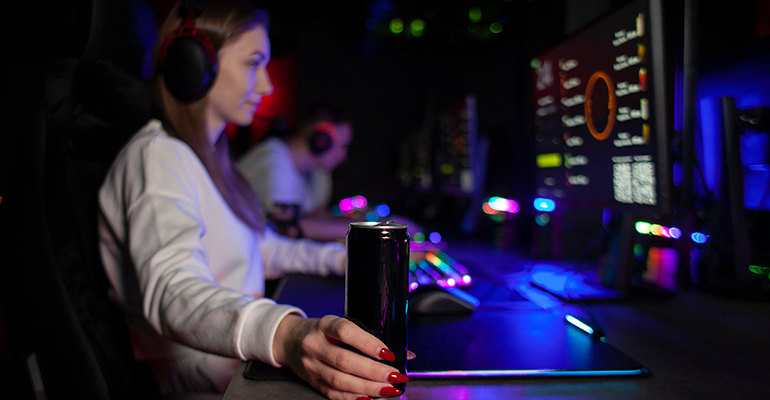
No industry has embraced gaming and esports marketing more enthusiastically than energy drinks. Red Bull pioneered the space with the Red Bull Gaming Sphere and extensive esports team sponsorships. Monster Energy sponsors hundreds of esports athletes and teams globally. G Fuel built its entire brand identity around gaming culture, becoming the unofficial energy drink of streamers and content creators on Twitch and YouTube. The commercial logic is compelling: the global esports audience of approximately 540 million people has enormous demographic overlap with energy drink consumers — predominantly 18-34 year old males who spend multiple hours per day in front of screens. Research consistently shows that gaming sessions trigger energy drink consumption; multiple studies report that regular gamers consume energy drinks at 2-3x the rate of non-gamers. The rise of mobile gaming in Asia — with over 1 billion mobile gamers in China alone — has opened new distribution opportunities for energy brands in markets that were previously underpenetrated. Energy drink brands have also invested heavily in streaming partnerships, with Red Bull and Monster sponsoring major Twitch and YouTube streamers whose combined audiences number in the hundreds of millions.
The Sugar-Free Revolution and Functional Beverages
The most significant product trend reshaping the energy drinks category is the rapid consumer shift toward sugar-free, zero-calorie, and functionally-enhanced products. In the US market, sugar-free variants now account for approximately 40% of volume — up dramatically from approximately 20% in 2017. This shift is driven by broad consumer health consciousness, the influence of keto and low-carb dietary movements, and increasing awareness of sugar's metabolic effects. Red Bull Sugar Free and Monster Ultra (zero sugar) have become standalone billion-dollar products in their own right. Monster Ultra alone accounts for approximately 15-20% of Monster's total US volume, and its distinctive white can has become a recognisable symbol of the sugar-free movement within the category. The functional energy segment goes beyond mere sugar reduction to actively position energy drinks as performance supplements. Products like Celsius add metabolism-boosting ingredients, Alani Nu targets female consumers with specific nutritional profiles, and brands like Bloom and Nuun target electrolyte replenishment alongside energy. This functional evolution is expanding the total addressable market for energy drinks by attracting consumers who previously avoided the category due to sugar content or perceived unhealthiness — potentially adding tens of millions of new consumers globally over the next decade.
The global energy drinks market in 2025 sits at a fascinating inflection point. The core category — high-caffeine beverages in standard can formats — remains extremely profitable and is still growing in emerging markets. But the real story is the evolution: sugar-free products growing at nearly double the rate of the overall category, functional beverages commanding premium price points, and an entirely new generation of gaming-oriented brands reaching consumers through digital channels that traditional beverage giants struggle to access. The next decade will see the energy drinks category fragment into distinct sub-segments — performance sports, gaming and focus, health-wellness, and traditional stimulant — each with its own leading brands, consumer demographics, and growth trajectories. The total addressable market is significantly larger than today's $106 billion figure suggests, provided the industry continues to innovate product formats and expand geographic distribution into the world's billions of underserved consumers across Asia, Africa, and Latin America.
Energy Drinks Market Forecast — $230 Billion by 2032
The global energy drinks market is projected to reach approximately $230 billion by 2032, driven by four primary growth vectors. First, emerging market expansion — Asia-Pacific, Latin America, Middle East and Africa are all at early stages of category development relative to North America and Europe, with massive headroom for growth as urbanisation and income growth continue. Second, sugar-free and functional product innovation — the shift toward health-positioned energy products is expanding the total addressable market by attracting consumers who previously avoided traditional high-sugar energy drinks. Third, distribution expansion — energy drinks are still underpenetrated in foodservice, convenience, and emerging market retail channels relative to their ultimate potential. Fourth, the continued growth of gaming and esports as cultural forces, which brings new cohorts of younger consumers into the category annually. For the broader context of global consumer market growth see our global financial markets statistics and Pinduoduo revenue data on emerging market digital commerce driving consumer goods distribution.
Frequently Asked Questions — Energy Drinks Market
The global energy drinks market is worth approximately $106 billion in 2025, up from $61 billion in 2017. It is projected to reach $230 billion by 2032 at a CAGR of approximately 11.5%.
Red Bull leads globally with approximately 43% market share by volume, generating approximately $12 billion in annual revenue. Monster Energy is second at approximately 39%. Together they control over 80% of the global market.
The US energy drinks market is worth approximately $22 billion in 2025 — the largest single national market globally. Monster leads the US at approximately 35% share, with Red Bull at 32% and Celsius at approximately 10%.
North America is the largest region at approximately 37% of global revenue ($39B). Europe is second at 28% ($30B). Asia-Pacific at 21% is the fastest growing region at approximately 13% CAGR annually.
Key drivers include rising demand among 18-34 year olds, gaming and esports culture, sugar-free product innovation attracting health-conscious consumers, expanding distribution in emerging markets, and the functional beverage trend. Asia-Pacific growth is particularly strong as urbanisation and income growth drive adoption.
Primary: Grand View Research — Energy Drink Market Report 2025
Primary: Mordor Intelligence — Global Energy Drinks Market Analysis
Supporting: Red Bull GmbH — Company Data · Monster Beverage Corporation — Investor Relations · Statista — Energy Drinks Topic