
Data Centers — The Invisible Infrastructure Powering the Digital Economy
Data centers are the physical backbone of the modern digital economy — the buildings, servers, networking equipment, and cooling systems that make cloud computing, artificial intelligence, streaming, e-commerce, and financial transactions possible. The global data center market reached approximately $335 billion in 2025, having grown from approximately $187 billion in 2017 — nearly doubling in eight years. There are approximately 10,978 data centers worldwide as of 2025, ranging from small enterprise facilities to hyperscale campuses covering millions of square feet. The market is projected to reach $625 billion by 2032 at a CAGR of approximately 10%, driven primarily by AI compute demand, cloud adoption, and the proliferation of connected devices. The AI revolution has fundamentally changed data center investment calculus: what was a steady infrastructure sector has become one of the fastest-growing areas of capital expenditure in the global economy, with Amazon, Microsoft, and Google each pledging $50-80 billion in data center investment in 2025 alone. For broader technology sector context see our AI market size worldwide statistics and Alphabet revenue data.
The data center industry has three distinct segments. Hyperscale data centers — operated by Amazon Web Services, Microsoft Azure, Google Cloud, Meta, and Apple — are massive facilities typically exceeding 100,000 square feet, purpose-built for cloud and AI workloads, and increasingly located in clusters in regions with cheap power and cool climates. Colocation data centers — operated by companies like Equinix, Digital Realty, NTT, and CyrusOne — lease space, power, and cooling to enterprise customers who bring their own servers. Enterprise data centers — owned and operated by individual companies for their own internal IT needs — are declining as workloads migrate to cloud, but still represent a significant portion of total infrastructure. The colocation segment is growing fastest as enterprises outsource infrastructure, while enterprise data centers are consolidating as cloud adoption accelerates. The hyperscale segment is experiencing the most dramatic investment surge, driven by AI training and inference workloads that require unprecedented densities of GPU computing power.
Global Data Center Market Size 2017–2032 — From $187B to $625B
The bar chart below shows the global data center market size from 2017 to 2032. Growth has been consistent throughout, with AI-driven acceleration particularly visible from 2023 onwards. The 2025-2032 projected CAGR of 10% is significantly faster than historical growth rates of 7-8%, reflecting the step-change in AI infrastructure investment that began in 2023 following the ChatGPT inflection point.
Hyperscaler Cloud Market Share 2025 — AWS, Azure, Google Cloud
Three companies dominate global cloud infrastructure: Amazon Web Services (AWS) with approximately 31% market share, Microsoft Azure at approximately 25%, and Google Cloud at approximately 11%. Together they control approximately 67% of the global cloud infrastructure market. AWS has led since launching in 2006 but its lead has narrowed — Azure has grown faster in recent years due to Microsoft's enterprise relationships and its deep integration with AI tools including OpenAI's GPT models. Google Cloud, despite its smaller share, is growing at approximately 28% annually — faster than either AWS or Azure — thanks to its AI-differentiated offerings including Vertex AI and TPU chips. For technology company revenue context see our Google statistics and YouTube statistics on Alphabet's broader infrastructure investments.
Hyperscaler Capital Expenditure — 2025 Investment Surge
Countries with the Most Data Centers 2025 — US Leads with 5,400+
The United States dominates global data center geography with approximately 5,400 data centers — nearly half of the worldwide total of 10,978. Northern Virginia (known as Data Center Alley) is the world's single largest data center market, hosting more capacity than any other metropolitan area on earth, with approximately 3,500 MW of operational capacity. Germany leads Europe with approximately 521 facilities, followed by the UK with 517. Singapore — despite its small geography — ranks 6th globally with 70+ hyperscale-grade facilities, reflecting its role as the primary digital hub for Southeast Asia. For financial markets context across these key regions see our UK financial markets and Germany financial markets data on infrastructure investment trends.
Data Center Power Consumption — 200 TWh Annually and Rising Fast
Data centers consume approximately 200-250 TWh of electricity annually — approximately 1-2% of global electricity consumption. This figure sounds modest, but is growing rapidly: the IEA projects data center power demand to reach 500-600 TWh by 2030, driven almost entirely by AI workloads. A single large-scale AI training run — such as training a frontier language model — can consume as much electricity as 1,000 US households use in an entire year. The geographic concentration of data centers in specific regions has created local grid stress: Northern Virginia's data centers already consume approximately 70% of the state's electricity in some counties, causing utility companies to warn of potential supply constraints. Ireland hosts data centers that consume approximately 21% of the country's total electricity — a figure expected to reach 30%+ by 2030, raising serious questions about energy security and the country's renewable energy targets.
Data Center Market by Segment 2025
AI and Data Centers — The $200 Billion Investment Surge
Artificial intelligence has fundamentally transformed the data center industry. Before ChatGPT's launch in November 2022, data center investment was growing steadily at 7-8% annually. By 2025, investment growth had accelerated to 15-20% annually, driven by an insatiable demand for AI compute — both for training large language models and for inference (running AI models to serve user requests). The numbers are staggering: Microsoft committed $80 billion to data center investment in 2025 alone, with approximately half earmarked for US facilities. Amazon announced $100+ billion in data center CapEx for 2025-2026. Google committed $75 billion for 2025. Meta pledged $60-65 billion. In total, the four largest hyperscalers committed over $300 billion in data center investment in a single year — a figure that exceeds the entire GDP of many countries. For the AI market context driving this investment see our AI market size worldwide statistics.
The technical demands of AI are reshaping data center design from the ground up. Traditional data centers are designed around CPU-based workloads with power densities of approximately 5-10 kW per rack. AI training clusters require GPU racks consuming 30-100 kW per rack — requiring completely different cooling infrastructure, power distribution, and facility layouts. NVIDIA's H100 and H200 GPU clusters — the primary compute infrastructure for AI training — draw so much power that liquid cooling is now mandatory rather than optional. A single 10,000-GPU training cluster requires approximately 30-40 MW of power — equivalent to powering a small city. The next generation of facilities being planned for 2026-2028 are designing for 500-1,000 MW campuses — a scale that was unimaginable in data center planning a decade ago. This AI-driven architecture revolution is making existing data center stock partially obsolete and driving demand for purpose-built AI data centers at unprecedented investment levels.
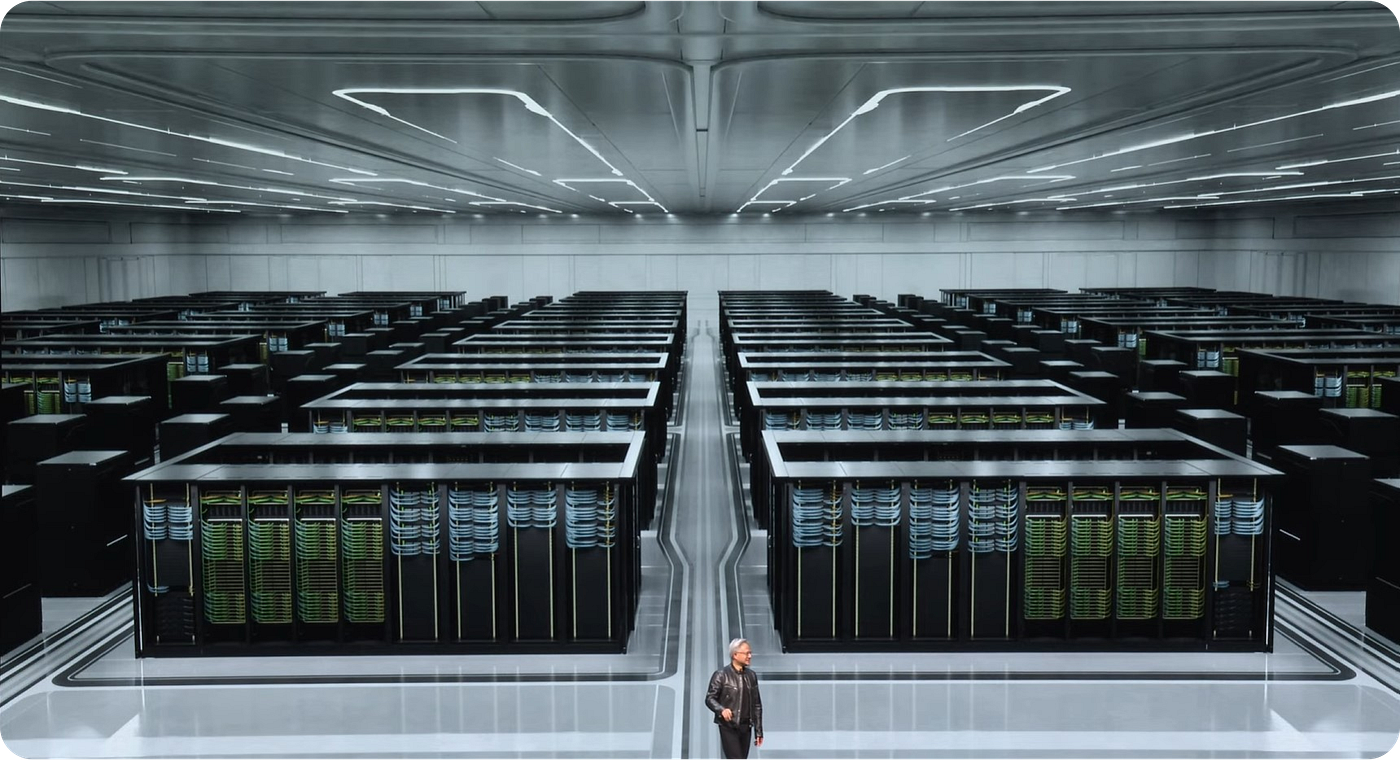
Colocation vs Hyperscale vs Edge — Three Different Markets
The data center industry is not monolithic — it consists of three distinct sub-markets with different economics, customers, and growth drivers. The hyperscale segment — dominated by AWS, Azure, Google, Meta, and Apple — involves companies building and operating their own massive facilities exclusively for their own workloads. These facilities range from 100,000 to over 1 million square feet, consume 100-500 MW of power, and cost $500 million to $2 billion each to build. The colocation segment — led by Equinix ($8B annual revenue), Digital Realty ($5.5B), NTT Global ($3.5B), and CyrusOne — provides space, power, and connectivity to enterprise customers who own their own servers. Colo facilities are typically located in dense urban areas close to network interconnection points, making them critical for low-latency applications. The edge computing segment is the newest and fastest-growing, consisting of small facilities located close to end users — in 5G cell towers, retail locations, factories, and distribution centres — that process data locally rather than sending it to centralised cloud regions. Edge computing is critical for autonomous vehicles, augmented reality, industrial IoT, and real-time AI applications where even 20-50ms round-trip latency to a centralised data centre is unacceptable.
Sustainability and the Green Data Center Challenge
Data centers face enormous sustainability pressure as their power consumption grows. Microsoft, Google, and Amazon have all pledged to power 100% of their data centers with renewable energy — with Google claiming to have achieved this since 2017 on an annual average basis and Microsoft targeting 100% by 2025. However, the gap between "renewable energy matching" and actual 24/7 carbon-free electricity is substantial. When AI workloads surge at 2am, the electricity powering those computations may come from natural gas peaker plants, not solar panels. The industry is investing heavily in battery storage, hydrogen fuel cells, and 24/7 power purchase agreements with renewable generators to address this gap. Water consumption is also a growing concern — data centers use billions of litres of water annually for cooling, creating conflicts with local communities in drought-prone regions. Microsoft's data center in Arizona was criticised for its water consumption during a period of severe regional drought. The sustainability challenge will only intensify as AI multiplies data center power demand over the next decade, making it one of the most significant ESG challenges facing the technology industry.
Northern Virginia — The World's Data Center Capital
Loudoun County, Virginia — known as "Data Center Alley" — is home to the highest concentration of data center capacity anywhere on earth. Approximately 300 data centers in this 521-square-mile area process an estimated 70% of the world's internet traffic, hosting infrastructure for virtually every major cloud, technology, and financial services company globally. The region's advantages are clear: proximity to Washington DC's fibre network hubs (MAE-East and Equinix Ashburn), historically cheap Dominion Energy electricity, flat buildable land, and a business-friendly regulatory environment in Virginia. The concentration has become so extreme that Dominion Energy has warned of potential electricity supply constraints by 2030 without major grid investment, and local governments have begun imposing data center moratoria in some areas due to concerns about electricity consumption, noise, and visual impact. Despite these pressures, new construction continues — approximately 2,000 MW of new data center capacity was under construction or planned in Northern Virginia as of early 2026, reflecting the insatiable demand for AI compute infrastructure.
Other significant data center clusters globally include Frankfurt (the primary hub for European internet infrastructure, chosen for its position at the centre of European fibre networks and Frankfurt Internet Exchange — DE-CIX, the world's largest internet exchange point by traffic volume), Singapore (the gateway to Southeast Asian digital infrastructure and home to the regional headquarters of every major cloud provider), Dublin (favoured by hyperscalers for its EU data residency compliance, low corporate tax rates, and cool climate that reduces cooling costs), and Chicago (the second-largest US market, favoured for financial services low-latency applications given its position at the centre of North American fibre networks).
Data Centers — Key Statistics & Facts 2025
The data center industry has quietly become one of the most strategically important sectors of the global economy. Northern Virginia — which few people outside the technology industry have heard of — processes more internet traffic than any other location on earth. The approximately 300 data centers in Loudoun County, Virginia host infrastructure for Netflix, Amazon, Google, Microsoft, Salesforce, and thousands of other companies. A single day of outages in this corridor would disrupt the digital services of hundreds of millions of people globally. The industry's strategic importance is reflected in national security policy: the US, EU, China, India, and several other major economies now classify data center infrastructure as critical national infrastructure requiring government oversight and in some cases restricting foreign ownership.
The scale of hyperscaler data center investment in 2025 is without historical precedent in any industry. Microsoft alone committed $80 billion — with CEO Satya Nadella describing it as essential to remaining competitive in AI. Amazon's $100+ billion commitment dwarfs any single-year infrastructure investment by any company in history. Google's $75 billion reflects its determination to close the gap with AWS and Azure in cloud market share while building the AI infrastructure to compete with OpenAI. The combined $255+ billion from just three companies exceeds the annual GDP of over 140 nations.
Data Center Jobs and Economic Impact
The data center industry supports a significant and growing workforce globally. A single large hyperscale data center creates approximately 25-50 direct permanent jobs — relatively modest for its construction cost of $500M-$2B — but generates enormous indirect economic activity through construction, equipment supply chains, and the digital services it enables. The data center construction boom of 2024-2026 is creating hundreds of thousands of temporary construction jobs globally, with electricians, HVAC technicians, and specialised data center engineers in particularly high demand. In the US, data center construction is one of the fastest-growing segments of commercial construction, with approximately $50 billion in new projects underway or recently completed. The skilled trades shortage is a significant constraint on the pace of deployment — the demand for certified data center technicians and engineers is far outpacing the supply of trained workers, causing delays and cost overruns at multiple major projects. Several US states have introduced data center-specific training programmes and tax incentives to attract investment, recognising data centers as critical economic development infrastructure comparable to automotive plants or semiconductor fabs in their capital intensity and supply chain multiplier effects.
The economic multiplier from data center investment extends far beyond the facilities themselves. Each dollar invested in data center infrastructure enables multiple dollars of digital economy activity — cloud-based software development, AI applications, e-commerce, digital media, financial services, and remote work infrastructure all depend on the underlying data center layer. The McKinsey Global Institute has estimated that cloud computing — the primary service delivered through data centers — contributes approximately $1 trillion annually to global GDP through productivity gains in enterprises that adopt it. As AI adds a further layer of productivity improvement on top of cloud, the economic value enabled by data center investment will continue to grow at rates far exceeding the direct market size figures. For the broader digital economy context see our countries with the largest GDP data and consumer market statistics for comparison with other major global market categories.
Data Center Market Forecast — $625 Billion by 2032
The global data center market is projected to reach approximately $625 billion by 2032, nearly doubling from $335 billion in 2025. Four trends will drive this growth. First, AI infrastructure expansion — the buildout of AI training and inference capacity will continue at unprecedented rates as AI adoption accelerates across every industry vertical. Second, edge computing proliferation — as 5G networks mature, data processing will increasingly move to edge locations closer to end users, creating demand for thousands of smaller distributed data centers. Third, emerging market expansion — India, Southeast Asia, and Latin America are all at early stages of hyperscale data center development relative to their economic size, representing substantial greenfield opportunity. Fourth, the shift to renewable energy — data centers are under increasing pressure from corporate sustainability commitments and regulatory requirements to source 100% renewable electricity, driving investment in new solar and wind capacity co-located with or dedicated to data center facilities. For broader context on the financial markets driving these investments see our global financial markets statistics and Nasdaq stock market data on technology infrastructure valuations.
Frequently Asked Questions — Data Centers
The global data center market is worth approximately $335 billion in 2025, projected to reach $625 billion by 2032 at a CAGR of approximately 10%. The US represents approximately 40% of the global market by revenue.
There are approximately 10,978 data centers worldwide as of 2025. The United States leads with approximately 5,400 — nearly half the global total. Germany is 2nd in Europe with approximately 521, UK 3rd with 517.
Amazon Web Services (AWS) leads with approximately 31% cloud market share, followed by Microsoft Azure at 25% and Google Cloud at 11%. Together they control approximately 67% of global cloud infrastructure. Equinix and Digital Realty are the largest colocation operators.
Data centers consume approximately 200-250 TWh of electricity annually — approximately 1-2% of global electricity. AI workloads are projected to double this to 500-600 TWh by 2030, creating significant pressure on electricity grids in data center cluster regions.
AI has transformed data center investment — accelerating CapEx growth from 7-8% to 15-20% annually. Microsoft, Amazon, and Google committed over $250 billion in new data center capacity in 2025. AI GPU racks require 30-100 kW of power per rack versus 5-10 kW for traditional CPU racks, driving a complete redesign of facility architecture.
Primary: Synergy Research Group — Cloud Infrastructure Market Data 2025
Primary: IEA — Data Centres and Data Transmission Networks Report 2025
Supporting: Grand View Research — Data Center Market Report · Cushman & Wakefield Data Center Outlook 2025 · Data Center Map — Global Facility Count