
Amazon 2026 — The $638B Everything Store, Cloud Giant, and Advertising Powerhouse
Amazon is no longer just a retailer. It is simultaneously the world's largest e-commerce marketplace, the world's largest cloud infrastructure provider, the world's third-largest digital advertising platform, a global logistics network rivalling UPS and FedEx, a major entertainment studio, a grocery chain, and a leading AI research organisation. Founded by Jeff Bezos in a Bellevue, Washington garage in 1994 as an online bookstore, Amazon reported full-year 2024 revenues of $638 billion — a figure that would make it one of the largest economies in the world if it were a country.
AWS (Amazon Web Services), launched in 2006, generated $107 billion in 2024 revenue at operating margins exceeding 37% — making it easily the most profitable cloud division in history and the primary engine of Amazon's $59 billion net profit in 2024. Meanwhile, Amazon Advertising — now a standalone reporting segment — generated $56 billion in 2024, growing faster than Google Search and Meta's ad businesses. Understanding stock market terminology is essential when analysing AMZN's financial performance and valuation multiples.
Amazon Annual Revenue — 2004 to 2026
The bar chart below tracks Amazon's explosive revenue growth from just $6.9 billion in 2004 to $638 billion in 2024 — a 92x increase in 20 years. The compound annual growth rate across this period is approximately 26% per annum. Key inflection points: the launch of Amazon Prime in 2005 accelerated retail, the launch of AWS in 2006 seeded a trillion-dollar business, and the acquisitions of Whole Foods (2017, $13.7B) and MGM (2022, $8.5B) expanded Amazon into grocery and entertainment. Revenue is projected to exceed $750 billion by 2026 as AWS, advertising, and international retail all accelerate.
Amazon Business Segments — Complete Revenue Breakdown 2024
Amazon reports revenue across five key segments: North America (online stores, physical stores, third-party seller services, subscription services), International (same services outside the US), AWS, Advertising Services (broken out as a standalone segment since 2022), and Other. North America remains the largest by revenue at ~$387 billion, but AWS is by far the most profitable — generating over 60% of Amazon's total operating income despite representing only ~17% of total revenue. This margin disparity is the fundamental financial story of Amazon in 2024–2026.
| Segment | Revenue (USD) | % of Total | YoY Growth | Op. Margin |
|---|---|---|---|---|
| North America Retail | ~$387B | ~61% | ~10% | ~5% |
| International Retail | ~$143B | ~22% | ~11% | ~1% |
| AWS (Cloud) | ~$107B | ~17% | ~17% | ~37% |
| Advertising Services | ~$56B | ~9% | ~18% | ~25%+ |
| Subscription Services | ~$43B | ~7% | ~11% | ~15% |
| Physical Stores | ~$21B | ~3% | ~4% | ~3% |
AWS — The World's Largest Cloud Provider with $107B Revenue and 31% Market Share
Amazon Web Services (AWS), launched publicly in March 2006 with Amazon S3 and EC2, is the world's dominant cloud infrastructure provider. With approximately $107 billion in 2024 revenue and an operating income of ~$40 billion (37%+ operating margin), AWS is one of the most profitable technology businesses ever built. AWS holds approximately 31% global cloud infrastructure market share — ahead of Microsoft Azure (~24%) and Google Cloud (~12%). AWS operates 33 geographic regions with 105+ availability zones and serves millions of customers including Netflix, Airbnb, NASA, the US government, and virtually every Fortune 500 company. For context on the broader tech landscape, see our global financial markets statistics.
AWS generated approximately $40 billion in operating income in 2024 — representing over 60% of Amazon's $66 billion total operating income, despite being only 17% of total revenues. Without AWS, Amazon's entire retail, logistics, and media empire would be barely breakeven. This cross-subsidisation model — using cloud profits to fund long-term retail and logistics investment — is perhaps the most powerful competitive advantage in corporate history. AWS's 37%+ operating margins dwarf Google Cloud (~10%) and Azure (disclosed only within Microsoft Cloud at ~43% but diluted by enterprise software). Competitors have been trying to close the gap for 18 years — and AWS has continued to widen its lead.
Top AWS Competitors — Cloud Market Share 2025
Amazon Prime — 200M+ Members, $139/Year, and the Ultimate Lock-In Machine
Amazon Prime, launched in February 2005 at $79/year for unlimited two-day shipping, has become the world's most successful subscription membership programme. With over 200 million global members as of 2025 — approximately 170 million in the US alone — Prime generates an estimated $43 billion in annual subscription revenue. But the real value of Prime is behavioural: Prime members spend approximately $1,400 per year on Amazon versus ~$700 for non-members, and the annual churn rate is below 8%. Prime bundles free shipping, Prime Video, Prime Music, Prime Reading, Prime Gaming, and exclusive deals into a single membership, making it one of the stickiest consumer products ever created.
| Region / Market | Prime Members (est.) | Annual Fee | Launched | Key Benefit |
|---|---|---|---|---|
| United States | ~170M | $139/yr | 2005 | Same-day + Prime Video |
| Europe (combined) | ~50M | €69–89/yr | 2007 | Free delivery + Video |
| India | ~25M+ | ₹1,499/yr | 2016 | Fast delivery + Video |
| Japan | ~15M | ¥600/mo | 2007 | Same-day + Video |
| Canada | ~8M | CAD$99/yr | 2013 | Free shipping + Video |
| Australia | ~3M | AUD$9.99/mo | 2018 | Free delivery + Video |
Amazon Marketplace — 9.7M+ Sellers, 60%+ of Units, and the World's Largest Third-Party Retailer
Amazon Marketplace, launched in 2000, is the invisible engine beneath the "Everything Store." Third-party sellers now account for over 60% of all unit sales on Amazon — up from 3% in 1999. There are approximately 9.7 million registered sellers globally, with about 2 million actively selling. Sellers pay Amazon 8–15% referral fees, fulfilment fees (FBA), advertising costs, and various other charges — meaning the effective "take rate" can reach 40–50% for smaller sellers. For 2024, Amazon's Third-Party Seller Services segment generated approximately $157 billion — more than Amazon's entire first-party online stores revenue, illustrating the profound shift toward a marketplace model. Understanding the broader financial market dynamics helps explain why Amazon's take-rate economics are so attractive to investors.
Amazon accounts for approximately 40% of all US e-commerce sales — meaning roughly 4 in every 10 dollars spent online in America goes through Amazon. The next largest competitor, Walmart, holds about 6–7%. This dominance is powered by Prime membership loyalty, Amazon's logistics speed advantage (same-day delivery now available in 90+ US metro areas), the vast product catalogue, and the competitive advantage of AWS-funded price leadership. Amazon's mobile app is consistently the #1 or #2 most-downloaded shopping app in the US. During Prime Day 2024 — Amazon's annual summer sale — the company processed over 375 million items sold in 48 hours.
Amazon Advertising — The $56B Business Making Amazon the World's #3 Digital Ad Platform
Amazon's advertising business, largely invisible to casual observers, has become one of the most powerful and fastest-growing advertising platforms on the planet. With $56 billion in 2024 revenue (up ~18% YoY), Amazon Advertising has overtaken YouTube's ad revenue and is now the world's third-largest digital advertising platform after Google Search and Meta. Unlike Google and Meta, Amazon's ad inventory sits at the point of purchase — meaning advertisers pay for placement directly in front of buyers with high commercial intent, generating exceptional return-on-ad-spend (ROAS). Sponsored Products, Sponsored Brands, and Amazon DSP (Demand-Side Platform) for off-Amazon placements are the core products. Amazon Prime Video's expansion into ad-supported streaming in 2024 added a major new inventory source, with 115M+ Prime Video viewers in the US now seeing ads by default.
Amazon Logistics — 185+ Fulfilment Centres, Amazon Air, and Rivian Delivery Vans
Amazon's logistics network is one of the greatest infrastructure investments in private sector history. Having started by relying entirely on UPS, FedEx, and USPS, Amazon now operates its own last-mile delivery network — Amazon Logistics (AMZL) — which handles more than 72%+ of all Amazon's own US packages and an estimated 8 billion parcels annually. This makes Amazon Logistics one of the largest parcel carriers in the US, overtaking FedEx in US parcel volume around 2022. Amazon's logistics footprint includes 185+ fulfilment centres, 110+ sortation centres, and 460+ delivery stations globally.
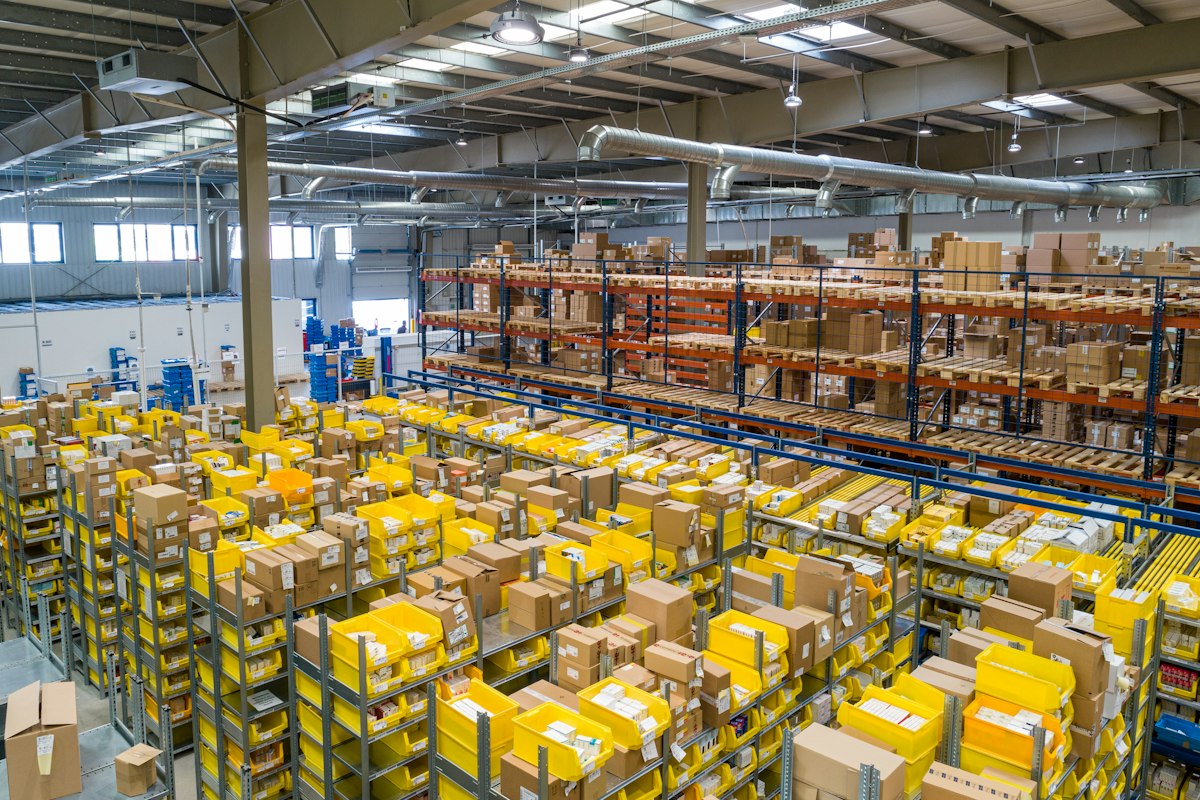
| Facility Type | Count (Global) | Avg. Size | Primary Function |
|---|---|---|---|
| Fulfilment Centres (FCs) | 185+ | 800,000 sq ft | Store + pick + pack orders |
| Sortation Centres | 110+ | 200,000 sq ft | Sort packages for last mile |
| Delivery Stations | 460+ | 100,000 sq ft | Last-mile delivery hubs |
| Amazon Fresh / Whole Foods | 530+ stores | Varies | Grocery retail + same-day |
| Amazon Air Hubs | 5 major | Varies | Air cargo sorting |
| Amazon Air Fleet | 100+ aircraft | B767/B737 | Own air freight network |
| Rivian Electric Vans | 10,000+ (ordered 100K) | Cargo van | Zero-emission last mile |
| Amazon Robotics (Kiva) | 750,000+ robots | N/A | Warehouse automation |
Amazon Global Operations — 21 Countries, 1.55M Employees, and the Emerging Market Push
Amazon operates retail marketplaces in 21 countries and sells to customers in 100+ countries via cross-border e-commerce. The US remains by far the largest market (~60% of revenue), but international operations — particularly in India, Germany, UK, Japan, and Canada — are growing rapidly. India is a key battleground: Amazon has committed $26 billion+ in India investments, competing fiercely with Flipkart (Walmart-owned) and Reliance Jio in a market projected to be the world's third-largest e-commerce market by 2030. With 1.55 million employees, Amazon is the second-largest private employer in the United States after Walmart. For deeper context on global digital economy trends, explore our coverage of crypto and digital asset market statistics.
Amazon Revenue by Geography — 2024
AMZN vs S&P 500 vs Big Tech — Total Return Comparison 2000–2025
The chart below compares indexed total return performance of Amazon (AMZN), Apple, Microsoft, and the S&P 500 from 2000 to 2025. Amazon's long-term total return performance is extraordinary — but marked by brutal volatility. AMZN fell 94% from 2000 to 2001 during the dot-com crash (from $106 to $6), wiping out nearly all shareholder value. Those who held emerged with extraordinary gains — AMZN returned approximately 2,000x from its 2001 trough to its 2021 peak. The post-2022 correction saw AMZN lose ~55% before recovering strongly in 2023–2025 as AWS growth re-accelerated and the advertising business matured.
Amazon 2026 — Key Facts & Forward Outlook
Amazon enters 2026 on strong financial footing: AWS growth has re-accelerated above 17%, advertising continues growing at ~18% annually, and international retail is turning profitable for the first time. Key growth vectors for 2026 and beyond include AWS AI infrastructure (Amazon Bedrock, Trainium chips, and Amazon Q), Amazon Healthcare (Amazon Clinic, Amazon Pharmacy, One Medical), Amazon Kuiper (satellite internet, competing with Starlink), and the expansion of Amazon's private label and grocery businesses. The primary risks are antitrust scrutiny (FTC lawsuits in the US and EU DMA obligations), the intensifying competition from TikTok Shop and Temu in low-cost retail, and the massive capital requirements of AI infrastructure investment. For broader context on global capital markets, see our global financial markets report.
Frequently Asked Questions — Amazon Statistics 2026
Amazon's full-year 2024 revenue was approximately $638 billion, growing ~11% year-over-year. AWS contributed ~$107B, advertising ~$56B, North America retail ~$387B, and international ~$143B. Net income was approximately $59 billion — Amazon's most profitable year ever.
Amazon Prime has 200M+ global members, with ~170M in the US. Prime members spend roughly 2x more annually than non-members (~$1,400 vs ~$700). The annual churn rate is below 8%, making Prime one of the stickiest consumer subscriptions ever created. US Prime membership costs $139/year or $14.99/month.
Amazon's market cap stands at approximately $2.2 trillion+ as of early 2026, making it consistently one of the five most valuable companies globally alongside Apple, Microsoft, Nvidia, and Alphabet. Amazon trades on NASDAQ under the ticker AMZN. The P/E ratio is typically 35–50x given strong earnings growth expectations.
AWS generated $107 billion in 2024 revenue, up ~17% YoY, with an operating margin of 37%+. AWS holds approximately 31% global cloud market share — the largest of any provider, ahead of Microsoft Azure (~24%) and Google Cloud (~12%). AWS operates 33 geographic regions with 105+ availability zones worldwide.
Amazon employs approximately 1.55 million people globally as of 2025, making it the second-largest private employer in the United States after Walmart. About 75% of Amazon's workforce is in fulfilment, logistics, and operations. Amazon peaked at 1.62 million employees in late 2021 before a 2022–2023 restructuring reduced headcount by ~100,000.
Third-party sellers account for over 60% of all unit sales on Amazon as of 2025. Amazon has 9.7M+ registered sellers globally, ~2M of which are active. Third-party seller services revenue was approximately $157 billion in 2024. Amazon FBA (Fulfilment by Amazon) handles storage, shipping, and returns for ~73% of active sellers.
Amazon Advertising generated approximately $56 billion in 2024, growing ~18% YoY. This makes Amazon the world's third-largest digital advertiser after Google and Meta, commanding ~7–8% of global digital ad spend. The key ad products are Sponsored Products, Sponsored Brands, Sponsored Display, and Amazon DSP. Prime Video ads, added in 2024, represent a major new inventory source.
Primary: Amazon Investor Relations — Annual Reports (10-K)
Primary: Amazon Web Services — About AWS
Market Data: Synergy Research Group Cloud Market Share · IDC Cloud Infrastructure Report · eMarketer E-Commerce Market Share · Gartner Cloud Forecast 2025–2026
Additional: Bloomberg Terminal data · SEC EDGAR filings · MWPVL International logistics research · Pitney Bowes Parcel Shipping Index · Statista Digital Economy Reports · Morning Consult Consumer Data