
Global AI Market 2020–2031 — The Fastest Growing Technology Market in History
Artificial intelligence is experiencing the most rapid market expansion of any technology sector in history — surpassing the internet in the 1990s, smartphones in the 2000s, and cloud computing in the 2010s. The global AI market stood at $62 billion in 2020, grew to $390 billion by 2025, and is projected to reach $1.81 trillion by 2031. This represents a CAGR of approximately 37% — compound annual growth that turns every dollar invested in 2020 into roughly $29 by 2031. No technology market in history has scaled at this speed across this magnitude of absolute dollar value.
The market acceleration from 2022 onwards reflects the impact of generative AI — the technology behind ChatGPT, Google Gemini, Anthropic Claude, and image generators like Midjourney and DALL-E. Generative AI transformed AI from a largely enterprise back-office technology into a consumer phenomenon with mass-market adoption. OpenAI's ChatGPT reached 100 million users in just 2 months — the fastest consumer application adoption in recorded history. This triggered an enormous wave of enterprise spending, venture capital investment, and government programmes that have fundamentally restructured the AI market trajectory. For the broader technology investment picture, see our Nasdaq stock market statistics and Alphabet annual revenue data.

Global AI Market Size 2020–2031 — Bar Chart
The chart below shows the global AI market size from 2020 through 2025 (actual/estimated) and 2026–2031 (projected). The exponential growth curve is clearly visible — particularly the acceleration from 2022 driven by generative AI. Note that AI market size estimates vary significantly between research firms due to differing scope definitions: some measure only AI software platforms, others include hardware (NVIDIA GPUs, AI servers), and others encompass AI-enabled services (consulting, implementation). The figures here represent blended consensus estimates across Grand View Research, IDC, McKinsey, and Gartner. Hover over bars for year-by-year data.
AI Market Size by Year — Complete Data 2020 to 2031
| Year | Market Size (USD) | YoY Growth | GenAI Share | Status | Key Driver |
|---|---|---|---|---|---|
| 2020 | $62B | +24% | ~2% | Actual | COVID digital acceleration |
| 2021 | $94B | +52% | ~3% | Actual | Enterprise AI adoption surge |
| 2022 | $142B | +51% | ~5% | Actual | MLOps, AI chips, cloud AI |
| 2023 | $207B | +46% | ~18% | Actual | ChatGPT / GenAI explosion |
| 2024 | $279B | +35% | ~28% | Actual | Enterprise GenAI deployment |
| 2025 | $390B | ~+40% | ~38% | Estimated | AI agents, AI PCs, GenAI scale |
| 2026* | $540B* | ~+38%* | ~45%* | Projected | Agentic AI, multimodal models |
| 2027* | $740B* | ~+37%* | ~50%* | Projected | AI-native software, robotics |
| 2028* | $1.01T* | ~+36%* | ~55%* | Projected | AI healthcare, finance at scale |
| 2029* | $1.30T* | ~+29%* | ~58%* | Projected | Physical AI, autonomous systems |
| 2030* | $1.57T* | ~+21%* | ~62%* | Projected | AGI-adjacent, mass deployment |
| 2031* | $1.81T* | ~+15%* | ~65%* | Projected | AI infrastructure maturity |
AI Market by Segment — Software, Hardware & Services 2025
The AI market consists of three broad segments: AI Software (platforms, applications, algorithms, foundation models), AI Hardware (NVIDIA GPUs, TPUs, AI servers, custom silicon), and AI Services (consulting, integration, managed services). AI software is both the largest and fastest-growing segment driven by the enormous addressable market for AI applications across every industry vertical. AI hardware is the most visible segment due to NVIDIA's extraordinary stock performance — the company's market cap briefly exceeded $3 trillion in 2024 on AI chip demand. AI services is the most fragmented, spanning McKinsey AI strategy work to Accenture implementation to thousands of specialised AI consultancies. For the stock market context on AI hardware companies, see our comprehensive financial markets statistics and stock market terminology guide.
AI Market by Region — North America Leads, Asia-Pacific Closes Fast
North America holds approximately 37% of the global AI market, driven by the concentration of AI-native companies (Google, Microsoft, Amazon, Meta, OpenAI, Anthropic) and the world's deepest venture capital ecosystem. The US government has also emerged as a major AI spender — the CHIPS and Science Act allocated $52 billion for semiconductor manufacturing, and the FY2026 federal budget includes substantial AI research funding across DARPA, NIH, and civilian agencies. Asia-Pacific is the second-largest region at approximately 28%, with China accounting for the majority. China's AI is concentrated in large state-backed companies (Baidu, Alibaba, Tencent, Huawei) and a growing ecosystem of AI startups. Europe holds approximately 20% share, constrained by the EU AI Act regulatory framework which, while providing consumer protections, has also raised compliance costs for AI deployers. For the broader digital economy context, see our Alibaba statistics and Amazon statistics.
Generative AI Market — 46% CAGR, $1.3 Trillion by 2032
Generative AI — technology that creates new content (text, images, audio, video, code) rather than merely analysing existing data — has transformed from a research curiosity to a multi-hundred-billion dollar market in just three years. Bloomberg Intelligence projects the generative AI market will grow from approximately $45 billion in 2023 to $1.3 trillion by 2032, a CAGR of 46%. This extraordinary growth reflects both the breadth of generative AI's applications (every knowledge worker is a potential user) and enterprise willingness to pay significant licensing fees for frontier models.
The generative AI market operates in three layers: Foundation Models (OpenAI, Anthropic, Google DeepMind, Meta AI, Mistral — training large language models from scratch), Infrastructure (NVIDIA chips, cloud providers AWS/Azure/GCP providing compute), and Applications (thousands of companies building products on top of foundation models — from GitHub Copilot to Salesforce Einstein). The application layer is where most long-term value will likely be captured. Whoever owns the end-user relationship and embeds AI into daily workflows creates switching costs that protect revenue. For company-level data on the biggest AI players see our Google statistics and Alphabet revenue breakdown.
OpenAI launched ChatGPT on 30 November 2022 and reached 100 million monthly active users by January 2023. TikTok took 9 months, Instagram 2.5 years, Facebook 4.5 years. By 2025, ChatGPT had approximately 400 million weekly active users. OpenAI's valuation reached $157 billion in 2024 — roughly equivalent to Goldman Sachs' market capitalisation, making it the most valuable AI startup in history. Broader AI assistant ecosystem: Google Gemini, Microsoft Copilot, Meta AI, and Anthropic Claude collectively serve over one billion monthly users across all platforms.
Global AI Investment — Over $100 Billion in 2025
AI investment reached unprecedented levels in 2025. Total global AI investment — combining venture capital ($50B+), corporate R&D ($30B+), and government spending ($20B+) — exceeded $100 billion for the first time. The US accounts for approximately 60% of global private AI investment. Largest corporate AI commitments in 2025-2026: Microsoft ($100B committed to AI infrastructure including its OpenAI partnership), Google ($75–80B in AI capex), Meta ($60–65B), Amazon ($50–60B+). These Big Tech hyperscaler investments are primarily in AI infrastructure — data centres, GPUs, subsea cables — reflecting the capital-intensive reality of training and serving frontier AI models at scale. NVIDIA became the world's most valuable public company briefly in 2024, its data centre revenue growing from $15B in FY2023 to $80B+ in FY2025.
AI Spending by Industry Vertical — Financial Services Leads
AI investment is not evenly distributed across industries. Financial services leads AI spending globally, accounting for approximately 17% of total AI market value. Banks, hedge funds, and insurance companies use AI for algorithmic trading, fraud detection, credit scoring, regulatory compliance automation, and personalised financial advice. Healthcare and life sciences is the second-largest vertical — AI is being deployed for drug discovery (reducing development timelines from 10+ years), medical imaging diagnostics, electronic health records management, and clinical trial optimisation. Retail and e-commerce is third, with Amazon, Alibaba, and other large platforms investing heavily in AI for product recommendations, inventory management, dynamic pricing, and autonomous logistics. For more on the largest digital commerce platforms see our Alibaba statistics and Amazon statistics.
AI Market Trends 2020–2031 — Four Key Metrics Compared
The chart below tracks four critical AI market indicators from 2020 to 2031: Total AI Market (all segments combined), Generative AI (the fastest-growing sub-segment), Global AI Investment (VC + corporate + government), and NVIDIA AI/Data Centre Revenue (the most concrete real-time infrastructure spending proxy). Each line tells a different part of the AI story — the total market shows the scale, GenAI shows the acceleration, investment shows capital commitment, and NVIDIA shows actual hardware demand.
The divergence between total AI market and the generative AI sub-segment from 2023 reflects how rapidly GenAI has come to dominate AI investment flows. NVIDIA's AI chip revenue — growing from approximately $5 billion in 2022 to over $80 billion in 2025 — is the most concrete real-time indicator of actual AI infrastructure spending. Every frontier model (GPT-4o, Gemini Ultra, Claude 3.5 Sonnet) required billions of dollars of NVIDIA GPU compute to train. Ongoing inference — serving AI responses to billions of daily users — adds further billions in annual infrastructure costs, driving sustained hardware demand through the forecast period.
AI Market Key Facts & Statistics 2026
AI Market Key Players — Company Revenue Rankings 2025
The AI market is dominated by technology giants who have data, compute, and research talent to build foundational AI systems. Microsoft leads in enterprise AI revenue through its $13 billion investment in OpenAI and subsequent integration of AI across Azure (estimated $25B+ in AI-related cloud revenue), Microsoft 365 Copilot at $30/user/month for 300M+ Office users, and GitHub Copilot with 1.8 million paying subscribers. Microsoft is uniquely positioned as the enterprise AI distribution channel — almost every large organization already pays for Microsoft software, making AI upsells structurally easier than for pure AI startups. Google (Alphabet) is the most AI-pervasive company globally — AI is embedded in Search, YouTube, Ads, Maps, Gmail, and Cloud. For full Google context see our Google statistics.
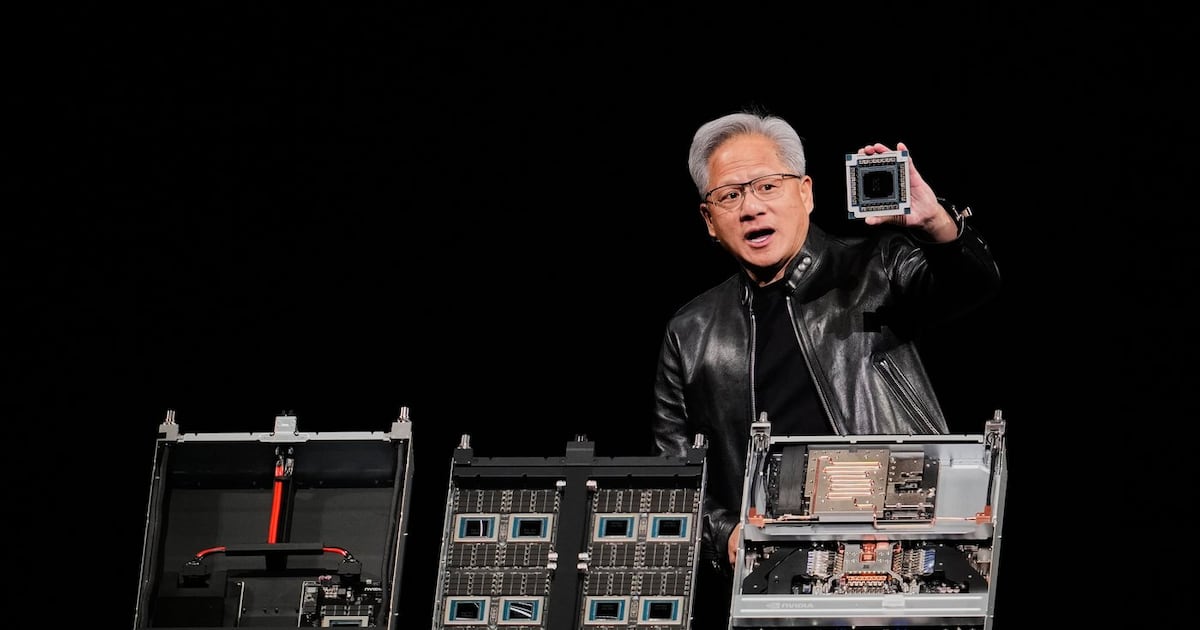
NVIDIA has become the defining infrastructure company of the AI era. Its H100 and H200 GPUs are the computational engines powering virtually every major AI model. Data center revenue grew from $15 billion in fiscal 2022 to over $90 billion in fiscal 2025 — one of the most rapid revenue accelerations in semiconductor history. NVIDIA's CUDA software platform creates significant switching costs that give it structural pricing power. Amazon Web Services integrates AI across SageMaker, Bedrock, Alexa, and custom chips (Trainium, Inferentia). For Amazon's broader context see our Amazon statistics.
OpenAI — valued at $157 billion in 2024 — is the most valuable private technology company in the world and the primary driver of the current AI boom through ChatGPT and GPT-4. Revenue grew from $28 million in 2022 to an estimated $3.7 billion in 2024. Anthropic — founded by former OpenAI researchers — has raised $7.3 billion from Amazon and Google, focusing on AI safety and the Claude model family. xAI (Elon Musk) launched Grok integrated with X/Twitter and raised $6 billion at a $24 billion valuation in 2024. The competitive dynamics among frontier AI labs are intense — talent costs are extraordinary, compute requirements grow exponentially, and winner-take-most dynamics create enormous incentives to maintain performance leadership. For stock investment context see our stock market terminology guide.
AI Venture Capital — $110 Billion Invested in 2025
AI startup funding has set consecutive records. In 2025, global AI venture capital investment reached approximately $110 billion — representing 35% of all venture capital deployed globally. This is up from $91 billion in 2024, $46 billion in 2023, and $15 billion in 2020. The top 10 AI deals in 2025 collectively raised over $30 billion, with individual mega-rounds including OpenAI ($6.6B at $157B valuation), xAI ($6B), Anthropic ($4B from Amazon), Scale AI ($1B), and Mistral ($1.1B). Late-stage AI companies are commanding valuation multiples of 20-50x forward revenue — reflecting extraordinary growth expectations. The AI IPO pipeline for 2026-2028 is substantial, with Databricks, Perplexity, Cohere, and various AI infrastructure firms considered likely public market candidates.
AI Adoption Statistics — From 20% to 72% in Eight Years
Enterprise AI adoption has crossed a critical threshold. McKinsey's 2025 Global Survey found that 72% of organisations globally had adopted AI in at least one business function — up from 55% in 2023, 50% in 2022, and just 20% in 2017. The most common AI use cases: natural language processing for customer service (56% of adopting organisations), computer vision for quality inspection (44%), predictive analytics for demand forecasting (42%), and generative AI for content creation (38%). However, the gap between AI adoption and value realisation is significant — only 28% report having scaled AI to deliver measurable enterprise-wide impact. Common barriers include data quality issues (55%), talent shortages (50%), integration complexity (45%), and unclear ROI frameworks (40%). Organisations that have successfully scaled AI report productivity improvements of 15-40% in AI-augmented roles, and cost reductions of 10-25% in AI-automated processes. For the US market context see our US financial markets statistics.
Frequently Asked Questions — AI Market Size
The global AI market is estimated at approximately $390 billion in 2025, up ~40% from $279B in 2024. Generative AI accounts for approximately 38% (~$148B) of total spend. NVIDIA alone generates $80B+ in AI chip revenue. Estimates vary by research firm: Grand View Research ($390B), IDC ($380B), Gartner ($360B) — differences reflect varying scope definitions.
The global AI market is projected to reach approximately $1.81 trillion by 2031 (Grand View Research consensus). By 2030, PwC estimates AI will contribute $15.7 trillion to global GDP. Goldman Sachs projects AI could add 7% to global GDP. McKinsey estimates AI's economic impact at $2.6–4.4 trillion annually from productivity gains.
Generative AI is growing at 46% CAGR — from $45B in 2023 to projected $1.3T by 2032 (Bloomberg Intelligence). AI chips/hardware is the fastest-growing hardware segment. Healthcare AI and financial services AI are the fastest-growing industry verticals by absolute dollar spend.
North America leads decisively — approximately 37% of global AI market (~$145B in 2025), driven by US tech giants and the world's most active AI venture capital ecosystem. Asia-Pacific is #2 at 28%, with China the dominant force. Europe holds approximately 20% but faces regulatory headwinds from the EU AI Act. The UK, Canada, France, and Israel are notable secondary AI hubs.
Total global AI investment exceeded $100 billion in 2025: VC ~$50B, corporate R&D ~$30B, government ~$20B. Microsoft committed $100B (incl. OpenAI). Google, Meta, Amazon each plan $50–80B in AI capex in 2025–2026. OpenAI reached a $157B valuation in 2024.
PwC: AI will contribute $15.7 trillion to global GDP by 2030 (China +$7T, North America +$3.7T, Northern Europe +$1.8T). Goldman Sachs: AI could boost global GDP by 7%. McKinsey: AI will automate 30% of work hours by 2030, primarily repetitive cognitive tasks. Jobs impact is mixed — significant displacement in some roles, significant creation in AI development, deployment, and oversight roles.
Primary: Grand View Research — Artificial Intelligence Market Size Report 2025
Primary: IDC — Worldwide AI and Generative AI Spending Guide, 2025–2029
Primary: McKinsey Global Institute — The State of AI 2025
Supporting: Goldman Sachs — Generative AI Research Report · PwC — Sizing the Prize: AI Economic Impact · Bloomberg Intelligence — Generative AI Forecast
Supporting: Stanford HAI AI Index 2025 · NVIDIA Annual Report FY2025 · Gartner AI Hype Cycle 2025 · CB Insights State of AI · OECD AI Policy Observatory