
Alibaba 2026 — Asia's Digital Commerce Empire, Cloud Giant, and the World's Largest Shopping Event
Alibaba Group Holding Limited is simultaneously the world's most used e-commerce ecosystem, Asia's largest cloud infrastructure provider, China's dominant digital payment and financial platform (through Ant Group), a global logistics network, and a major entertainment and media company. Founded in 1999 by 18 co-founders led by Jack Ma — a former English teacher — Alibaba has grown from a business-to-business marketplace connecting Chinese manufacturers to global buyers into a $130B+ annual revenue empire that touches virtually every aspect of Chinese digital life.
Alibaba's platforms host Taobao (consumer marketplace, 900M+ users), Tmall (brand stores, China's largest online retail platform), AliExpress (global cross-border shopping), Lazada (Southeast Asia), Trendyol (Turkey and Middle East), and Alibaba.com (B2B global trade). Alibaba's annual 11.11 Singles' Day shopping festival — the world's largest shopping event — generated $84.5B in GMV in 2021, dwarfing every other global retail event combined. For context on global digital commerce and investment trends, see our global financial markets statistics.

Alibaba Annual E-Commerce Revenue by Region — FY2015 to FY2025
The stacked bar chart below tracks Alibaba's e-commerce revenue from $12.3B in FY2015 to an estimated $97B in FY2025 — split between China Commerce (Taobao, Tmall, 1688, Freshippo) and International Commerce (AliExpress, Lazada, Trendyol, Alibaba.com). The most striking trend is the rapid internationalisation: international commerce revenue grew from $0.6B (5% share) in FY2015 to an estimated $15B (15% share) in FY2025, driven by the explosive growth of Trendyol in Turkey and AliExpress's expansion in Europe and the Americas. Note: Alibaba's fiscal year ends March 31. All USD figures converted at prevailing average exchange rates. FY2025 figures are estimates based on Q1–Q3 FY2025 reported results.
Alibaba Group Business Segments — Complete Revenue Breakdown FY2025
Alibaba reports revenue across six major segments: China Commerce (Taobao, Tmall, 1688, Freshippo, Taocaicai), International Commerce (AliExpress, Lazada, Trendyol, Alibaba.com), Local Consumer Services (Ele.me food delivery, Amap navigation), Cainiao Smart Logistics, Alibaba Cloud, and Digital Media & Entertainment (Youku, Alibaba Pictures). China Commerce remains the core profit engine — generating the vast majority of operating income — while international commerce and cloud are the primary growth vectors for 2025–2028. The total revenue picture of $130B+ reveals a significantly more diversified business than is commonly understood outside China. Understanding stock market terminology is essential when analysing BABA's complex segment structure and valuation.
| Segment | Revenue (USD) | % of Total | YoY Growth | Op. Margin |
|---|---|---|---|---|
| China Commerce | ~$82B | ~63% | ~2% | ~40%+ |
| International Commerce | ~$15B | ~11% | ~32% | ~-5% (inv.) |
| Alibaba Cloud | ~$14B | ~11% | ~14% | ~8% |
| Cainiao Logistics | ~$11B | ~8% | ~28% | ~2% |
| Local Consumer Services | ~$6B | ~5% | ~12% | ~-10% (inv.) |
| Digital Media & Ent. | ~$3B | ~2% | ~4% | ~-8% (inv.) |
China Commerce — Taobao, Tmall, and the $1T+ GMV Ecosystem
Alibaba's China Commerce segment — built around Taobao (consumer-to-consumer), Tmall (brand-to-consumer), 1688.com (B2B domestic wholesale), Freshippo/Hema (new retail grocery), and Taocaicai (community group buying) — remains one of the most profitable business units in the history of technology. With operating margins exceeding 40% on ~$82B in revenue, China Commerce generates approximately $33B+ in annual operating income — funding all of Alibaba's investments in cloud, international expansion, and logistics.

Tmall is the dominant brand retail platform in China, hosting over 250,000 brands including Apple, Nike, L'Oréal, BMW, and virtually every major global consumer brand. Tmall's gross merchandise value (GMV) is estimated at $600B+ annually. Taobao, despite intense competition from Pinduoduo and Douyin (TikTok's Chinese cousin), still serves 650M+ monthly active users. However, Alibaba faces genuine competitive pressure: Pinduoduo (PDD Holdings) overtook Alibaba in market cap in late 2023, and Douyin's live-streaming commerce has captured a growing share of impulse-buy categories. Understanding the broader context of digital economy trends helps explain the shifting landscape of Chinese tech.
In October 2020, Jack Ma publicly criticised Chinese financial regulators, calling them "pawnshops" at a speech in Shanghai. Two days before Ant Group's planned $37 billion IPO — the world's largest ever — Beijing suspended it indefinitely. What followed was a systematic regulatory crackdown on Alibaba: in April 2021, the SAMR (China's antitrust regulator) levied a record $2.8 billion antitrust fine on Alibaba for anti-competitive practices. The company was forced to restructure numerous business practices. Alibaba's market cap plunged from $850B+ in October 2020 to under $200B by March 2022 — one of the largest wealth destructions in technology history. The crackdown fundamentally changed how investors perceive Chinese tech companies and remains a defining event in the story of global platform regulation.
Alibaba International Commerce — AliExpress, Lazada, Trendyol, and the $15B Global Push
Alibaba's International Commerce segment has been the company's most exciting growth story over the past five years. Revenues grew from $7.2B in FY2021 to an estimated $15B in FY2025 — a CAGR of ~32%. Three platforms drive this growth: AliExpress (cross-border B2C, 150M+ buyers in 200+ countries, strong in Europe and Latam), Trendyol (Turkey and Middle East, 40M+ users, valued at $12B+), and Lazada (Southeast Asia, operating in 6 countries). Alibaba.com, the original B2B wholesale marketplace connecting Chinese manufacturers with global buyers, continues to serve 40M+ registered buyers across 200+ countries. Alibaba's international segment is currently loss-making as the company invests heavily in fulfilment, marketing, and technology — but management expects a path to profitability by FY2027.
| Platform | Region | Users / Buyers | Est. Revenue | Key Strength | Profitable? |
|---|---|---|---|---|---|
| AliExpress | Global (200+ countries) | 150M+ buyers | ~$6B | Cross-border B2C, price value | NEAR |
| Trendyol | Turkey, Middle East | 40M+ users | ~$4B | Super-app, fast delivery | YES |
| Lazada | SE Asia (6 countries) | 80M+ users | ~$2.5B | Regional leader, logistics | NO |
| Alibaba.com | Global B2B (200+ countries) | 40M+ buyers | ~$1.5B | B2B wholesale, sourcing | YES |
| Daraz | South Asia (5 countries) | 10M+ users | ~$0.5B | Pakistan, Bangladesh, Nepal | NO |
Alibaba International Revenue — FY2017 to FY2025
Alibaba Cloud — Asia's Largest Cloud Provider with $14B Revenue and 36% China Market Share
Alibaba Cloud (阿里云, Āliyún), launched in 2009, is Asia's largest cloud infrastructure provider and the world's fourth-largest globally. With approximately $14 billion in FY2025 revenue growing at ~14% annually, Alibaba Cloud commands roughly 36% of China's cloud market — ahead of Huawei Cloud (~18%), Tencent Cloud (~16%), and Baidu Cloud (~9%). Internationally, Alibaba Cloud operates in 29 regions globally, with particular strength in Southeast Asia, the Middle East, and Europe. Its core customers are Chinese enterprises going global, Southeast Asian startups, and large domestic Chinese companies in finance, retail, and government. For broader cloud market context, explore our Amazon AWS statistics for a direct comparison with the world's largest cloud provider.
China Cloud Market Share — 2025
Alibaba Consumers & GMV — 1.4 Billion Users and the World's Biggest Shopping Event
Alibaba's platforms collectively serve 1.4 billion+ annual active consumers globally — making it the only e-commerce company in history to reach this scale. China accounts for 900M+ of these consumers through Taobao and Tmall, while international platforms add 300M+ more. Alibaba's total annual GMV — the gross merchandise value flowing through all its platforms — reached $1.7 trillion at its peak in FY2022, exceeding the retail GDP of all but the world's largest economies. However, GMV has plateaued in recent years as China's retail growth slowed and competition intensified from Pinduoduo, JD.com, and short-video commerce platforms Douyin (TikTok China) and Kuaishou.
Alibaba's annual 11.11 Global Shopping Festival (Singles' Day, named for the date November 11 — four "single" ones) generated $84.5 billion in GMV in 2021. To put this in perspective: Amazon Prime Day 2024 generated approximately $14 billion in two days, and Black Friday / Cyber Monday combined in the US generates roughly $35–40 billion. Singles' Day is roughly 6× larger than Black Friday and Cyber Monday combined. The event features celebrity performances, brand launches, and real-time data dashboards. Since 2022, Alibaba has stopped reporting a single GMV figure for Singles' Day, reflecting sensitivity around the growth deceleration — a significant shift from the record-breaking annual announcements that defined the event from 2009 to 2021.
| Platform | Market | Annual Active Consumers | Type | Monthly Active Users |
|---|---|---|---|---|
| Taobao + Tmall | China | 900M+ | C2C + B2C | ~750M MAU |
| 1688.com | China (B2B) | 20M+ buyers | B2B Wholesale | ~15M MAU |
| Freshippo (Hema) | China Grocery | 40M+ members | New Retail | ~30M MAU |
| AliExpress | Global | 150M+ buyers | Cross-Border B2C | ~80M MAU |
| Lazada | SE Asia | 80M+ users | Regional B2C | ~50M MAU |
| Trendyol | Turkey & MENA | 40M+ users | Super-App | ~35M MAU |
| Alibaba.com | Global B2B | 40M+ buyers | B2B Wholesale | ~25M MAU |
Cainiao Smart Logistics — The $11B Network Powering Alibaba's Global Fulfilment
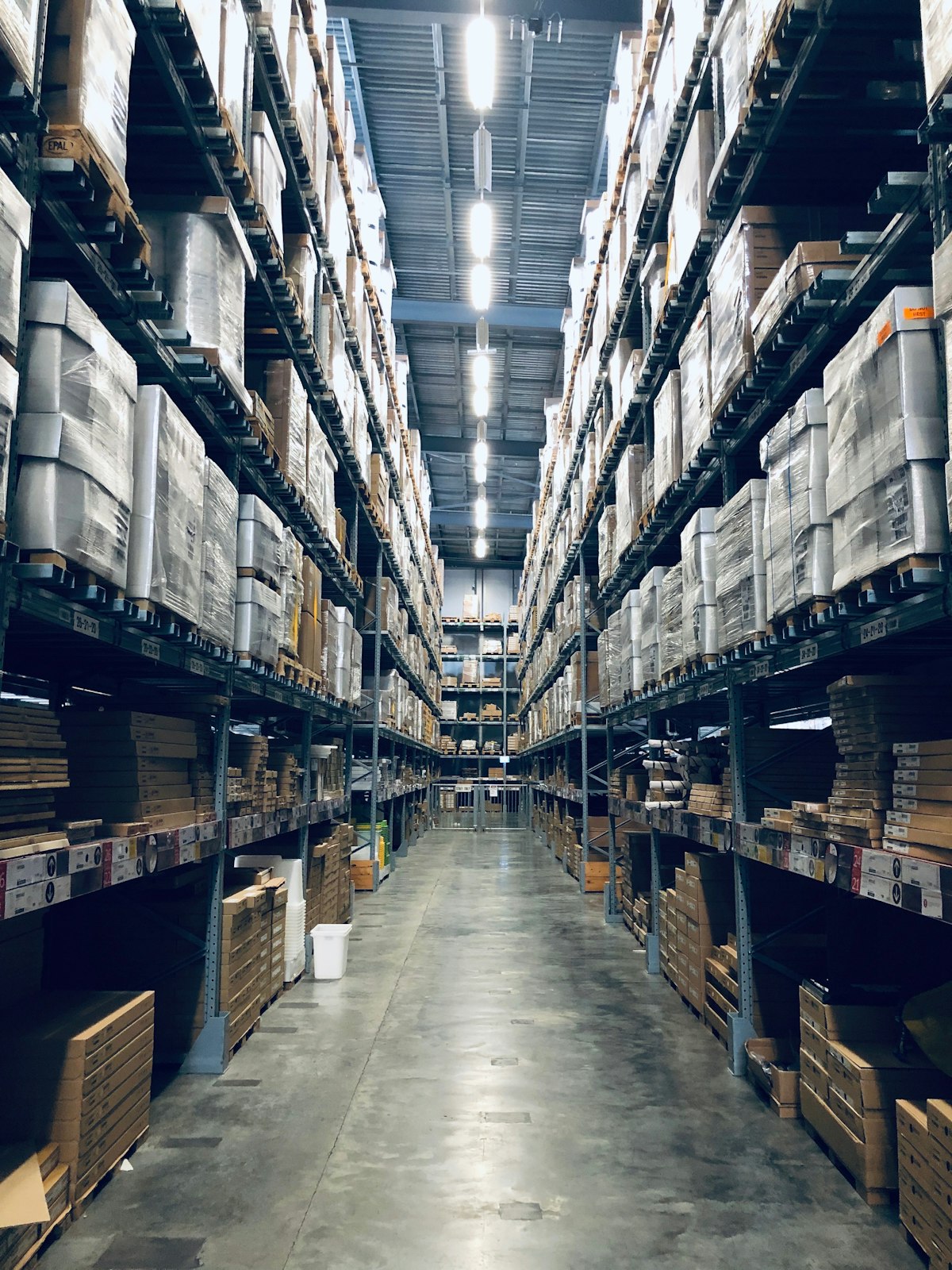
Cainiao Network Technology (菜鸟网络), Alibaba's logistics arm, has grown from a domestic Chinese parcel tracking platform into a global smart logistics company generating approximately $11 billion in FY2025 revenue. Cainiao's domestic network operates in partnership with China's top courier companies (STO Express, YTO Express, ZTO Express, SF Express), while its international arm operates bonded warehouses, cross-border fulfilment centres, and delivery networks across Southeast Asia, Europe, the US, and the Middle East. Cainiao processes over 100 million parcels per day domestically during peak seasons and operates 80+ overseas warehouses for international merchants. Alibaba had planned to IPO Cainiao in Hong Kong in 2024 at a valuation of ~$20B but withdrew the filing amid market conditions.
Alibaba Global Operations — 240K+ Employees, Six Business Groups, and a $150B+ Restructuring
In March 2023, Alibaba announced the most significant corporate restructuring in Chinese tech history — splitting the company into six independent business groups, each with its own CEO, board, and potential path to independent IPO or external financing. The six groups are: Taobao Tmall Commerce Group, Alibaba International Digital Commerce Group, Alibaba Cloud Intelligence Group, Cainiao Smart Logistics Group, Local Services Group, and Digital Media & Entertainment Group. This restructuring — announced just one month after Daniel Zhang became Chairman — was widely seen as an attempt to unlock shareholder value and reduce regulatory risk by creating smaller, more manageable entities. Eddie Wu replaced Zhang as CEO in September 2023, and Jack Ma — who had largely disappeared from public view since his 2020 speech — re-emerged to signal his continued involvement with the company.
Alibaba Revenue by Geography — FY2025
BABA vs Amazon vs JD.com — Total Return Comparison 2014–2025
The chart below compares indexed total return performance of Alibaba (BABA), Amazon (AMZN), JD.com (JD), and the Hang Seng Tech Index from Alibaba's 2014 IPO to 2025. BABA's story is extraordinary in its extremes: it was one of the world's greatest IPOs in September 2014 (raising $25B — the largest IPO in US history at the time), peaked as one of the world's five most valuable companies, and then suffered one of the most dramatic crashes of any $100B+ company — losing approximately 75% of its peak value between October 2020 and March 2022. The subsequent recovery has been partial. By contrast, Amazon delivered more consistent compounding through the same period, illustrating the regulatory and geopolitical risks unique to investing in Chinese technology companies. For deeper context on global equity markets, see our global financial markets report.
Alibaba 2026 — Key Facts & Forward Outlook
Alibaba enters 2026 at an inflection point. The regulatory storm of 2020–2022 has largely passed — the Chinese government signalled a shift toward supporting the private sector in late 2022, and regulators approved Ant Group's capital restructuring. China's domestic e-commerce market, while no longer growing at the double-digit rates of the 2010s, remains extraordinarily profitable. The key strategic questions for Alibaba in 2026 are: Can international commerce reach profitability? Can Alibaba Cloud close the gap with domestic rival Huawei Cloud? Can the six-business-group restructuring unlock shareholder value? And how will Alibaba navigate an intensifying US-China geopolitical environment that has already seen several US states restrict access to Alibaba-owned platforms? See our global financial markets statistics for broader context on Asia-Pacific market dynamics.
Frequently Asked Questions — Alibaba Statistics 2026
Alibaba's full-year FY2025 (ending March 2025) group revenue is estimated at approximately $130–135 billion. China Commerce contributes ~$82B (63%), International Commerce ~$15B (11%), Alibaba Cloud ~$14B (11%), Cainiao ~$11B (8%), and the rest from Local Services and Digital Media. Note: Alibaba reports in Chinese Yuan (RMB) — USD figures are converted at prevailing average exchange rates.
Alibaba's platforms collectively serve 1.4 billion+ annual active consumers globally — 900M+ in China (Taobao/Tmall) and 300M+ internationally (AliExpress, Lazada, Trendyol). China's 900M+ consumer base represents approximately 64% of China's total population and the largest single-country e-commerce audience in history.
Alibaba's market cap was approximately $200–250 billion as of early 2026, trading on both NYSE (BABA) and Hong Kong Stock Exchange (9988.HK). This represents a dramatic decline from its peak of $850B+ in October 2020 — driven by the regulatory crackdown, competition concerns, and US-China tensions. At $200B, BABA trades at roughly 10–12x earnings, considered cheap by global tech standards.
Alibaba Cloud generated approximately $14 billion in FY2025 revenue, growing ~14% YoY. It holds ~36% of China's cloud market — the largest share — and is the world's 4th-largest cloud provider globally. Alibaba Cloud operates in 29 regions worldwide and is particularly strong in Southeast Asia, where it leads the market. Operating margin is approximately 8%, expanding as the business scales.
In October 2020, Jack Ma publicly criticised China's state-owned banks and financial regulators at a forum in Shanghai. Two days before Ant Group's record $37B IPO, Beijing suspended it. The government then launched a broad antitrust investigation into Alibaba, resulting in a $2.8 billion antitrust fine in April 2021 — the largest tech antitrust fine in Chinese history. Alibaba's market cap fell from $850B to under $200B. Jack Ma spent extended time in Japan and Europe before gradually re-engaging with Alibaba's strategic direction from 2023 onward.
In FY2025, Alibaba's China Commerce revenue was approximately $82B (Taobao, Tmall, 1688, Freshippo) and International Commerce was approximately $15B (AliExpress, Lazada, Trendyol, Alibaba.com). International share grew from ~5% in FY2015 to ~15% in FY2025 — driven by Trendyol's Turkey expansion, AliExpress's European growth, and Lazada's Southeast Asia operations. The international segment is currently investing for growth and operates at a loss.
Amazon (FY2024: $638B revenue, $2.2T market cap) is significantly larger than Alibaba (FY2025: ~$130B revenue, ~$200B market cap) by both revenue and market cap. However, Alibaba's e-commerce GMV (~$1T+) is comparable to or larger than Amazon's. The key differences: Amazon owns its inventory and logistics (first-party model) while Alibaba is primarily a marketplace (third-party model with higher margins but lower revenue recognition). AWS ($107B) is much larger than Alibaba Cloud ($14B). Both are essential reading for understanding global e-commerce — see our Amazon Statistics article for a direct comparison.
Primary: Alibaba Group Investor Relations — Annual Reports (20-F)
Primary: Alibaba Group — Quarterly Earnings Results
Market Data: IDC Asia-Pacific Cloud Infrastructure Tracker · Canalys China Cloud Market Monitor · eMarketer China Retail E-Commerce Sales · iResearch China Digital Retail Report 2025
Additional: Bloomberg Terminal · SEC EDGAR 20-F filings · Synergy Research Group Cloud Market Share · MWPVL International Cainiao Logistics Research · Morning Consult Consumer Data · Statista Asia-Pacific Digital Economy Reports