
France Financial Markets 2026 — The EU's #1 Financial Centre and Luxury Capital
France's financial markets combine a unique mix of European institutional power and global luxury dominance. Euronext Paris is the Eurozone's largest equity market at €3.1T. BNP Paribas is Europe's largest bank. Amundi is Europe's largest asset manager. And the CAC 40 is the world's only major index where luxury goods companies — LVMH, Hermès, L'Oréal, Kering — represent nearly 30% of total market cap, making French equities uniquely exposed to global luxury demand cycles.
Post-Brexit Paris has emerged as the clear winner among EU financial centres. More than 50 global financial firms — including JPMorgan, Goldman Sachs, HSBC, and BlackRock — expanded Paris operations since 2016. Paris recaptured EU equity trading leadership from Amsterdam in 2022. The government's 'Choose France' initiative, regulatory reforms, and competitive financial rules have accelerated this shift. France's financial sector contributes approximately 4.5% to GDP and employs 400,000+ people directly in financial services. Understanding stock market terminology is essential for navigating French capital markets.
CAC 40 Historical Performance — 1987 to 2026
The chart below tracks the CAC 40 from its launch at 1,000 in December 1987 to crossing 8,000 for the first time in 2024. Key milestones: peak of 6,922 in September 2000 (dot-com era), crash to 2,400 in 2003 (-65%), recovery to 6,100 in 2007, GFC crash to 2,519 (-58%), COVID crash to 4,572 (-35%), and the remarkable post-2020 recovery driven by luxury sector dominance — LVMH, Hermès, and L'Oréal all hit successive all-time highs through 2021–2024.
Euronext Paris & French Index Family — Complete Statistics 2025
Euronext Paris is the flagship market of Euronext NV — Europe's leading pan-European exchange group operating markets in Paris, Amsterdam, Brussels, Dublin, Oslo, Lisbon, and Milan. With a market capitalisation of approximately €3.1 trillion for Paris-listed companies, it is the Eurozone's largest equity market. Euronext acquired Borsa Italiana (Milan) in 2021 for €4.4B, making it the EU's most powerful exchange infrastructure group with combined market cap of €7T+ across all markets.
| Index | Constituents | Market Cap | Launch | Div. Yield | P/E |
|---|---|---|---|---|---|
| CAC 40 | 40 | ~€2.5T | 1987 | ~3.2% | ~14x |
| SBF 120 | 120 | ~€2.9T | 1993 | ~2.8% | ~13x |
| CAC Mid 60 | 60 | ~€180B | 2011 | ~2.5% | ~15x |
| CAC Small | 130+ | ~€60B | 2011 | ~2.0% | ~16x |
| CAC All-Tradable | 300+ | ~€3.1T | 2011 | ~2.8% | ~13x |
Top CAC 40 Companies by Market Cap
Banque de France — Founded 1800, 2,437T Gold, and the ECB Rate Cycle
The Banque de France, founded in 1800 by Napoleon Bonaparte, is France's central bank and a key member of the European System of Central Banks. It participates in ECB monetary policy decisions, manages France's foreign exchange and gold reserves, and supervises French financial institutions (alongside the ACPR). France holds 2,437 tonnes of gold — the world's 4th-largest reserve (after the US, Germany, and Italy) — valued at approximately €160B+. The Banque de France stores most of this gold in subterranean vaults beneath the Hôtel de Toulouse in Paris — one of the world's most secure gold storage facilities.
French financial regulation operates through two main bodies: the ACPR (Autorité de Contrôle Prudentiel et de Résolution), attached to the Banque de France, which supervises banks and insurers; and the AMF (Autorité des Marchés Financiers), which regulates securities markets. Post-Brexit, the AMF approved 50+ new entities for EU market access. Learn more about central banks worldwide and how the Banque de France compares globally.
French Banking — €10T+ in Assets, Four G-SIBs, and Europe's Universal Banking Model
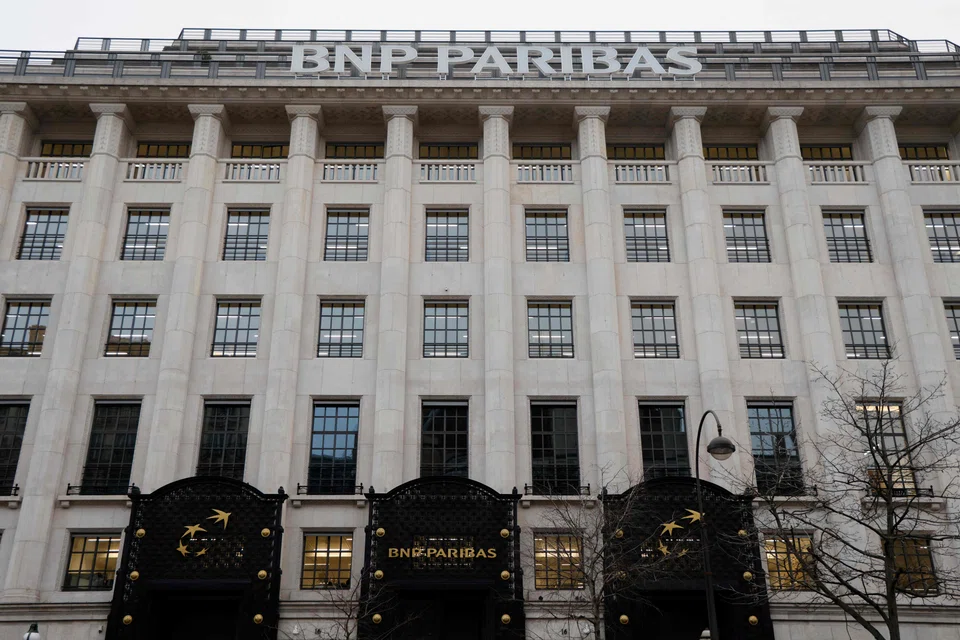
French banking assets exceed €10 trillion — Europe's second-largest banking system. France has four G-SIBs (Global Systemically Important Banks) — the most of any country in Europe: BNP Paribas, Crédit Agricole, Société Générale, and BPCE. BNP Paribas, with ~€2.9T in total assets, is Europe's largest bank, operating in 65+ countries. French banks are known for their universal banking model — combining retail banking, investment banking, and insurance (bancassurance) under one roof.
| Bank | HQ | Total Assets | Market Cap | G-SIB |
|---|---|---|---|---|
| BNP Paribas | Paris | ~€2.9T | ~€80B | YES |
| Crédit Agricole Group | Paris | ~€2.5T | ~€35B | YES |
| Société Générale | Paris | ~€1.7T | ~€25B | YES |
| BPCE / Natixis | Paris | ~€1.6T | Mutual | YES |
| Crédit Mutuel | Strasbourg | ~€1.0T | Mutual | NO |
| La Banque Postale | Paris | ~€300B | State | NO |
French OAT Market — €3T+ Outstanding and the EU's Second-Largest Sovereign Bond Market
OATs (Obligations Assimilables du Trésor) are French government bonds managed by Agence France Trésor (AFT). Total outstanding OATs exceed €3 trillion — the Eurozone's second-largest sovereign bond market after Italy. France's debt-to-GDP ratio stands at approximately 112%, reflecting decades of welfare state spending and pandemic-era borrowing. The 10-year OAT yield (~3.0% in 2025–26) typically runs 50–100 basis points above the equivalent German Bund, reflecting France's higher debt load.
When President Macron dissolved the National Assembly in June 2024 and called snap elections, OAT-Bund spreads surged from 50bp to 80bp within days — the widest since the 2012 Eurozone crisis. Investors feared a victory by Marine Le Pen's National Rally party, which had proposed expansionary fiscal policies potentially incompatible with EU deficit rules. French bank stocks (BNP Paribas, Société Générale) fell 10–15% in the week following the announcement. The crisis passed without catastrophe, but highlighted France's ongoing fiscal vulnerability and the sensitivity of OAT markets to political risk.
Paris — The EU's #1 Financial Centre Post-Brexit
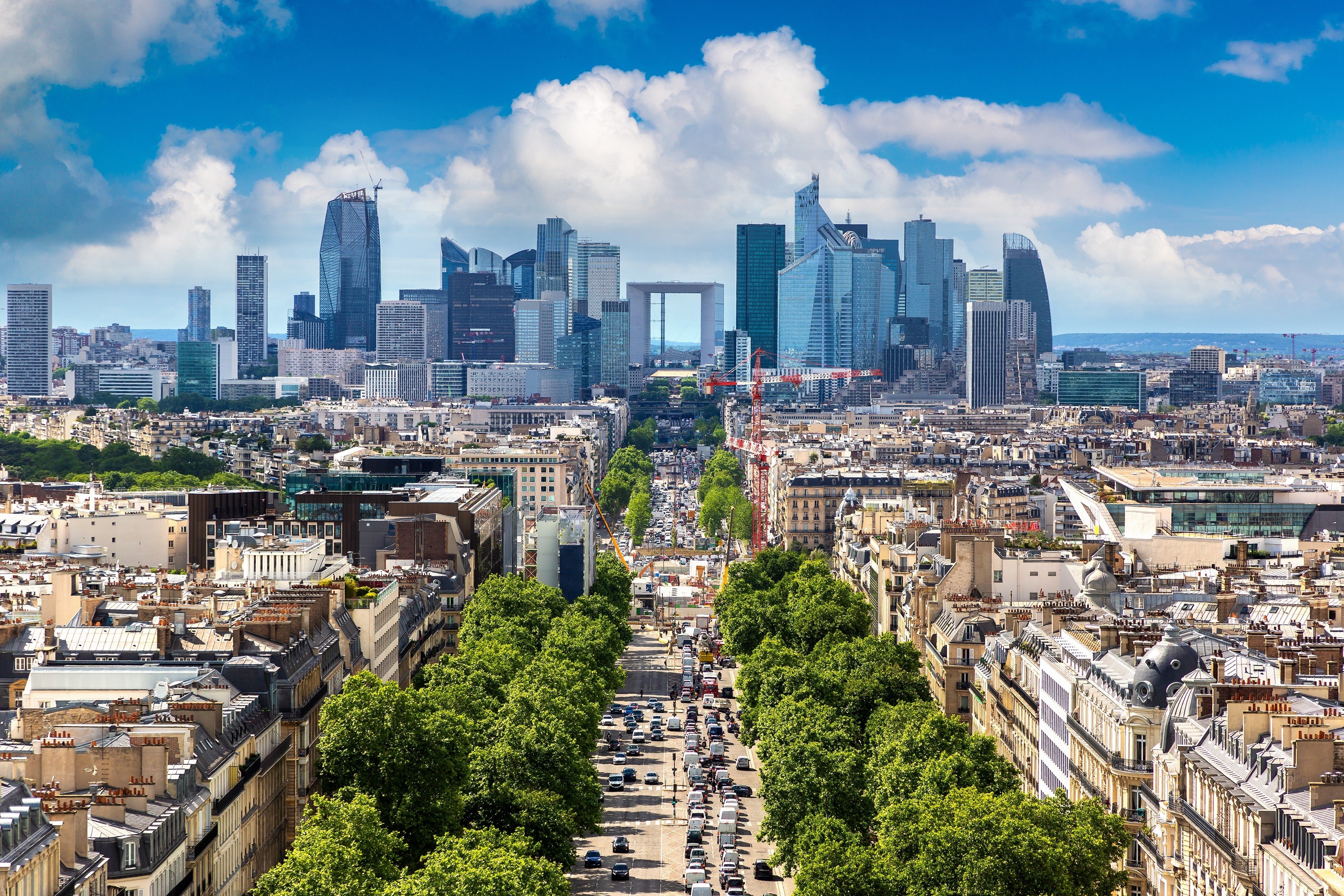
Post-Brexit, Paris has emerged as the European Union's dominant financial centre. By 2022, Paris overtook Amsterdam as the EU's largest equity trading hub by daily volume. More than 50 global financial firms have expanded Paris operations since 2016, including JPMorgan (doubled headcount), Goldman Sachs, Morgan Stanley, HSBC, and BlackRock. La Défense — Europe's largest purpose-built business district — hosts 3,500+ companies and 180,000 workers, and continues to attract financial sector relocations from London. The AMF (Autorité des Marchés Financiers) has approved 50+ new entities for EU market access since Brexit.
CAC 40 vs European Peers — Total Return Comparison 2000–2025
The line chart below compares indexed total return performance of the CAC 40, S&P 500, FTSE 100, and DAX 40 from 2000 to 2025. The CAC 40's post-2020 outperformance is driven almost entirely by the luxury sector — LVMH, Hermès, and L'Oréal together represent over 30% of the index and delivered extraordinary returns as global luxury demand rebounded. The CAC 40 offers a dividend yield of ~3.2%, comparable to other European indices but well above the S&P 500.
French Asset Management — €4.5T+ AUM, Amundi, and the Bancassurance Giant Complex
France manages approximately €4.5 trillion+ in AUM (AFG data) — over 20% of all European fund assets. Amundi (a Crédit Agricole subsidiary) is Europe's largest asset manager with ~€2.1T in AUM. AXA Investment Managers manages ~€900B, Natixis Investment Managers ~€1.1T (including affiliates), and BNP Paribas Asset Management ~€500B. France is also a global leader in green bond issuance — the French Treasury issued the world's first sovereign green OAT in 2017 and has issued €60B+ in green bonds since. See our global financial markets statistics for context.
French Fintech & Luxury — Europe's Largest Hub with 1,600+ Firms and $12B Annual Investment
France's CAC 40 is the world's most luxury-concentrated major index. LVMH alone (~€350B market cap) represents approximately 14% of the entire index — a single stock weighting that dwarfs any comparable concentration in the S&P 500 or DAX 40. Together, luxury stocks (LVMH, Hermès, L'Oréal, Kering) represent nearly 30% of CAC 40 market cap. France's fintech sector is growing rapidly — 800+ fintech firms, €2B+ in annual investment, Lydia, Qonto, and Alan are leading unicorns. The FCA-equivalent AMF regulatory sandbox has accelerated French fintech development.
France's luxury sector dominance in the CAC 40 is unmatched globally — Bernard Arnault (LVMH chairman) is consistently among the world's three wealthiest people. The global personal luxury market of $420B+ sees French brands capturing 30%+ share, including Louis Vuitton, Cartier (Richemont, Swiss but Paris-listed), Chanel, Dior, Givenchy, and Balenciaga. French fintech unicorns include Qonto (€4.4B), Alan (€4B), and Lydia. For digital asset context, see our crypto market statistics.
France Financial Markets 2026 — Key Facts & Forward Outlook
France's financial markets enter 2026 with Paris firmly established as the EU's leading financial centre. The CAC 40's record highs above 8,000 in 2024 were driven by luxury sector strength and post-COVID corporate earnings recovery. Key challenges include: France's debt-to-GDP (~112%) and fiscal deficit above EU limits creating OAT supply pressure; political uncertainty following 2024 snap elections; and LVMH's Chinese luxury demand sensitivity. Positives: Euronext continues gaining EU market share, BNP Paribas and Crédit Agricole are posting strong returns in the higher-rate environment, and Amundi's €2.1T AUM makes Paris an increasingly powerful global asset management hub.
Frequently Asked Questions — France Financial Markets
Euronext Paris ~€3.1T market cap, banking assets €10T+, OAT bonds €3T+, AUM €4.5T+. Four G-SIBs: BNP Paribas (€2.9T), Crédit Agricole (€2.5T), SocGen (€1.7T), BPCE (€1.6T). Paris is the EU's #1 financial centre post-Brexit.
The CAC 40 launched at 1,000 in December 1987, crossed 8,000 in 2024. Dividend yield ~3.2%. Unique globally for luxury dominance: LVMH alone is ~14% of index weight. Key constituents: LVMH, Hermès, TotalEnergies, L'Oréal, Airbus, BNP Paribas, Sanofi.
Founded by Napoleon in 1800. France's central bank and ECB member. Holds 2,437 tonnes of gold (world's 4th largest, ~€160B value). Supervises French banks via ACPR. Participates in ECB monetary policy decisions.
Paris hosts Euronext (EU's largest exchange), BNP Paribas (Europe's largest bank), Amundi (Europe's largest asset manager), AXA, and 50+ Brexit-relocated global firms. Recaptured EU equity trading leadership from Amsterdam in 2022.
OATs (Obligations Assimilables du Trésor) are French government bonds with €3T+ outstanding. The 10-year OAT yield (~3.0% in 2025) trades 50–100bp above German Bunds. France issued the world's first sovereign green bond in 2017 — €60B+ issued since.
LVMH (~€350B market cap) represents ~14% of CAC 40 total weight — making it more influential than any single stock in the S&P 500 or DAX 40. French luxury stocks collectively (LVMH, Hermès, L'Oréal, Kering) = ~30% of CAC 40 market cap.
France manages €4.5T+ in AUM (20%+ of EU fund assets). Amundi (€2.1T) is Europe's largest asset manager. Other major players: AXA IM (€900B), Natixis IM (€1.1T), BNP Paribas AM (€500B). France is a global leader in green bond issuance.
Primary: Banque de France — Statistics
Primary: Euronext — Paris Market Data
Primary: AMF — French Financial Markets Statistics
Additional: Agence France Trésor · FFA (French Insurance Federation) · AFG (French Asset Management Association) · BNP Paribas Investor Relations · Crédit Agricole Annual Report · ECB Eurozone Data