
Italy's Business Travel Market — Manufacturing Heritage Meets Global Event Power
Italy's corporate travel market occupies a distinctive position in the European business travel landscape. Unlike France or Germany — whose corporate travel economies are driven primarily by financial services and heavy industry respectively — Italy's business travel ecosystem is deeply rooted in its world-renowned manufacturing districts, fashion and luxury supply chains, food and wine export culture, and a uniquely dense network of specialised trade fairs that serve as annual or biannual global gathering points for entire industries.
The Italian business travel market was valued at EUR 28.6 billion in 2024, a 9.1% increase over 2023 levels and a full recovery from the COVID-19 disruption. Total international visitor arrivals surpassed 57 million — the highest on record — driven by the convergence of strong leisure tourism recovery and a robust rebound in trade fair attendance, corporate meetings, and incentive travel programs. For broader context on how Italy performs within the overall continental corporate travel ecosystem, European business travel statistics show Italy consistently registering above the continental average for trade show-driven inbound visitor spend — a structural distinction that sets it apart from most peer economies.
Milan is the undisputed anchor of Italy's corporate travel economy, commanding approximately 58% of all national MICE revenue and housing Fiera Milano in Rho-Pero — the largest exhibition centre in the European Union at 345,000 sqm of net indoor exhibition space. Beyond Milan, Italy's corporate travel geography is defined by a remarkable diversity of specialised event cities: Verona for wine and agriculture, Bologna for food technology and beauty, Florence for fashion and leather goods, Rimini for wellness and hospitality equipment, and Genoa for the maritime and energy sectors.
| Metric | Value / Figure |
|---|---|
| Business Travel Market Size (2024) | EUR 28.6 Billion |
| YoY Market Growth (2023–2024) | +9.1% |
| Projected Market Size (2030) | EUR 40.2 Billion |
| CAGR (2024–2030) | 5.8% |
| Total International Arrivals (2024) | 57 Million+ (Record) |
| Annual Business Visitors | ~8–9 Million |
| Average Spend per Business Visitor | EUR 1,620 per trip |
| National Hotel Occupancy (2024) | 67.2% |
| Milan CBD Hotel Occupancy (Weekday) | 76–80% |
| Milan Corporate Hotel ADR (2024) | EUR 204 |
| Milan Hotel RevPAR (2024) | EUR 158 — Record High |
| Fiera Milano Net Exhibition Space | 345,000 sqm (EU's Largest) |
| Annual Professional Events in Italy | 8,500+ |
| MICE Revenue — Italy National (2024) | EUR 10.4 Billion |
| Italy Share of European MICE Market | ~15% |
| Milan MICE Revenue Share (National) | ~58% |
| Salone del Mobile Visitors (2024) | 300,000+ from 181 countries |
| EICMA Motorcycle Show Visitors | 450,000+ |
| Business Travel GDP Contribution | ~EUR 12.8 Billion |
| Milan–Cortina 2026 Winter Olympics Investment | EUR 1.3 Billion+ |
EUR 28.6 Billion — Italy's Record Corporate Travel Spend in 2024
Italy's position as Europe's fourth-largest corporate travel market — behind the United Kingdom, Germany, and France — is defined by its unique industrial geography. The country's EUR 28.6 billion business travel market is not concentrated in a single financial or political capital but distributed across a constellation of specialised manufacturing and trade districts, each generating predictable annual and biannual corporate travel flows tied to the Italian calendar of international fairs. This structure makes Italy's corporate travel economy more resilient to macroeconomic volatility than markets dependent on discretionary executive travel — the pull of a Salone del Mobile or a Vinitaly is rooted in the commercial necessity of global sourcing and procurement cycles, not optional relationship management.
The average business visitor to Italy spends approximately EUR 1,620 per trip — slightly below France's premium but meaningfully above the European corporate travel average of EUR 1,340. Top inbound corporate source markets are Germany (19% of business visitors), the United States (14%), France (11%), and China (8%). Business visitors from Asia — particularly from China and Japan — tend to generate the highest per-trip spend, driven by fashion sourcing visits, automotive technology procurement, and food and beverage import buying concentrated in Milan, Bologna, and Verona. For a structural comparison of how corporate accommodation markets operate across Europe's two leading manufacturing economies, Germany's accommodation industry statistics offer a direct parallel — particularly the shared dynamic of extreme ADR volatility between trade fair and non-event periods that characterises Milan, Düsseldorf, and Frankfurt alike.

A Structural Catalyst for Italy's Corporate Travel Infrastructure
The Milan–Cortina 2026 Winter Olympic and Paralympic Games represent a EUR 1.3+ billion infrastructure investment in Northern Italy — including upgrades to Milan Malpensa and Linate airports, new high-speed rail connections to the Dolomites, and a legacy of world-class event venues. Post-Games, Milan is expected to leverage its Olympic profile to compete more directly with Paris and Barcelona for large-scale international association congresses — a high-margin MICE segment in which Italy has historically underperformed relative to its brand appeal and existing trade fair infrastructure.
Milan Hotels Hit Record RevPAR of EUR 158 — Fiera District Drives Peak Pricing
Italy's hotel sector delivered record performance in 2024, with national occupancy reaching 67.2% — 2.8 percentage points above the 2019 pre-pandemic level. Milan business hotels in the CBD and the Fiera Milano district achieved weekday occupancy rates of 76–80% during trade fair periods, with revenue dynamics heavily shaped by the event calendar. The Average Daily Rate for Milan corporate hotels reached EUR 204, and Revenue Per Available Room crossed EUR 158 — both all-time records that reflect the sustained pricing power commanded by Milan's hotel stock during high-demand trade fair weeks.
During flagship trade fair periods — Salone del Mobile, EICMA, HOST Milano — hotel rates in greater Milan surge dramatically. During Salone del Mobile 2024, average achieved rates for 4-star business hotels within 10km of Fiera Milano exceeded EUR 380 per night, while 5-star properties in Milan's Brera and Porta Nuova districts reached EUR 550–750. This extreme ADR volatility creates a bifurcated revenue model for Milan hoteliers: approximately 8–12 "super-peak" weeks per year generate the majority of annual revenue, with shoulder and off-peak periods requiring aggressive corporate account management. Extended-stay clients — Fiera tenants, headquartered multinationals, and automotive and fashion executives on multi-week assignments — are critically important to annual revenue stability for business-oriented properties across the city.
Milan, Rome, Bologna, Verona, and Italy's Specialised Trade Fair Cities
Italy's corporate travel geography is defined by specialisation. Unlike France — where Paris dominates with approximately 45% of MICE revenue — Italy has developed a genuinely polycentric business event ecosystem where each major city serves as the global capital of a specific industry vertical, making the national market uniquely resilient and internationally indispensable across multiple sectors simultaneously.
EUR 10.4 Billion in MICE Revenue — Italy's Trade Fair Calendar Is Unique in the World
Italy's trade show and MICE ecosystem is, per capita and per GDP, among the most dense in Europe. The country hosts over 8,500 professional events annually, generating total MICE revenues of approximately EUR 10.4 billion. The Italian Exhibition Group (IEG), Fiera Milano, BolognaFiere, and Veronafiere collectively represent the operational backbone of a national trade fair infrastructure that has no precise equivalent — each operator serving as the globally recognised authority for its sector's annual commercial convocation. The density and commercial authority of Italy's trade fair system stands in instructive contrast to markets like China, where China's corporate travel and exhibition industry operates at a fundamentally different scale with 85 million sqm of exhibition floor space — but Italy's events carry a depth of industry-embedded commercial authority that raw venue scale alone cannot replicate for sectors like furniture, fashion, and wine.
Italy's Flagship Trade Shows — The Global Industry Calendar
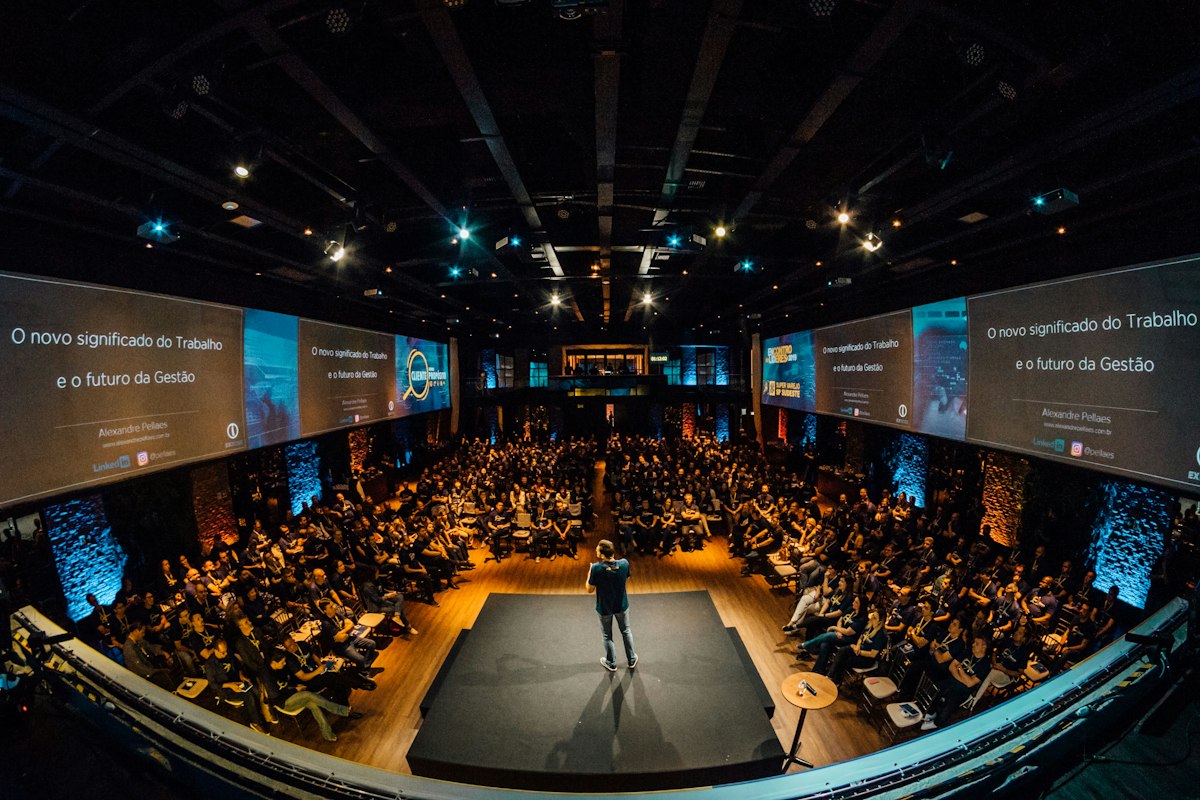
The Salone del Mobile in Milan is the world's most significant furniture and interior design trade fair, attracting over 300,000 visitors from 181 countries in 2024 and generating an estimated EUR 620 million in direct visitor spend in Milan during its six-day run. EICMA — the Milan motorcycle and cycling show — drew 450,000 visitors and 1,800 exhibitors in 2024, establishing itself as the global launch platform for the entire motorcycle industry. Vinitaly in Verona welcomed 93,000 operators from 143 countries, generating EUR 450 million in direct economic impact for the Verona area. COSMOPROF Bologna attracted 250,000 visitors from 150 countries — the world's largest professional beauty and cosmetics trade fair. These events are not merely commercial exhibitions — they are structurally embedded in the international procurement and product launch calendars of entire global industries, making Italy an obligatory annual destination for corporate buyers worldwide regardless of macroeconomic conditions.
Italy's trade fair system is one of the most sophisticated in the world — not because of the scale of individual venues but because of the extraordinary depth of industrial embedding. When the entire global furniture industry converges on Milan every April, it is not attending a trade show. It is attending the furniture industry's annual parliament.
— UFI European Exhibition Industry Report, 2024The Five Industries That Power Italy's Corporate Travel Economy
Six Forces Reshaping Business Travel in Italy
Trenitalia's Frecciarossa and Italo's AGV networks connect Milan, Bologna, Florence, Rome, and Naples with journey times under 3 hours, capturing 72–80% of business traveler modal share on these corridors. Italy's high-speed rail network is now the primary business travel mode between northern and central cities, substantially reducing aviation dependence and improving corporate carbon footprint reporting for Italian itineraries.
Italy's unique ability to embed trade events within its cultural landscape — Fuorisalone in Milanese palazzos, wine tastings in Tuscan villas, product launches at Roman amphitheatres — creates a MICE experiential premium no other European market can fully replicate. This "Made in Italy" corporate experience is increasingly priced into premium event packages at 25–35% above comparable northern European alternatives.
Fiera Milano, BolognaFiere, and Rimini Expo Centre have all committed to carbon-neutral operations by 2030. ISO 20121 sustainable event management certification is now required by major international exhibitors — particularly from Northern Europe and North America — as a condition of participation. Green venue investment totalling EUR 280 million is planned across Italy's top five exhibition operators through 2027.
Unlike northern European markets where hybrid adoption is near-universal, Italian trade fair operators have been deliberately selective. The tactile in-person interaction central to fashion sourcing, wine tasting, and furniture evaluation cannot be replicated digitally. Hybrid components are deployed for conference sessions while exhibition floor activity remains overwhelmingly in-person — a deliberate commercial choice that preserves the attendance volumes that define event authority.
Italy's unparalleled cultural appeal generates a bleisure extension rate of approximately 47% — the highest of any major European business travel destination. GBTA data indicates that Italian-destination bleisure extensions average 2.1 additional nights, generating significant incremental hotel revenue concentrated in the luxury and upper-upscale segments that disproportionately benefit Italy's premium hospitality operators.
Italian corporate travel management companies including BCD Travel Italia, American Express GBT Italy, and CWT Italy are deploying AI-powered booking optimisation, real-time policy compliance monitoring, and carbon tracking tools. TMC penetration among Italian large enterprises grew from 38% in 2019 to 61% in 2024 — reflecting a post-pandemic shift toward managed travel programs that deliver measurable cost and compliance improvements.
Infrastructure Gaps, Bureaucracy, and Peak-Period Accommodation Crises
Forecasts & Growth Projections to 2030
Italy's business travel market is forecast to grow from EUR 28.6 billion in 2024 to EUR 40.2 billion by 2030, representing a CAGR of 5.8% — in line with the European corporate travel average but with a distinctive growth profile shaped by the Milan–Cortina 2026 Winter Olympics, the continued global expansion of Italian fashion and food export sectors, and progressive infrastructure investment in high-speed rail and airport capacity. MICE revenue is projected to grow from EUR 10.4 billion to EUR 16.8 billion by 2030, with Milan maintaining its dominance but secondary cities — particularly Bologna, Verona, and Rome — growing at 1.5–2× the national MICE average as organiser demand diversifies. Compared with France's EUR 44.8 billion trajectory, Italy trails in total scale but leads on per-event commercial density — a distinction explored in detail in the analysis of business travel in France, where the structural difference between a fashion-and-food-fair-driven Italian market and France's ICCA congress-and-luxury-brand-anchored economy is most clearly apparent.
Key Growth Drivers Through 2030
Frequently Asked Questions
Italy's business travel market was valued at EUR 28.6 billion in 2024 — a 9.1% increase over 2023 — making it the fourth-largest corporate travel market in Europe. The market is projected to reach EUR 40.2 billion by 2030 at a CAGR of 5.8%, driven by fashion and luxury expansion, food export growth, the Milan–Cortina 2026 Winter Olympics infrastructure legacy, and high-speed rail network completion.
Yes. Milan is Italy's undisputed MICE capital, generating approximately 58% of all national MICE revenue. The city houses Fiera Milano in Rho-Pero — the EU's largest exhibition venue at 345,000 sqm of net indoor space — along with MiCo Milano Congressi (18,000 delegate capacity). Milan hosts Salone del Mobile (300,000+ visitors from 181 countries), EICMA (450,000+ visitors), HOST Milano, and Milan Fashion Week (50,000 industry visitors twice annually).
Fiera Milano in Rho-Pero is Italy's and the European Union's largest exhibition venue, with 345,000 sqm of net indoor exhibition space across 24 pavilions connected by 5km of internal roads. It hosts flagship global events including Salone del Mobile, EICMA, HOST Milano, and TUTTOFOOD. BolognaFiere (375,000 sqm gross) is Italy's second-largest complex by total area and hosts COSMOPROF — the world's largest professional beauty fair.
Italy's national hotel occupancy reached 67.2% in 2024 — 2.8 percentage points above 2019. Milan business hotels in the CBD and Fiera district achieved weekday occupancy of 76–80% during trade fair periods, with RevPAR crossing EUR 158 — an all-time record — and ADR for Milan business hotels reaching EUR 204. During Salone del Mobile, rates for 4-star properties exceeded EUR 380 per night across greater Milan.
Italy's flagship trade fairs include Salone del Mobile (Milan, 300,000+ visitors from 181 countries), EICMA (Milan, 450,000+ visitors — world's top motorcycle show), Vinitaly (Verona, 93,000 operators from 143 countries), COSMOPROF (Bologna, 250,000 visitors — world's largest beauty fair), CIBUS (Parma, food and beverage), and Pitti Uomo (Florence, 18,000+ international buyers). Each functions as the global reference point for its respective industry.
Milan experiences extreme ADR volatility tied to its trade fair calendar. During Salone del Mobile, average rates for 4-star business hotels exceed EUR 380 per night — while 5-star properties in Brera and Porta Nuova reach EUR 550–750. Approximately 8–12 "super-peak" trade fair weeks per year generate the majority of annual hotel revenue. Corporate travel managers for major furniture and fashion groups typically block rooms 12–18 months in advance for key event weeks.
The five largest corporate travel-generating sectors in Italy are fashion and luxury (Milan Fashion Week, LINEAPELLE), food and beverage (Vinitaly, CIBUS, Italian export sourcing across Tuscany and Emilia-Romagna), furniture and design (Salone del Mobile, Fuorisalone), automotive and motorcycle (EICMA, Emilia-Romagna Motor Valley), and pharmaceuticals and life sciences (Rome and Milan medical congresses).
Italy's business travel market is projected to grow from EUR 28.6 billion in 2024 to EUR 40.2 billion by 2030 at a CAGR of 5.8%. MICE revenue is forecast to reach EUR 16.8 billion. Key growth drivers include the Milan–Cortina 2026 Winter Olympics infrastructure legacy, Italian fashion and food export expansion, EUR 49.2 billion PNRR digital investment, high-speed rail network completion, and Italy's #2 global ranking for corporate incentive travel destination preference among US corporate planners.
Primary: GBTA (Global Business Travel Association) — European Business Travel Market Report 2024
Primary: UFI Global Exhibition Barometer 2024 — European Market Report
Additional: ENIT (Italian National Tourism Agency) Annual Report 2024 · Federcongressi&eventi Italy · Fiera Milano Annual Report · BolognaFiere Statistics · Veronafiere Annual Data · Statista Italy Business Travel · Mordor Intelligence European MICE Market · UNWTO International Tourism Statistics · SITE Incentive Travel Index · Istat Italian Tourism Data