
China's MICE & Corporate Travel Sector — The World's Most Ambitious Market
China's corporate travel and exhibition ecosystem is, by nearly every measurable dimension, the most significant in the world. From the cavernous exhibition halls of Shanghai's National Exhibition and Convention Center — the largest single venue on earth — to the sprawling business travel corridors connecting Beijing, Guangzhou, Shenzhen, and Chengdu, the scale and velocity of commercial activity in China's meetings, incentives, conferences, and exhibitions (MICE) market has no global parallel.
China's business travel market was valued at approximately USD 380 billion in 2024, cementing its position as the second-largest corporate travel market worldwide behind only the United States. When combined with the country's MICE industry — valued at USD 83.7 billion in 2024 and projected to reach USD 142.6 billion by 2030 at a CAGR of 9.3% — the combined addressable opportunity represents one of the most strategically important commercial segments in the global economy.
The post-pandemic recovery trajectory has been steep and decisive. Chinese domestic corporate travel rebounded sharply from 2022 lows, reaching 97% of pre-COVID volume by mid-2023 and surpassing 2019 benchmarks across most KPIs by Q1 2024. Exhibition attendance, hotel occupancy in business districts, air passenger loads on key domestic routes, and MICE venue booking rates all confirmed the structural resilience of China's corporate travel demand base. For context on how China's corporate travel dynamics compare with broader regional trends, business travel in Europe is also recovering strongly — though at meaningfully different growth rates and with distinct structural drivers shaped by regulatory environments and corporate spending cultures.
| Metric | Value / Figure |
|---|---|
| Business Travel Market Size (2024) | USD 380 Billion |
| MICE Market Size (2024) | USD 83.7 Billion |
| MICE Market Projection (2030) | USD 142.6 Billion |
| MICE CAGR (2024–2030) | 9.3% |
| Annual Corporate Travel Trips | 500 Million+ |
| Annual Trade Shows & Exhibitions | 13,000+ |
| Total Indoor Exhibition Floor Space | 85 Million+ sqm |
| Number of Exhibition Venues (2024) | 320+ |
| Largest Venue: NECC Shanghai (gross) | 1.47 Million sqm |
| Corporate Travel Budget Growth (2024) | +11.4% YoY |
| Avg Domestic Corporate Trip Spend | USD 760 |
| Avg International Corporate Trip Spend | USD 4,200 |
| China Share of APAC MICE Market | ~38% |
| Exhibition Industry Direct GDP Contribution | USD 48 Billion+ |
| Exhibition Industry Jobs Supported | 2.8 Million |
| Top Exhibition City — Shanghai Market Share | ~22% of national |
| International Exhibitors in China (2024) | 45,000+ |
| Online/Hybrid Event Adoption Rate | 64% of large events |
| Government Infrastructure Investment (2024) | CNY 180 Billion+ |
| Exhibition Industry Revenue CAGR (2023–2028) | 8.7% |
USD 380 Billion and the World's Highest Corporate Trip Volume
China's corporate travel market is a structural force of staggering proportions. With approximately 500 million corporate trips made annually — the majority domestic but increasingly international — China produces more business travel by volume than any other country on earth. The USD 380 billion total spend figure encompasses air tickets, hotel accommodation, ground transport, meals, and ancillary services consumed by business travelers, and represents roughly 19% of global business travel expenditure as tracked by the Global Business Travel Association (GBTA).
Recovery from the pandemic was initially hampered by China's extended zero-COVID policy, which suppressed both outbound and domestic travel through Q3 2022. The reopening that began in December 2022 triggered one of the sharpest demand rebounds in the history of global corporate travel markets. Domestic airline capacity recovered to 110% of 2019 levels by June 2023, and business hotel RevPAR in Tier 1 cities — Beijing, Shanghai, Guangzhou, and Shenzhen — surpassed 2019 peaks before year-end 2023.

Corporate travel policy in China has evolved significantly in the post-pandemic period. Chinese enterprises — both state-owned and private — have formalized travel management programs at a far higher rate than their pre-2020 counterparts, with Travel Management Company (TMC) penetration growing from an estimated 31% of mid-large enterprises in 2019 to 54% by 2024. This reflects both the maturation of the market and the influence of platform-based corporate travel tools from domestic providers such as Ctrip for Business (now Trip.Biz), Tongcheng Business, and Mafengwo Enterprise.
Outbound Business Travel Recovery: Uneven but Accelerating
Chinese outbound corporate travel reached approximately 72% of 2019 volumes in 2024. Key outbound destinations for Chinese business travelers include Southeast Asia (Singapore, Bangkok, Kuala Lumpur), Europe (Frankfurt, London, Paris), and the Middle East (Dubai, Abu Dhabi). Recovery in traditional Western markets remains slower due to visa policy frictions and geopolitical headwinds. Average spend per outbound trip is USD 4,200 — the highest of any outbound business travel origination market globally.
The World's Largest Exhibition Market — 85 Million sqm and 13,000 Annual Events
China's exhibition industry is, without qualification, the largest on the planet. With over 85 million square meters of total indoor exhibition floor space spread across 320+ purpose-built venues, and an annual calendar exceeding 13,000 trade shows, fairs, and exhibitions, China has constructed a physical and operational infrastructure for commercial gatherings that no other country approaches in scale. The China Association of Exhibition Centers (CAEC) reported that exhibitions in 2024 generated USD 48 billion in direct GDP contributions and supported approximately 2.8 million jobs across the value chain.
The National Exhibition and Convention Center (NECC) in Shanghai's Hongqiao district stands as the definitive symbol of China's exhibition ambitions. Opened in 2015 and expanded through 2021, it encompasses a gross floor area of 1.47 million square meters — making it the largest single exhibition and convention facility on earth. The NECC hosts the China International Import Expo (CIIE), an annual event that in 2024 attracted over 3,400 exhibitors from 152 countries and generated an estimated USD 78.4 billion in intended deals and contracts during its five-day run.
UFI (the Global Association of the Exhibition Industry) data confirms China's dominance: Chinese venues account for approximately 43% of all purpose-built exhibition floor space globally, up from 28% in 2010. The country added an average of 4.2 million sqm of new exhibition space per year between 2015 and 2023 — a construction pace driven by government-backed industrial parks, free trade zones, and city-level economic development strategies that treated MICE infrastructure as a catalyst for regional commercial activity.
China's exhibition sector is no longer simply the world's largest — it is becoming the world's most technologically sophisticated, with AI-driven matchmaking, real-time visitor analytics, and integrated digital-physical hybrid event platforms redefining what a trade show can accomplish for exhibitors and buyers alike.
— UFI Global Exhibition Barometer, 2024Shanghai, Beijing, and the Emerging Tier 2 MICE Powerhouses
China's MICE activity is heavily concentrated in a handful of major metropolitan centers, though the geographic distribution of events has been deliberately diversified through government policy. The following analysis covers the six most significant MICE destinations in mainland China.
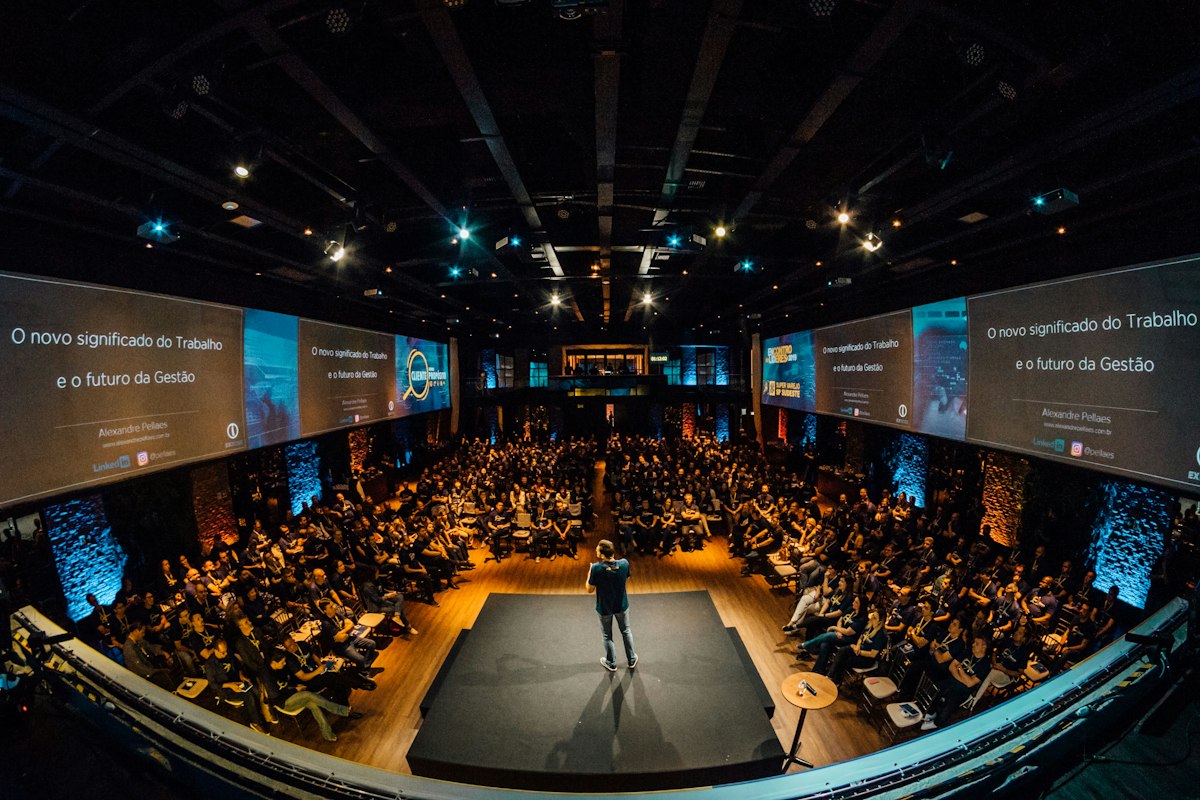
The Canton Fair: China's Exhibition Crown Jewel
The China Import and Export Fair — universally known as the Canton Fair — held biannually in Guangzhou remains the single most economically significant trade exhibition event in the world. The Spring 2024 Canton Fair attracted 286,000 overseas buyers from 214 countries and regions, with total intended procurement deals reaching USD 24.6 billion — a record for the event. Exhibitors numbered 28,530, representing virtually every sector of Chinese manufacturing from electronics and machinery to textiles, chemicals, and consumer goods. The event's total floor area spans over 1.18 million square meters across three phases operating over a three-week period — a logistical achievement with no equivalent anywhere in the global exhibition calendar.
Meetings, Incentives, Conferences, Exhibitions — The Four Pillars
China's MICE market is best understood by examining its four constituent segments, which each have distinct growth profiles, demand drivers, and competitive dynamics.
AI, WeChat Integration, and China's Lead in MICE Technology
China's corporate travel and MICE sector has become a global laboratory for hospitality and events technology, driven by the country's unique digital ecosystem, high mobile payment adoption, and a culture of technological pragmatism that deploys new tools at institutional speed. The integration of AI, big data, facial recognition, and super-app platforms into the meeting and exhibition experience has produced innovations that are increasingly being exported to global markets rather than imported from them.
Platforms like Smart Show China and 55Haitao deploy machine learning to predict and pre-schedule buyer-exhibitor meetings based on purchase history, company profile, and behavioral data. Match accuracy rates of 78%+ are reported — dramatically increasing the ROI of trade show participation.
The majority of China's domestic event registrations, badge printing, networking, and post-event follow-up are conducted entirely within the WeChat ecosystem. This creates unparalleled data continuity for organizers and removes friction at every touchpoint of the delegate journey.
Facial recognition check-in is now standard at major exhibition venues including NECC, Shenzhen World, and the CNCC. Average check-in times have fallen from 4.2 minutes to under 30 seconds, enabling mass-attendance events to process 100,000+ visitors daily without queuing bottlenecks.
64% of large-scale conferences in China now incorporate hybrid components. Domestic platforms — including VX Cloud Event, Huawei Cloud Events, and Alibaba's Cloud Summit platform — have displaced international providers and offer integrated streaming, real-time translation, and e-commerce transaction capabilities.
Alipay and WeChat Pay dominate at 96%+ of MICE venue transactions. This cashless environment enables instant exhibitor-buyer transaction closure on show floors, shortening sales cycles from weeks to minutes for standardized products and creating a fundamentally different commercial dynamic versus Western trade shows.
Chinese exhibition venues deploy floor-level sensor networks, Wi-Fi positioning, and AI video analytics to provide exhibitors with real-time footfall data, dwell time analysis, and competitor stand comparison — tools that are beginning to reshape how booth placement is sold and priced.
The corporate travel booking landscape in China is dominated by a handful of super-platforms. Ctrip (Trip.com Group) — the world's second-largest online travel agency by revenue — commands an estimated 45% share of online corporate air and hotel bookings in mainland China. Its enterprise product, Trip.Biz, serves over 800,000 corporate clients. Fliggy (Alibaba's travel platform) and Meituan-Dianping are strong competitors particularly in the SME segment. WeChat Mini Programs for hotel direct booking have grown rapidly, with major chains reporting 28–35% of their China corporate bookings now originating through WeChat channels.
CNY 180 Billion in State Investment — The Policy Engine Behind China's MICE Scale
China's exhibition and MICE infrastructure did not emerge organically — it was systematically built through decades of coordinated government policy at the national, provincial, and municipal levels. The 14th Five-Year Plan (2021–2025) explicitly designates the MICE industry as a "pillar service sector," mandating investment in convention and exhibition infrastructure as part of China's broader strategy to transition from an export-driven to a consumption and services-led growth model.
In 2024 alone, government-backed investment in new MICE infrastructure, transportation links to exhibition districts, and smart venue technology upgrades exceeded CNY 180 billion (approximately USD 25 billion). This includes the second phase expansion of Shenzhen World, the new Chengdu East International Convention Center, and the Xiamen International Conference and Exhibition Center Phase III. Government subsidies for hosting international events — covering venue fees, marketing support, and delegate facilitation — were made available to qualified organizers at rates reaching 30–50% of total event costs, making China one of the most financially attractive locations in the world for international conference organizers.
Hainan Free Trade Port: China's Newest MICE Frontier
The Hainan Free Trade Port — granted special economic status in 2020 and progressively operationalized through 2025 — offers zero tariffs on goods imported for exhibitions, simplified visa-on-arrival for international participants from 59 countries, and duty-free retail that creates a uniquely attractive incentive travel proposition. Hainan's MICE revenue grew 340% between 2021 and 2024, with the island projected to become a Top 5 China MICE destination by 2028.
Overcapacity, Talent Gaps, and Geopolitical Friction
Despite extraordinary scale and growth, China's corporate travel and MICE market faces significant structural challenges that constrain efficiency, international integration, and long-term sustainable expansion. Understanding these challenges is essential for any international operator, exhibitor, or investor seeking to engage with the market effectively. The accommodation infrastructure supporting the MICE ecosystem faces distinct pressures — for a comparative perspective on how venue-adjacent hospitality markets respond to structural challenges, accommodation industry dynamics in Germany — one of Europe's most mature MICE markets — offer instructive parallels in managing oversupply and quality stratification.
Forecasts & Growth Projections to 2030
China's corporate travel and MICE industry is on a firmly upward trajectory through the end of the decade, underpinned by structural demand drivers that are unlikely to weaken materially regardless of short-term economic or geopolitical volatility. The MICE market is projected to grow from USD 83.7 billion in 2024 to USD 142.6 billion by 2030, representing a CAGR of 9.3% that is among the highest of any major global market. Business travel spend is forecast to surpass USD 500 billion by 2028, driven by GDP expansion, rising corporate disposable income, growing outbound recovery, and the continued deepening of China's integration in global supply chains and trade relationships.
Key Growth Drivers Through 2030
Frequently Asked Questions
China's business travel market was valued at approximately USD 380 billion in 2024, making it the second-largest corporate travel market in the world after the United States. China generates over 500 million corporate trips annually and represents approximately 19% of total global business travel expenditure.
China's MICE (Meetings, Incentives, Conferences, Exhibitions) industry was valued at USD 83.7 billion in 2024 and is forecast to reach USD 142.6 billion by 2030 at a CAGR of 9.3%. China commands approximately 38% of the total Asia-Pacific MICE market and is projected to reach 45% share by 2030.
China hosts over 13,000 trade shows and exhibitions annually — making it the world's largest exhibition market by both venue space and event count. These range from hyper-specialized domestic industry fairs to global flagship events like the Canton Fair and CIIE, which attract hundreds of thousands of international buyers.
China's total indoor exhibition space exceeded 85 million square meters in 2024, spread across 320+ purpose-built facilities. Chinese venues account for approximately 43% of all purpose-built exhibition floor space globally. The National Exhibition and Convention Center (NECC) in Shanghai alone spans 1.47 million sqm — the world's largest single venue.
Shanghai leads with approximately 22% of national exhibition market share, followed by Beijing (~18%), Guangzhou, Shenzhen, Chengdu, Hangzhou, and Xiamen. Shanghai hosts over 2,000 large-scale events annually from the world's largest single venue, NECC. Emerging Tier 2 destinations including Chengdu and Hainan are growing the fastest in percentage terms through 2025.
The China Import and Export Fair (Canton Fair), held biannually in Guangzhou, is the world's largest trade fair by exhibitor and buyer count. The Spring 2024 edition attracted 286,000 overseas buyers from 214 countries and generated USD 24.6 billion in intended procurement deals. It spans over 1.18 million sqm across three phases and 28,530 exhibitors — representing the full breadth of Chinese manufacturing.
China leads globally in MICE technology adoption — deploying AI-powered matchmaking platforms, facial recognition check-in, WeChat-integrated event management, real-time footfall analytics, and Alipay/WeChat Pay for seamless floor transactions. 64% of large conferences now use hybrid formats. Facial recognition has reduced check-in times from 4+ minutes to under 30 seconds at major venues like NECC and Shenzhen World.
China's MICE industry is projected to grow from USD 83.7 billion in 2024 to USD 142.6 billion by 2030 (CAGR 9.3%). Exhibition floor space will surpass 100 million sqm by 2027. Business travel spend is forecast to exceed USD 500 billion by 2028. Key growth drivers include BRI trade expansion, technology sector exhibition growth, Hainan FTP maturation, and rising SME internationalization.
Average corporate travel spend per trip in China stands at approximately USD 760 for domestic trips and USD 4,200 for international trips — the highest outbound business traveler spend of any single origination market globally. Overall corporate travel budgets grew 11.4% in 2024 as enterprises expanded their event and travel programs following the post-pandemic normalization.
Primary: GBTA (Global Business Travel Association) — China Business Travel Market Report 2024
Primary: UFI Global Exhibition Barometer 2024
Additional: CAEC Annual Statistics Report 2024 · Statista China MICE Industry · Grand View Research China MICE Market Forecast · Mordor Intelligence Corporate Travel Asia-Pacific · CTA China Tourism Academy · WTTC Economic Impact China · China Import and Export Fair Committee