
Germany's Accommodation Sector — A Record-Breaking Rebound
Germany's accommodation industry is one of Europe's most significant and most diverse hospitality markets. Comprising hotels, inns, guesthouses, hostels, vacation apartments, campsites, and serviced residences, the sector is a central pillar of both the national economy and international tourism. After enduring the most severe disruption in its modern history during the COVID-19 pandemic years of 2020 and 2021, the industry has not only fully recovered — it has exceeded every pre-pandemic benchmark in 2024.
The broader Germany hospitality market was valued at USD 49.91 billion in 2025 and is projected to reach USD 63.32 billion by 2031 at a CAGR of 4.05%. Germany recorded a historic 496.1 million overnight stays in 2024 — 0.1% above the previous all-time record set in 2019 — marking a definitive full recovery. The country welcomed 37.4 million international visitors, placing it 8th globally in the UNWTO World Tourism Ranking for 2024. Tourism-related spending reached $40.1 billion, a 6.1% increase on 2023, while the WTTC projects the sector to generate EUR 499 billion in GDP contribution and 6.5 million jobs in 2025.
| Metric | Value / Figure |
|---|---|
| Hospitality Market Size (2025) | USD 49.91 Billion |
| Projected Market Size (2031) | USD 63.32 Billion |
| CAGR (2026–2031) | 4.05% |
| Hotel Industry Revenue (2025 est.) | €36.4 Billion |
| Hotel Industry Revenue Forecast (2030) | €39.2 Billion |
| Hotel Industry Revenue CAGR (2025–2030) | 1.5% per year |
| Total Overnight Stays (2024) | 496.1 Million — All-Time Record |
| Domestic Overnight Stays (2024) | 410.8 Million |
| International Overnight Stays (2024) | 85.3 Million (+5.4% YoY) |
| International Visitor Arrivals (2024) | 37.4 Million (+7.5% YoY) |
| UNWTO Global Ranking (2024) | 8th Most Visited Country |
| WEF Tourism Development Index (2024) | 6th Globally |
| International Visitor Spending (2024) | $40.1 Billion (+6.1% YoY) |
| Number of Accommodation Establishments | ~48,200 |
| Number of Hotel Establishments (2023) | 12,166 |
| Total Bedplaces (2023) | 814,000 |
| Projected Bedplaces (2028) | 877,000 |
| 3-Star Hotels (Jan 2024) | ~3,900 |
| 4-Star Hotels (Jan 2024) | 2,400+ |
| Workforce (Hotel & Restaurant, 2023) | 1.83 Million |
| T&T Total Employment (direct + indirect, 2024 est.) | 6.3 Million Jobs |
| WTTC GDP Contribution (2025 forecast) | EUR 499 Billion |
| Accommodation Expenditure (2023) | €19.7 Billion |
| Accommodation Revenue (2023) | €42 Billion |
| Accommodation Revenue Forecast (2028) | €51.7 Billion |
| Mid & Upper-Mid Hotels Market Share (2025) | 47.22% |
| South Germany Market Share (2025) | 30.07% |
| East Germany CAGR (2026–2031) | 6.18% |
| OTA Booking Share (2025) | 31.74% |
| Serviced Apartment CAGR (to 2031) | 8.12% |
| UEFA Euro 2024 Economic Contribution | EUR 7.44 Billion |
| Camping & Caravanning Revenue (2024) | €20.8 Billion |
| Average Length of Stay (2024) | 13.1 Days |
48,200 Establishments, 496 Million Nights — Germany Sets an All-Time Record
Germany's accommodation market is the most diverse in Central Europe, offering options across the full spectrum — from budget-friendly hostels and family-run guesthouses to international luxury chains and historic castle hotels. As of 2024, approximately 48,200 open accommodation establishments operate across the country, with hotels comprising the largest and most commercially significant segment.
The hotel subsector alone counts 12,166 establishments as of 2023, with 3-star hotels being the most numerous category at approximately 3,900 properties, followed by over 2,400 four-star hotels. IBISWorld estimates hotel industry revenue reached €36.4 billion in 2025, recovering strongly from pandemic lows via an extraordinary 14.1% average annual growth rate from 2020 to 2025. Between 2025 and 2030, more moderate growth is projected at 1.5% per year, reaching €39.2 billion by 2030.
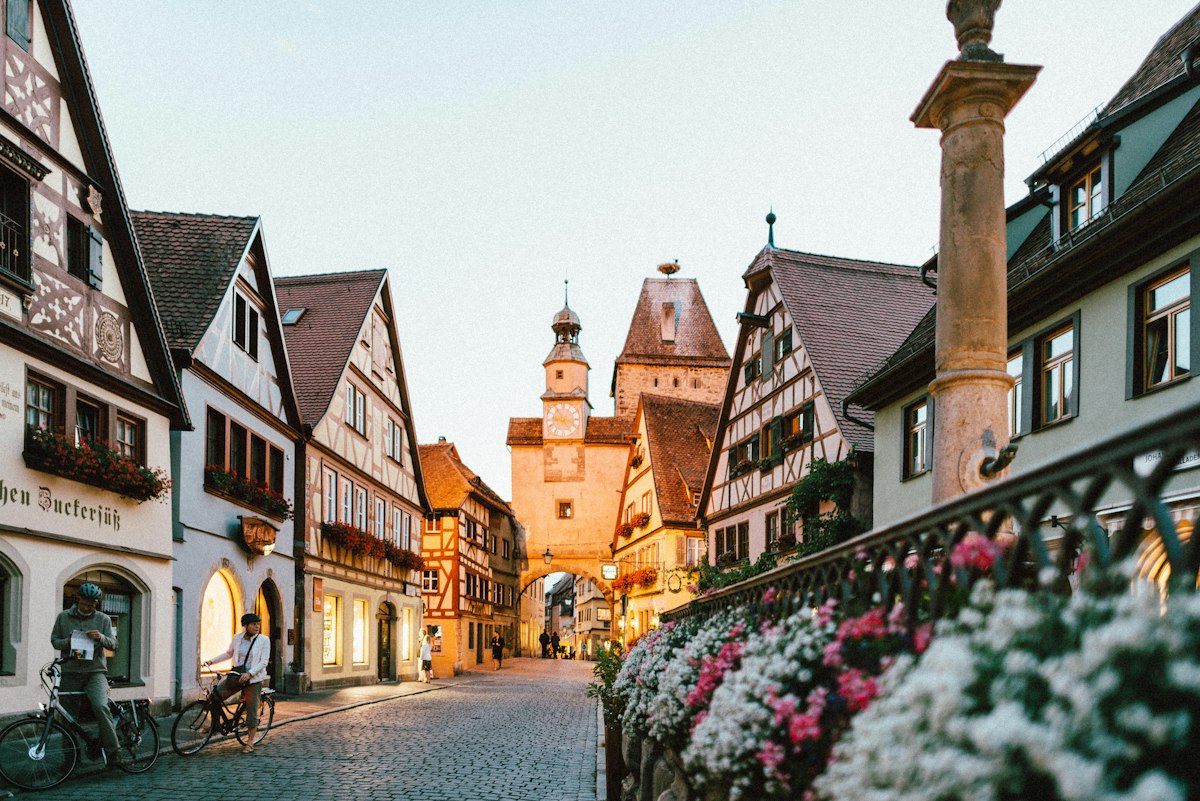
By accommodation class, mid and upper-mid-scale hotels captured 47.22% of market share in 2025, reflecting German travelers' preference for reliable comfort without luxury premiums. These properties dominate transport-linked plots, serve corporate negotiated rates, and maintain efficient staff-to-room ratios. Luxury remains vibrant at the top end — Kempinski's Nymphenburg Palace Royal Residence in Munich commands up to EUR 25,000 per night, underscoring the strong price elasticity among high-net-worth international visitors. Serviced apartments are the fastest-growing accommodation subtype, projected to expand at a CAGR of 8.12% through 2031, driven by extended-stay business travel and longer-duration leisure visitors.
International Chains Accelerating into Germany — No Single Player Holds 5%+
Despite increasing M&A activity, Germany's hotel market remains highly fragmented — no single operator holds more than 5% market share. International chains like B&B Hotels (targeting 400+ locations from its current ~300), Accor, Marriott, IHG, and Radisson are all expanding aggressively. B&B Hotels signed a portfolio agreement in September 2024 to add 30 hotels across Europe, with Germany as a core market. Meanwhile, office-to-hotel and residential-to-hotel conversion projects are rising as construction costs deter ground-up development.
Berlin, Munich & Hamburg Lead — East Germany is the Next Growth Frontier
Germany's tourism is anchored by its major cities, each offering distinct appeal to domestic and international visitors. South Germany generated 30.07% of the national hospitality market in 2025, led primarily by Munich and Bavaria. East Germany, while starting from a smaller base, is on track to deliver the fastest regional growth at a CAGR of 6.18% between 2026 and 2031, driven by increasing interest in Berlin's cultural scene and the rising appeal of Leipzig, Dresden, and other eastern cities.
37.4 Million International Arrivals — Germany Ranks 8th in the World
Germany welcomed 37.4 million international visitors in 2024, a 7.5% increase year-on-year, making it the 8th most visited country globally according to UNWTO's 2024 World Tourism Ranking. International overnight stays totaled 85.3 million — up 5.4% on 2023 though still 5.1% below 2019's pre-pandemic peak, indicating that international recovery, while strong, still has ground to cover. Total visitor spending reached $40.1 billion, already surpassing the 2019 level of $41.8 billion in real terms when adjusted for currency movements.
Germany ranked 6th globally in the World Economic Forum's Travel and Tourism Development Index (TTDI) in 2024 — the highest competitiveness ranking in continental Europe outside France. It also holds the distinction of being the #1 cultural destination among European travelers, with over 25% of all international holiday trips to Germany classified as cultural trips. The country's 53 UNESCO World Heritage Sites rank it among the top three countries globally by total listings.

Top Source Markets — Who Visits Germany?
Germany's largest international source markets in 2024 were dominated by neighboring countries, reflecting strong intra-European tourism flows. The Netherlands led with 11.0 million arrivals, followed by the USA (7.2 million), Switzerland (6.0 million), Great Britain (5.3 million), and Austria (4.4 million). The United States remains the most significant long-haul source market and the single most important high-yield visitor segment, with US travelers spending significantly more per trip than European counterparts.
Seasonal peaks concentrate in July and August, with July recording the highest monthly arrivals at 4.78 million in 2024, followed by August (4.36 million). December represents a uniquely German tourism phenomenon — the Christmas Market season transforms cities including Nuremberg, Cologne, Dresden, and Frankfurt into globally recognized winter destinations, sustaining strong accommodation demand well into the low season.
Germany ranks 1st place as a cultural destination among all worldwide travel by Europeans, with over 25% of all international holiday trips to Germany classified as cultural trips. It is the only country in the G7 to rank in the top 10 of both UNWTO arrivals and WEF tourism competitiveness simultaneously.
— German National Tourist Board (GNTB), Facts and Figures 2024Hotels, Apartments, Campsites & Beyond — A Multi-Segment Market
Germany's accommodation industry is defined by variety. While hotels dominate the commercial segment in terms of revenue, alternative accommodation types have grown substantially in both volume and economic importance. Understanding the full spectrum of the market is essential for operators, investors, and policymakers.
| Segment | Key Statistic | Trend |
|---|---|---|
| Hotels (all classes) | 12,166 properties; 190.7M nights (2023) | Stable / Consolidating |
| 3-Star Hotels | ~3,900 properties — largest category | Most represented star class |
| 4-Star Hotels | 2,400+ properties — fastest growing | Growing |
| Inns (Gasthöfe) | 5,449 establishments (2023, -3.7% YoY) | Declining |
| Serviced Apartments | 8.12% CAGR projected to 2031 | Fastest Growing Segment |
| Mid/Upper-Mid Hotels | 47.22% national market share (2025) | Dominant segment |
| Luxury Hotels | EUR 25,000/night ceiling (Munich) | Vibrant; HNWI-driven |
| Camping & Caravanning | €20.8B revenue; 74M nights (2024) | Record High |
| Budget / Economy Hotels | B&B Hotels: ~300 locations → 400+ target | Expanding aggressively |
| Vacation Homes / Airbnb | Growing in leisure destinations | Competitive threat to hotels |
| Total Bedplaces (2023) | 814,000 → 877,000 by 2028 | +1.2% annually |
Camping and caravanning emerged as one of the most surprising growth stories of 2024, generating €20.8 billion in revenue and 74 million overnight stays — both record figures. Germany's extensive network of purpose-built campsites and caravan parks, combined with post-pandemic preferences for nature-based and independent travel, have elevated outdoor accommodation to a mainstream market segment rather than a niche offering.
1.83 Million Jobs — and a Deepening Skills Shortage
In 2023, approximately 1.83 million people were gainfully employed in Germany's hotel and restaurant industry — accounting for 3% of all German employees aged 15 and over, according to Destatis and the German Federal Statistical Office's European hospitality benchmarking. When the full travel and tourism ecosystem is included — encompassing transportation, retail, cultural and entertainment services, and indirect supply chain employment — the WTTC estimates total industry employment contribution at 6.3 million jobs in 2024, projected to grow further in 2025.
Despite this scale, the industry faces an acute and structural workforce challenge. Germany's accommodation sector has been significantly impacted by a post-pandemic labor exodus, an aging demographic, and a persistent image problem that makes it less competitive for talent against other service industries offering higher wages, better work-life balance, and more predictable hours. The situation is most severe in seasonally dependent regions where overnight stay volumes fluctuate dramatically across the calendar year.
Seven Forces Reshaping German Accommodation in 2025 and Beyond
Online booking now dominates the industry, with OTAs holding 31.74% of market share in 2025 and direct digital bookings growing at 9.86% CAGR. AI travel planners, dynamic pricing systems, and contactless check-in are becoming standard. The EU Digital Markets Act's ban on price-parity clauses is accelerating direct booking strategies.
Eco-certified properties command measurable rate premiums. Germany's strict environmental regulations and consumer preference for responsible travel have positioned sustainability from a marketing option to an operational imperative. LEED, Green Key, and EU Ecolabel certified properties are growing across all accommodation tiers.
A 2024 SAP Concur survey found that 65% of business travelers in Germany engage in bleisure travel — combining business and leisure. This trend drives demand for premium accommodation, guided tours, wellness services, and local dining. Bleisure travelers typically spend more and stay longer than traditional segments.
Camping and caravanning generated a record €20.8 billion and 74 million overnight stays in 2024. The segment has been transformed from budget fallback to aspirational lifestyle choice, with premium glamping sites, eco-lodges, and design campsites attracting high-spending domestic and European leisure visitors.
Airbnb and alternative platforms represent the single biggest competitive challenge for traditional accommodation providers in leisure markets. In response, hotels are differentiating through personalised service, F&B offerings, loyalty programmes, and apartment-hotel hybrid formats that replicate residential flexibility within a serviced context.
UEFA Euro 2024 contributed EUR 7.44 billion to Germany's local economies across 10 host cities. The Bauma trade fair pushed Munich's April occupancy to 97.2%. Germany's pipeline of trade fairs (Messe Frankfurt, Messe Düsseldorf, Messe München) generates consistent high-value business travel that sets Germany apart from purely leisure-oriented competitors.
Germany's 53 UNESCO World Heritage Sites, medieval towns, Christmas markets, and Romantic Road castle route attract cultural travelers willing to pay premium prices for authentic experiences. Cultural trips represent over 25% of all international holiday visits, making heritage tourism the most commercially significant leisure segment.
OTAs Hold 31.74% — But Direct Digital is the Fastest-Growing Channel
The way Germany's accommodation is booked has been structurally transformed by digital platforms. Online Travel Agencies (OTAs) like Booking.com, Expedia, and HRS held a 31.74% share of market bookings in 2025. However, direct digital bookings — made via hotel websites, apps, and brand platforms — are growing at a CAGR of 9.86%, outpacing every other distribution channel.
The European Union's Digital Markets Act has been a significant catalyst for this shift. By classifying major OTAs as "gatekeepers" under the regulation and banning price-parity clauses that previously prevented hotels from offering lower rates on their own websites, the Act has given operators the commercial freedom to incentivize direct bookings through exclusive rates, loyalty benefits, and add-on services. Hotels that have invested in CRM and loyalty economics are already reaping measurable margin improvements from this channel shift.
Direct Booking Growth at 9.86% CAGR — The Most Important Channel Shift of the Decade
For accommodation operators, capturing the direct booking channel is the single highest-margin strategic priority. A reservation made directly costs 15–25% less in distribution fees than the same booking through an OTA. With 9.86% annual growth, direct digital is overtaking OTA growth for the first time — marking a fundamental rebalancing of Germany's accommodation distribution landscape that will reshape competitive economics through 2031.
Forecasts & Growth Projections to 2031
The German accommodation and hospitality industry is positioned for sustained, structurally supported growth through the end of the decade. The hospitality market is forecast to expand from USD 49.91 billion in 2025 to USD 63.32 billion by 2031 at a CAGR of 4.05%. Hotel industry revenue specifically is projected to grow from €36.4 billion to €39.2 billion by 2030. Accommodation revenue more broadly — encompassing all establishment types — is forecast to rise from €42 billion (2023) to €51.7 billion by 2028.
The WTTC projects that Germany's travel and tourism sector will contribute a record EUR 499 billion to GDP and support 6.5 million jobs in 2025 — both all-time highs. The global competitiveness of Germany's tourism offer is confirmed by its top-10 UNWTO arrival ranking and 6th-place WEF TTDI score, both of which reflect structural advantages that will sustain growth regardless of short-term economic cycles.
Key Growth Drivers
Frequently Asked Questions
The Germany hospitality market was valued at USD 49.91 billion in 2025 and is projected to grow to USD 63.32 billion by 2031 at a CAGR of 4.05%. The hotel subsector specifically is expected to reach €39.2 billion by 2030, while total accommodation revenue is forecast at €51.7 billion by 2028.
Germany recorded a record-high 496.1 million overnight stays in 2024 — 0.1% above the previous record set in 2019. Domestic guests accounted for 410.8 million stays, while international guests contributed 85.3 million (+5.4% year-on-year).
Germany welcomed approximately 37.4 million international visitors in 2024, a 7.5% increase year-on-year. This placed Germany 8th globally in the UNWTO World Tourism Ranking. Visitor spending reached $40.1 billion — a 6.1% increase on 2023.
There are approximately 48,200 open accommodation establishments in Germany, including around 12,166 hotels, 5,449 inns, plus hostels, guesthouses, vacation homes, campsites, and serviced apartments. 3-star hotels are the most represented category with ~3,900 properties.
In 2023, roughly 1.83 million people were employed in Germany's hotel and restaurant industry — approximately 3% of the total national workforce. Including indirect and induced employment, travel and tourism supports an estimated 6.3 million jobs across Germany's economy.
Serviced apartments are the fastest-growing accommodation format in Germany, projected to expand at a CAGR of 8.12% through 2031. Camping and caravanning is also experiencing record growth, generating €20.8 billion in revenue and 74 million overnight stays in 2024 — both new records.
South Germany generated 30.07% of the national hospitality market in 2025, primarily driven by Munich and Bavaria. However, East Germany is the fastest-growing region with a projected CAGR of 6.18% between 2026 and 2031, led by Berlin, Leipzig, and Dresden.
Hotel industry revenue is projected to grow from €36.4 billion (2025) to €39.2 billion by 2030 at 1.5% annually. Broader accommodation revenue is forecast to hit €51.7 billion by 2028. The overall hospitality market is projected to reach USD 63.32 billion by 2031.
Primary: Statista — Accommodation Industry in Germany
Primary: Mordor Intelligence — Germany Hospitality Market Report 2025
Primary: Destatis (German Federal Statistical Office) — Tourism & Hospitality Data 2024
Additional: IMARC Group Germany Hospitality Market Report · IBISWorld Germany Hotels Industry Analysis 2025 · WTTC Germany Economic Impact 2025 · German National Tourist Board (GNTB) Facts & Figures 2024 · CoStar / STR Germany Hotel Performance Data · ReportLinker Germany Hospitality Outlook 2024–2028 · GNTB DZT Press Releases · CEIC Germany Accommodation Data · World Tourism Forum Institute