
America's Favorite Food — A $50 Billion Industry Navigating Value, Technology, and Delivery Disruption
The United States pizza restaurant industry occupies a uniquely resilient position in the American foodservice landscape. Pizza is not merely a menu category — it is the country's most consumed restaurant food, generating annual industry revenues that rival those of some entire national economies. The industry reached a projected $50.1 billion in revenue in 2024, generated by more than 74,000 pizzeria businesses spanning independent corner shops, regional chains, and four globally dominant franchise systems, according to IBISWorld's Pizza Restaurants in the U.S. Market Research Report.
By 2026, the market stands at $49.5 billion — a marginal contraction from 2024's peak reflecting a post-pandemic normalisation of consumer spending and delivery habits, not a structural decline. The fundamentals remain sound: Americans consume approximately 3 billion pizzas per year, pizza remains the top food ordered via delivery platforms, and the four major chains — Domino's, Pizza Hut, Little Caesars, and Papa Johns — continue to generate combined U.S. revenues exceeding $23 billion annually. For context on how the broader quick-service restaurant sector's largest player structures its revenues over time, the McDonald's revenue trajectory from 2005 to 2026 offers an instructive parallel — demonstrating how QSR giants weather consumer spending cycles through brand loyalty and system-wide operational leverage, a dynamic the pizza category replicates through its own franchise infrastructure.
The competitive landscape is defined by a zero-sum battle at the top — when one major chain executes well on value and technology, the others feel measurable pressure — while the independent segment, comprising 40–60% of all pizzeria locations, competes on craft, local loyalty, and experiential differentiation. Looking forward, the market is projected to grow steadily to $50.7 billion by 2034 at a CAGR of 2.95%, driven by digital ordering expansion, menu innovation, and the continued migration of casual dining customers toward fast-casual and delivery pizza formats.
| Metric | Value / Figure |
|---|---|
| Industry Revenue (2024) | $50.1 Billion |
| Industry Revenue (2026) | $49.5 Billion |
| YoY Revenue Change (2025) | −0.3% |
| Projected Market Size (2034) | $50.7 Billion |
| CAGR (2026–2034) | 2.95% |
| Number of U.S. Pizzeria Businesses (2025–2026) | 75,736 |
| Industry Business Growth CAGR (2020–2025) | +0.9% per year |
| Consumer Spend — QSR Pizza (2024) | ~$42.1 Billion |
| Consumer Spend — Pizza Delivery (2024) | $16.9 Billion |
| Domino's U.S. Sales (2024) | $9.5 Billion |
| Domino's U.S. Units (2024) | 7,014 |
| Pizza Hut U.S. Sales (2024) | $5.29 Billion |
| Little Caesars U.S. Sales (2024) | $4.93 Billion |
| Papa Johns U.S. Sales (2024) | $3.86 Billion (est.) |
| Operators Using Online Ordering | 78%+ |
| Third-Party Delivery — Best ROI (Operators) | 32.4% report |
| Pizza Delivery Decline (2022–2025) | 61% → 55% monthly order rate |
| Frozen Pizza Retail Sales (52 wks to Jul 2025) | ~$7.5 Billion |
| Hot Honey Topping YoY Growth | +52% |
| Voice AI Callers Unaware of Robot (2026) | ~40% |
| Independent Pizzeria Share of Locations | 40–60% |
$50.1 Billion in 2024 — A Decade High Driven by Value Strategies and Digital Ordering
The United States pizza restaurant market projected revenues of $50.1 billion in 2024, generated by more than 74,000 pizzeria businesses — a figure that represents both the sustained resilience of pizza as a consumer staple and the structural power of the delivery-and-carryout business model that has defined the industry's recovery from pandemic disruption. According to data referenced in Domino's Pizza SEC filings, U.S. consumers spent approximately $42.1 billion at quick-service pizza restaurants in 2024, up nearly 2% from $41.3 billion in 2023, while pizza delivery specifically generated $16.9 billion — a modest rise from $16.5 billion the prior year.
The 2024 performance was shaped by a pivotal competitive dynamic: Domino's aggressive value-driven loyalty program refresh and its partnership with Uber Eats generated first-quarter 2024 revenue gains of 5.9% and same-store sales growth of 5.6% — pulling consumers who might otherwise have drifted toward casual dining or other delivery categories back into the pizza funnel. Meanwhile, competitors absorbed that gravitational pull. Papa Johns reported a 2% decline in both revenues and same-store sales for the same period, while Pizza Hut's U.S. same-store sales fell 6% — a dynamic that industry analysts at Jefferies characterised as a return to a zero-sum competitive environment among the top three chains.
Independent Pizzerias: The Backbone of the Industry
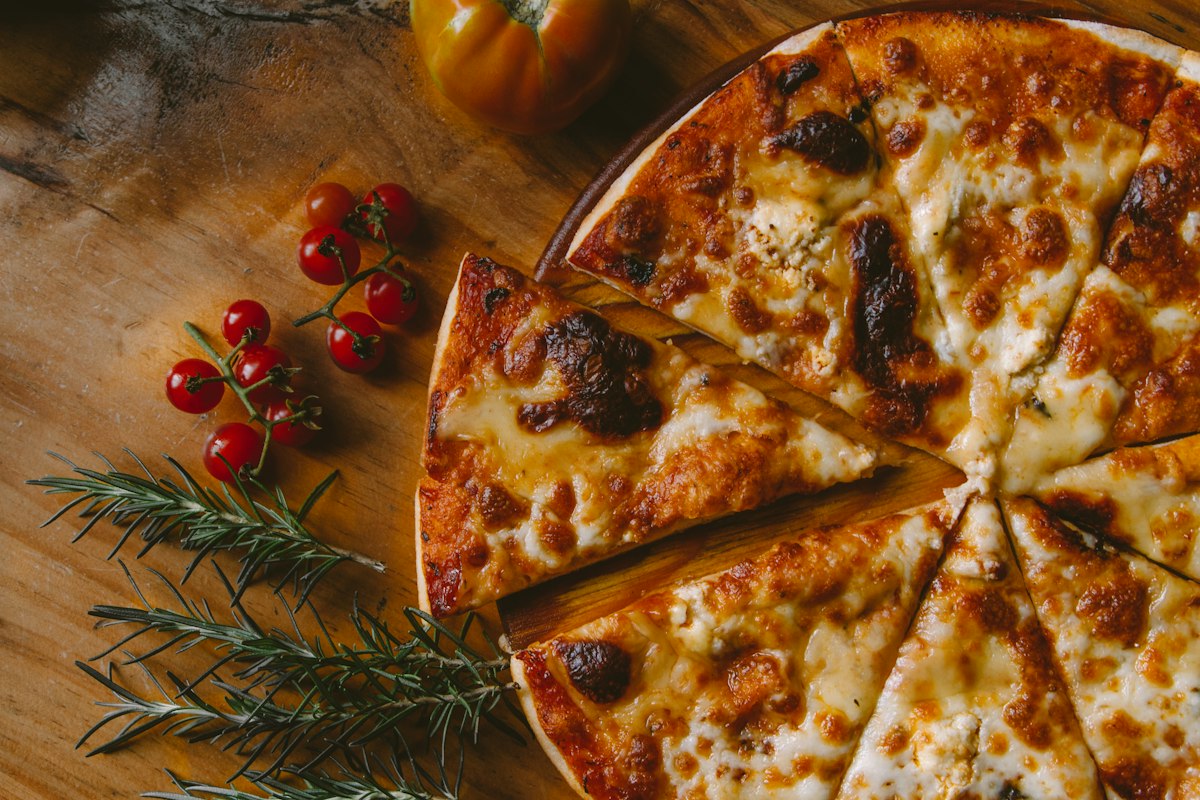
Independent pizzerias — those not operating under a franchise or license agreement and with nine or fewer units — represent approximately 40–60% of all U.S. pizzeria locations. While chains dominate system-wide revenue through operational scale and marketing investment, independents are outpacing chains in spending growth since late 2023, according to Bank of America data, as consumers seek craft quality and local identity alongside the value propositions of major brands.
$49.5 Billion in 2026 — Stabilisation After Modest Contraction, Growth Trajectory Intact
The U.S. pizza restaurant industry market size stands at $49.5 billion in 2026, according to IBISWorld's most current market research data. This represents a marginal softening from the 2024 peak — specifically a 3.6% decline in 2024 followed by a further 0.3% contraction in 2025 — before the market is forecast to return to positive growth over the following five years. These figures reflect a post-inflation normalisation of consumer spending patterns rather than any structural erosion of pizza's dominant position in the American QSR landscape.
The business count tells a different, more optimistic story: there are 75,736 pizza restaurant businesses operating in the United States as of 2025–2026, having grown at a CAGR of 0.9% between 2020 and 2025 — indicating that operator confidence and new market entry remain healthy even as revenue per unit faces pressure from food costs, labour rate increases, and third-party delivery commission structures that consume 20–30% of per-order revenue. Pizza Today's 2026 Industry Trends Report confirms that the top four chain rankings remain unchanged — Domino's, Pizza Hut, Little Caesars, Papa Johns — with shifts in relative share expected as 2026 progresses and value competition intensifies.
Top Pizza Chains by U.S. Sales — The 2024 Power Report
PMQ Pizza's annual Pizza Power Report, compiled in partnership with Datassential, provides the definitive ranking of U.S. pizza chain performance by sales and unit count. The 2024 rankings confirm Domino's continued dominance at the top, while Little Caesars delivers the strongest year-over-year sales growth among the top four — a reflection of its value-first "Hot-N-Ready" model resonating powerfully with budget-conscious consumers navigating elevated food-away-from-home costs.
It seems to be back to a zero-sum game. If one of the big guys is executing well — like Domino's is right now — it tends to create pressure for the other two, and that impacts overall category growth.
— Andy Barish, Analyst, Jefferies (via Nation's Restaurant News, 2024)Delivery Declines, Value Rises, and Online Orders Dominate the 2024–2026 Consumer
The U.S. pizza consumer landscape in 2024–2026 is defined by several significant behavioural shifts that are reshaping how operators structure their revenue models. Delivery — the channel that surged to dominance during the pandemic — has seen measurable erosion: monthly delivery ordering declined from 61% in 2022 to 55% in 2025, according to the 2025 Technomic Pizza Consumer Trend Report. Carryout has maintained its strong position, and a notable 25% of consumers report eating more frozen pizza as a substitute for restaurant options due to ongoing price sensitivity — a direct headwind for the foodservice market that frozen pizza's retail performance ($7.5 billion for the 52 weeks ending July 2025) confirms.
Value is the defining consumer priority of 2025–2026. Yelp data shows search volumes for "meal deal" rising 117%, "value meal" up 22%, and "cheap eats" up 21% in 2025. Nearly half of all U.S. consumers report getting food to go at least once per week, and the National Restaurant Association reports that 30–40% of restaurants have made operational changes to improve the off-premise experience since the pandemic. The pizza industry — built on delivery and carryout long before those channels became universal — is positioned advantageously relative to casual dining competitors, but must continue delivering compelling value propositions to prevent further trading down to frozen and grocery-deli alternatives.
Six Forces Reshaping the U.S. Pizza Restaurant Industry
Voice AI is the breakout technology story of 2026 for pizza operators. According to PMQ Pizza's technology forecast, 2026 is positioned to see major growth in AI voice ordering — with an estimated 40% of callers now unable to identify that they are speaking with a robot. AI voice systems outperform human order-takers on accuracy during peak hours and are expected to recapture phone-channel share that shifted to digital ordering over the past five years.
Third-party delivery platforms (DoorDash, Uber Eats, Grubhub) extract 20–30% commissions per order — a structural margin challenge that 53% of pizzeria operators navigate by not partnering with these platforms at all. The PMQ DELCO Report found that consumer satisfaction for first-party delivery (87% approval) meaningfully outperforms third-party (77% approval). The industry is trending toward hybrid strategies: using aggregators for discovery while routing loyal customers to owned channels.
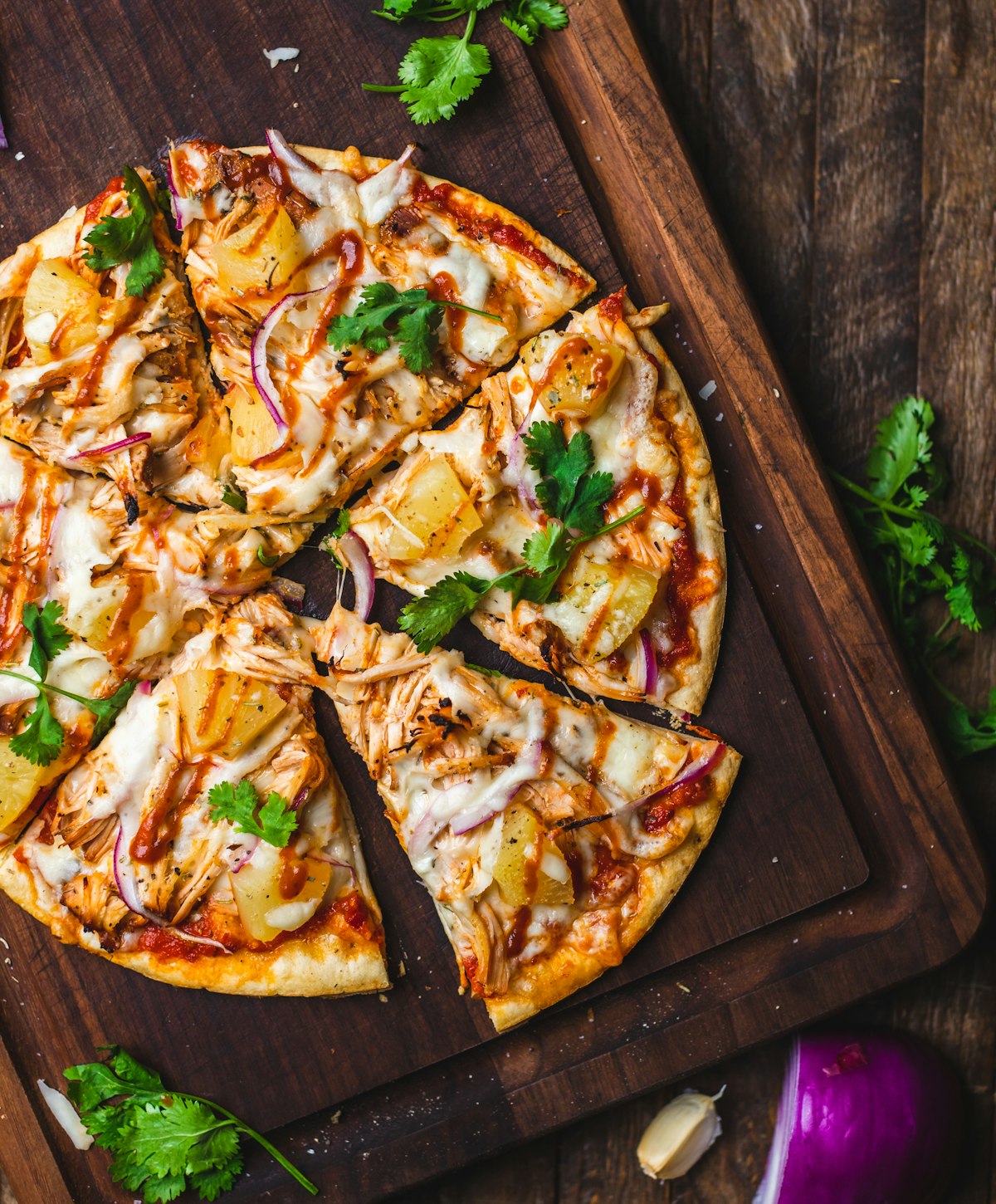
Menu differentiation is a primary battleground for both chains and independents. Hot honey is the standout topping trend with 52% year-over-year growth, according to Technomic. Regional styles — Detroit square, Roman al taglio, Sicilian, New Haven — are gaining menu share as consumers seek variety beyond standard thin and pan crusts. International flavor fusions (Korean, Mexican, Indian-inspired) are increasingly on trend, particularly among under-35 consumers.
Expanding the addressable consumer base through dietary accommodation is now a strategic imperative, not a niche offering. Plant-based meat toppings, vegan cheese, and gluten-free crust options are being adopted across both chain and independent segments. Transparency on calories, ingredient sourcing, and allergen information supports consumer trust and repeat visit frequency — particularly among Millennials and Gen Z who represent the fastest-growing pizza consumer demographic.
More than 78% of pizzeria operators use online ordering as of 2024–2025, with nearly 44% of those reporting that online channels account for 28% or more of total sales. Domino's loyalty program refresh and Uber Eats integration drove its 2024 outperformance. Personalized SMS and email loyalty campaigns are delivering measurable results — one case study cited by Clarity Voice showed an 18% increase in repeat order frequency from targeted messaging.
Rising hourly labor costs — with over 56% of pizzeria operators reporting employee pay increases of 4% or more — are accelerating investment in kitchen automation. Smart POS systems, conveyor oven technology (projected to grow from $1.67B in 2024 to $4.15B by 2035), and AI-driven demand forecasting are reducing labor dependency and improving throughput consistency. Self-service kiosks, deployed widely by Pizza Hut internationally, are beginning to appear across U.S. locations.
Five Pressures Constraining Growth and Profitability in 2026
Growth Projections — U.S. Pizza Restaurant Industry to 2034
The long-term growth trajectory for the U.S. pizza restaurant market remains constructive. IMARC Group projects the U.S. pizza market to grow from $39.0 billion in 2025 to $50.7 billion by 2034, at a CAGR of 2.95% during 2026–2034. IBISWorld additionally projects positive industry growth over the five-year period following 2025–2026, reversing the modest CAGR contraction of −2.9% recorded between 2020 and 2025. The primary growth drivers are digital ordering infrastructure maturity, AI-powered operational efficiency, menu diversification that broadens consumer occasions, and the ongoing consolidation of casual dining consumers into the pizza fast-casual segment — a migration that has structurally benefited the industry for over a decade and shows no signs of reversing.
Key Growth Drivers Through 2034
Frequently Asked Questions
The U.S. pizza restaurant industry market size was projected at approximately $50.1 billion in revenue in 2024, generated by more than 74,000 pizzeria businesses, according to IBISWorld. Consumer spending at quick-service pizza restaurants reached approximately $42.1 billion, while pizza delivery specifically generated $16.9 billion. Domino's alone posted $9.5 billion in U.S. sales — the strongest year in the chain's history.
The U.S. pizza restaurant industry market size stands at $49.5 billion in 2026, according to IBISWorld data. After modest contractions of 3.6% in 2024 and 0.3% in 2025, the market is forecast to stabilise and return to growth over the following five years. There are 75,736 pizza restaurant businesses operating in the U.S. as of 2025–2026, having grown at 0.9% CAGR between 2020 and 2025.
Domino's Pizza is the largest pizza chain in the United States by sales, generating $9.5 billion in U.S. sales in 2024 across 7,014 locations — up from $9.02 billion in 2023. It is followed by Pizza Hut ($5.29 billion, 6,518 units), Little Caesars ($4.93 billion, 4,249 units), and Papa Johns (approximately $3.86 billion, 3,320 units), according to PMQ Pizza's Pizza Power Report 2026.
There are approximately 75,736 pizza restaurant businesses in the United States as of 2025–2026, according to IBISWorld. Other estimates place the figure closer to 80,175 when all pizzeria formats are included. The number grew at a CAGR of 0.9% between 2020 and 2025, recovering from a slight post-pandemic dip and demonstrating ongoing operator confidence in the category.
More than 78% of pizzeria operators use online ordering as of 2024–2025, with nearly 44% reporting that online channels account for 28% or more of total sales, according to Pizza Today's Pizzeria Operator Survey. Over 60% of U.S. consumers order pizza online. Additionally, more than 32% of operators report that third-party delivery generates the best ROI among off-premise channels, while 53% choose not to partner with third-party platforms due to commission costs.
The U.S. pizza market is forecast to grow from $39.0 billion in 2025 to $50.7 billion by 2034, at a CAGR of 2.95% during 2026–2034, according to IMARC Group. IBISWorld independently projects positive growth over the next five-year period following 2025–2026, driven by digital ordering maturity, AI voice ordering adoption, menu innovation, and the structural migration of casual dining occasions toward fast-casual and delivery pizza formats.
The defining 2026 trends include: voice AI ordering (40% of callers now unaware they're speaking to a robot); first-party delivery growth as operators seek to reduce third-party dependence; hot honey and specialty topping adoption (+52% YoY); value meal strategies (meal deal searches up 117% on Yelp in 2025); plant-based and gluten-free menu expansion; and kitchen automation investment to manage rising labor costs. The top four chain rankings remain unchanged but share shifts are expected throughout the year.
Primary: IBISWorld — Pizza Restaurants in the US Industry Analysis 2025 / 2026
Primary: PMQ Pizza — Pizza Power Report 2026: Top 30 Chains by U.S. Sales & Unit Growth (Datassential)
Additional Data: Pizza Today 2025 & 2026 Pizza Industry Trends Reports · IMARC Group U.S. Pizza Market Forecast 2026–2034 · Mordor Intelligence Pizza Foodservice Market Report · Technomic Pizza Consumer Trend Report 2025 · Nation's Restaurant News · Circana OmniMarket Integrated Fresh (frozen/deli pizza) · U.S. SEC Domino's Form 10-K 2024 · National Restaurant Association · Conference Board Consumer Confidence Index