
Australia's Gambling Economy — AU$25.5 Billion in Annual Losses and the World's Highest Per Capita Gambling Rate
Australia's gambling market is one of the most structurally entrenched in the world. Despite accounting for less than 0.4% of global population, Australia generates approximately 3–4% of world gambling revenue — a staggering overrepresentation explained by the uniquely permissive regulatory environment for electronic gaming machines (pokies), the country's historically deep gambling culture, and the explosive growth of digital sports wagering. In 2025, total gambling losses across all legal forms reached an estimated AU$25.5 billion, a 4.2% increase on 2024 and representing a new nominal record for the sector.
The defining statistic of Australia's gambling economy is its per capita loss figure: Australian adults lose approximately AU$1,272 per person per year — the highest rate in the world, ahead of Singapore (AU$1,174), Ireland (AU$588), Finland (AU$533), and Canada (AU$493). This figure has remained the world's highest for over two decades, embedded in the structural framework of a gambling infrastructure that includes approximately 196,000 poker machines operating across 6,600+ venues nationwide — providing one of the world's most accessible gambling environments for the 26 million Australian population. Electronic gaming machines (pokies) remain the single largest contributor to gambling losses, accounting for approximately 52–55% of total industry revenue, followed by online wagering at 24% and casino table games at 12%.
The structural dynamics of Australia's gambling market are shifting rapidly. The online sports betting sector — anchored by operators like Sportsbet, Tab, Ladbrokes, and Pointsbet — has been the fastest-growing segment for the past eight consecutive years, growing from approximately AU$1.1 billion in losses in 2017 to an estimated AU$6.2 billion in 2025. This growth trajectory mirrors the revenue diversification seen in other major consumer-facing industries — just as the long-term revenue compounding seen in dominant consumer brands like Nike reflects the power of structural brand engagement, Australia's gambling operators have successfully converted casual participants into regular digital bettors through mobile app ecosystems, in-play betting, same-game multis, and algorithmically personalised promotional offers. According to the World Health Organization's overview of gambling and health, problem gambling is recognised as a significant public health concern in high-income countries — a classification that squarely applies to Australia's market given its per capita loss figures and documented harm rates.
| Metric | Value / Figure |
|---|---|
| Total Gambling Losses (2025 estimate) | AU$25.5 Billion |
| Per Capita Adult Gambling Losses | AU$1,272 (World's Highest) |
| YoY Growth in Total Gambling Losses (2024–2025) | +4.2% |
| Electronic Gaming Machine (Pokie) Losses | ~AU$13.5 Billion (53% of total) |
| Number of Pokie Machines (Venues ex-casinos) | ~185,000 across 5,800+ venues |
| Total Pokie Machines (inc. casinos) | ~196,000 nationwide |
| Online / Digital Gambling Market Size (2025) | AU$6.2 Billion |
| Online Wagering Growth (2017–2025) | +464% over 8 years |
| Adult Participation Rate (any gambling) | ~70–73% |
| Adults with Moderate-to-High Problem Gambling Risk | ~400,000–500,000 (2–2.5%) |
| Problem Gamblers Affected (family members included) | ~5–10 people per problem gambler |
| Total Casino Resorts in Australia | 6 Major Casinos |
| Casino Revenue (2024–25 est.) | AU$4.2–4.8 Billion |
| NSW Gambling Losses (largest state) | ~AU$8.8–9.1 Billion (35% of national) |
| Sports Betting Market Size (2025) | AU$5.5–6.0 Billion in turnover losses |
| Mobile Betting Share of Online Wagers | >75% |
| Lotteries & Scratch Cards Revenue | AU$3.2 Billion |
| Racing (TAB) Industry Losses | AU$2.4 Billion |
| Gambling Taxes Collected by States/Territories | AU$6.4–6.9 Billion annually |
| Projected Total Gambling Market (2030) | AU$31–33 Billion |
| Online Gambling Projected Market Share (2030) | 30%+ of total revenue |
196,000 Pokies, AU$13.5 Billion in Losses — Australia's Electronic Gaming Machine Dominance
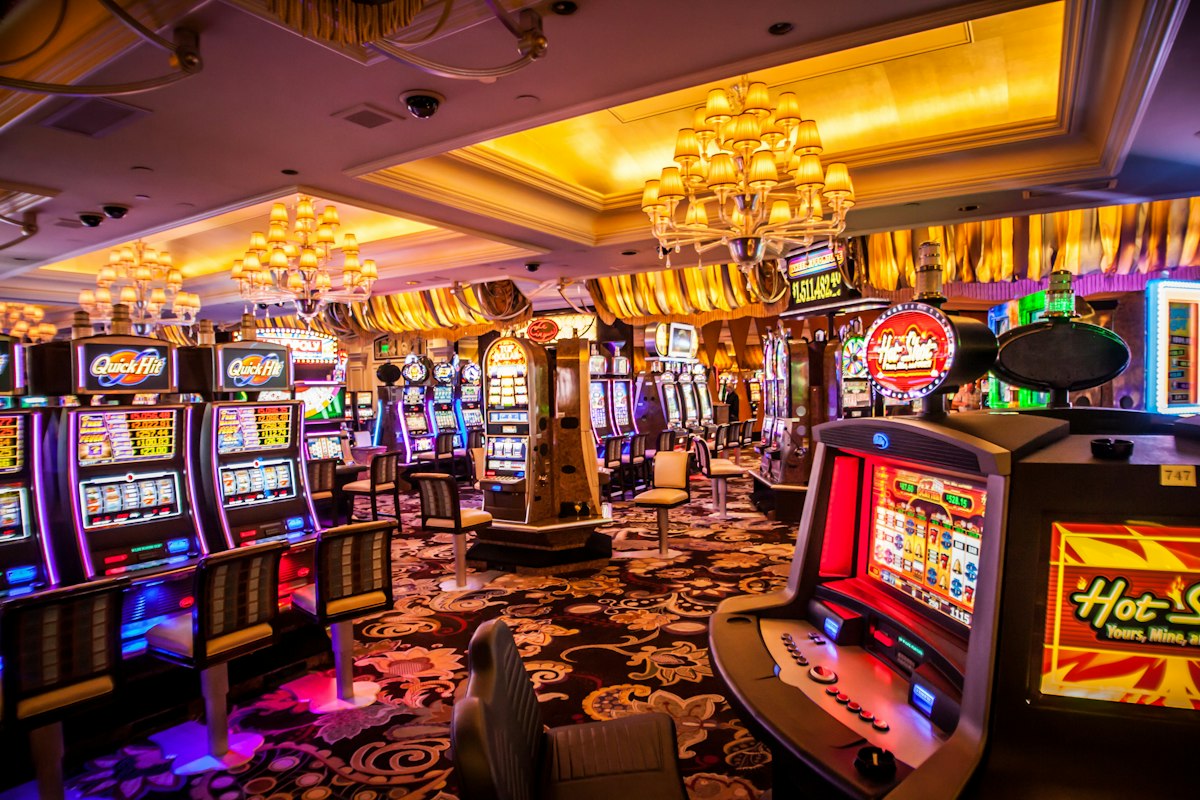
Electronic gaming machines — universally known in Australia as "pokies" — are the defining structural feature of Australian gambling and the primary driver of gambling-related harm. Australia operates approximately 196,000 pokie machines nationwide, of which roughly 185,000 are located in clubs, pubs, and hotels outside of casinos — giving Australia the highest concentration of non-casino gaming machines per capita of any country in the world. Expressed differently: there is approximately one pokie for every 136 Australian adults. In the state of New South Wales alone, over 85,000 poker machines operate across some 2,800+ licensed venues — a density that no other comparable jurisdiction globally approaches.
Pokie machines generated an estimated AU$13.5 billion in losses in 2025 — approximately 53% of total national gambling losses — despite representing a slowly declining share of the overall gambling economy as digital sports wagering grows. The average NSW pokie machine generates approximately AU$80,000–AU$100,000 in revenue per year, with premium machines in high-traffic metropolitan venues generating substantially more. Maximum bet limits — AU$10 per spin in most states — have been a persistent flashpoint of regulatory debate, with harm minimisation advocates arguing that mandatory AU$1 bet limits (as trialled in some jurisdictions) materially reduce both per-session losses and problem gambling rates. Victoria and Queensland have introduced progressive reforms around pre-commitment technology and cash input limits, though comprehensive national regulatory harmonisation remains elusive.
Australia's per capita gambling loss of AU$1,272 per adult per year in 2025 is approximately 2.2x the rate of Ireland (AU$588), 2.6x Finland (AU$533), and more than double Canada (AU$493). The nearest competitor is Singapore (AU$1,174), where gambling access is concentrated in two integrated casino resorts. Australia's figure encompasses all legal forms, with pokies alone accounting for approximately AU$680 per adult. The combination of uniquely accessible non-casino machine gambling, a strong sports wagering culture, and six major casino complexes creates the structural conditions for Australia's unmatched global per capita position.
AU$6.2 Billion and Accelerating — Australia's Online Wagering Revolution
Australia's online sports betting market has been the gambling sector's most explosive growth segment for nearly a decade. Total online wagering losses grew from approximately AU$1.1 billion in 2017 to an estimated AU$6.2 billion in 2025 — a 464% increase across eight years that reflects the structural power of mobile-first betting ecosystems, the legalisation and normalisation of in-play betting on Australian rules football, rugby league, cricket, and international sports, and the increasing sophistication of same-game multi (SGM) wagering products that dramatically increase per-event betting engagement. The sector is dominated by four major operators — Sportsbet (Flutter Entertainment), TAB (Entain), Ladbrokes/Neds, and PointsBet — which collectively hold an estimated 80–85% of online wagering market share.
Mobile betting now accounts for over 75% of all online wager volume, driven by iOS and Android apps that integrate push notification promotions, live score tracking, cashout functionality, and personalised odds boosts. The AFL and NRL seasons drive the largest betting volumes, with individual AFL grand finals generating estimated wagering of AU$150–200 million in a single day across all platforms. The 2025 Cricket World Cup and Rugby World Cup tournaments also generated record-level Australian online wagering volumes. The Interactive Gambling Act 2001, which prohibited most forms of online casino gaming and in-play betting via internet, has remained in place — though grey market offshore casino access by Australian players continues to generate significant cross-border regulatory complexity. Just as the global expansion of dominant platforms has created winner-take-most market dynamics across consumer industries — a dynamic visible in the concentration of smartphone market share among a small number of dominant vendors — Australia's online wagering sector is consolidating rapidly around a handful of scaled operators with the capital to sustain customer acquisition costs and marketing investment.
Sports Betting Product Innovation — Same-Game Multis, Cash-Out, and In-Play
The structural acceleration of online wagering in Australia is product-driven, not merely volume-driven. The same-game multi (SGM) — a wager combining multiple outcomes within a single sporting event at combined multiplied odds — has become Australia's single most popular sports betting product format since its widespread rollout in 2019–2020. SGMs offer operators significantly higher margins (estimated 12–18% hold rate versus 5–6% on single-event bets) while generating higher engagement and session duration. Cashout functionality — allowing bettors to settle bets for a guaranteed return before event completion — has driven average session lengths up by approximately 35–40% according to operator data. The result is a product ecosystem specifically engineered to maximise customer lifetime value through engagement intensity rather than bet volume alone.
NSW, Victoria, Queensland — The State-by-State Anatomy of Australian Gambling Losses
Australia's gambling market is administered primarily at the state and territory level, creating a fragmented regulatory environment with significant variation in machine density, tax rates, harm minimisation requirements, and casino licensing. New South Wales is by far the largest gambling state, accounting for an estimated 35–38% of total national gambling losses — a figure driven primarily by the extraordinary density of non-casino pokies in NSW clubs and pubs under the state's unique club industry structure. Victoria's market is shaped by the Crown Melbourne casino's dominant role and a more centralised gaming machine regulatory framework.
Six Casino Resorts, AU$4.5 Billion Revenue — Crown, Star, and the Premium Gaming Segment
Australia operates six major casino resorts across its five largest states, each holding an exclusive or near-exclusive casino licence for its jurisdiction. These six properties — Crown Melbourne, Crown Perth, The Star Sydney, The Star Gold Coast, SkyCity Adelaide, and Treasury Brisbane — collectively generate an estimated AU$4.2–4.8 billion in annual gaming revenue, with non-gaming revenue (hotels, food & beverage, entertainment) adding approximately AU$1.5–2.0 billion to total complex revenues. Crown Melbourne alone — Australia's largest casino complex, hosting over 2,500 gaming machines and 500 table games across 510,000 square feet of gaming space — generated approximately AU$2.3 billion in gaming revenue in its most recent full financial year.
The casino sector in Australia has undergone its most significant regulatory disruption in decades across 2021–2025. Following scathing royal commissions in Victoria (Finkelstein), New South Wales (Bell), and Western Australia (Owen), all three Crown Resorts casinos were found temporarily or conditionally unsuitable to hold casino licences due to money laundering risks, junket operator relationships, and governance failures. Crown Resorts was subsequently acquired by Blackstone Real Estate for AU$8.9 billion in 2022 in one of Australia's largest private equity transactions — marking the privatisation of what had been Australia's dominant listed gaming company. Star Entertainment Group faced simultaneous suitability challenges in NSW and Queensland, entering administration in 2024 under the weight of AU$1.6 billion in remediation costs, compliance failures, and revenue losses from international VIP market exit.

Australia's gambling industry is structurally embedded in community infrastructure, state government revenue, and the cultural fabric of pub and club life to a degree that has no close equivalent in any other comparable developed economy.
— ACIL Allen Consulting, Australian Gambling Industry Review, 2024400,000–500,000 Problem Gamblers and AU$22B+ in Annual Social Costs
Australia's high gambling participation rates and per capita losses generate a commensurate burden of problem gambling and associated social harm. The Australian Institute of Health and Welfare (AIHW) estimates that approximately 400,000–500,000 Australian adults (2–2.5% of the adult population) experience moderate-to-high levels of gambling-related harm — including financial crisis, relationship breakdown, employment loss, depression, anxiety, and suicidal ideation — at any given point in time. When accounting for the documented ripple effect of problem gambling on family members, friends, and workplace colleagues — estimated at 5–10 people per problem gambler — the number of Australians meaningfully affected by problem gambling harm may exceed 2.5–4 million people.
The total social costs of problem gambling in Australia — encompassing financial losses beyond means, mental health treatment, family services, criminal justice costs, lost productivity, and homelessness — have been estimated at AU$22–24 billion annually by various econometric studies, including work by AGSA and state-commissioned impact assessments. This figure significantly exceeds the AU$6.4–6.9 billion in gambling taxes collected by state and territory governments each year, raising persistent policy questions about whether the fiscal benefits of gambling to government budgets are adequately matched by expenditure on harm prevention, treatment, and community support. The OECD's framework for measuring social costs of unhealthy behaviours provides a useful comparative methodology for contextualising the AU$22B+ burden alongside other regulated harm categories such as alcohol and tobacco.
Six Forces Driving Australia's Gambling Economy
Seven Forces Reshaping Gambling in Australia Through 2030
Australia's online wagering sector is now overwhelmingly mobile-first. Over 75% of all sports bets are placed via smartphone apps, with Sportsbet, Ladbrokes, and TAB apps consistently ranking among the most downloaded in Australia's App Store. Mobile betting has democratised in-play wagering, same-game multis, and micro-market betting (individual player performance markets) in ways that fundamentally increase engagement intensity per sporting event. The convergence of sporting content and betting apps in a single mobile experience is considered the single most significant structural driver of online wagering growth through 2030.
The Australian federal government's announced ban on gambling advertising during live sports broadcasts — scheduled for phased implementation from mid-2026 — represents the biggest regulatory shift in the wagering sector since online betting was first legalised. The ban will prohibit wagering ads during live sport broadcasts between 6am and 10pm, with an immediate 8:30pm–5am ban applying from 2026. Industry analysts estimate this could reduce online wagering customer acquisition volumes by 15–25%, though operators with established customer databases are expected to adapt through digital direct channels, affiliate marketing, and app engagement.
Australia's two major casino groups — Crown (now Blackstone-owned) and Star Entertainment — have collectively spent over AU$2.0 billion on compliance remediation, technology systems, responsible gambling infrastructure, and governance overhaul since 2021. Crown Melbourne regained its suitability in late 2023. Crown Perth received conditional approval in 2024. Star Entertainment entered administration in 2024 with AU$1.6B in liabilities, with a rescue consortium from private equity and real estate interests acquiring the business in 2025. The post-royal commission era is fundamentally reshaping the risk tolerance, operating model, and profitability expectations of Australian casino operations.
The push for cashless electronic gaming — requiring all pokie play via registered player card rather than anonymous cash — has gained significant legislative momentum since 2023, following the ACT's leading adoption and the federal government's commitment to explore national cashless gaming frameworks. Proponents argue that card-based play enables real-time spending tracking, self-exclusion enforcement, and consumer data for harm identification. NSW, with the largest pokie fleet nationally, is the pivotal jurisdiction. Industry groups estimate that a mandatory AU$1 max bet limit on pokies could reduce annual EGM revenue by 35–40% — making NSW club revenue viability the central battleground of Australia's most significant gambling policy debate.
Despite the Interactive Gambling Act 2001's prohibition on most forms of online casino gaming by Australian residents, an estimated AU$2.5–3.5 billion per year in Australian consumer spend flows to unlicensed offshore online casino operators. These operators — primarily licensed in Curaçao, Malta, and Isle of Man — offer Australian residents the roulette, blackjack, online slots, and live dealer games that domestic operators cannot legally provide. The ACMA operates a website blocking regime that has blocked over 900 illegal gambling sites since 2019, but sophisticated consumers readily circumvent this via VPN.
Esports wagering — betting on professional video game competitions including CS:GO, League of Legends, Dota 2, and Valorant — has emerged as a structurally significant new wagering category in Australia since 2021. Estimated Australian esports betting turnover reached AU$180–250 million in 2025, with strong growth trajectory among 18–30-year-old male bettors. All major licensed operators now offer esports markets. Esports betting's appeal to digital-native younger demographics concerns harm prevention researchers given that pathway gambling — starting with low-stakes familiar activities and escalating — is a documented risk factor for developing problem gambling behaviours.
Gambling harm in First Nations communities — particularly in remote Northern Territory, Western Australia, Queensland, and South Australia communities — is disproportionately severe relative to income levels and access to support services. Research indicates problem gambling rates in some remote Indigenous communities may be 3–5x the national average, with limited access to counselling, financial hardship services, or culturally appropriate support. Community permit systems in the NT limiting gambling venue access to community members have shown measurable harm reduction outcomes. Federal government policy under the National Strategy for Gambling Reform (2022–2025) identifies First Nations gambling harm reduction as a priority area requiring dedicated funding and community-led solutions.
Regulatory Fragmentation, Social Harm, and the Advertising Normalisation Problem
Australia Gambling Market Forecast — Path to AU$33 Billion by 2030
Australia's total gambling market is projected to grow from an estimated AU$25.5 billion in 2025 to approximately AU$31–33 billion by 2030, at a CAGR of approximately 4.5–5.5%. Online wagering will be the dominant growth engine — projected to grow from AU$6.2 billion to AU$10–12 billion by 2030 as mobile betting penetration deepens, product innovation (same-game multis, micro-markets, in-play on expanded sports) drives per-customer revenue, and the advertising ban reshapes marketing mix without materially reducing aggregate demand. Electronic gaming machines are forecast to grow more slowly — at 2–3% CAGR — as cashless gaming reforms, machine number caps, and demographic shifts (older pokie players replaced by digital-native younger cohorts less oriented to EGMs) moderate the sector's contribution. The parallel trajectory of large consumer industries demonstrates that revenue scale built over decades through consistent market penetration and product innovation creates durable market positions — a dynamic evident in the long-term revenue trajectories of global franchise businesses that have compounded revenue steadily over 20+ year periods, and Australia's gambling operators display similar structural revenue resilience.
Key Growth Drivers Through 2030
Frequently Asked Questions
Australians lose approximately AU$25.5 billion per year on gambling — equating to AU$1,272 per adult per year, the highest per capita gambling losses in the world. This figure covers all legal gambling forms including electronic gaming machines (pokies), sports betting, lotteries, and casinos.
Approximately 70–73% of Australian adults participate in some form of gambling each year. Lottery and scratch cards are the most popular form, followed by electronic gaming machines (pokies) and sports betting. Around 39% engage in non-lottery forms of gambling.
Australia has approximately 185,000–196,000 electronic gaming machines (pokies) operating across some 6,600+ venues. This represents roughly one pokie machine for every 136 adults. New South Wales has the largest concentration with over 85,000 machines — the highest density outside of casinos of any jurisdiction in the world.
Australia's online gambling market was valued at approximately AU$6.2 billion in 2025, driven primarily by sports betting and online wagering. The market has grown 464% since 2017. It is projected to grow to AU$10–12 billion by 2030, with mobile betting accounting for over 75% of all online wagers.
New South Wales records the highest total gambling losses in Australia, accounting for approximately 35–38% of all national gambling revenue (~AU$8.9 billion). NSW also has the highest concentration of pokies outside of casinos of any jurisdiction in the world. Victoria is the second-largest gambling state, anchored by Crown Melbourne.
Australia's total gambling market is projected to grow from AU$25.5 billion in 2025 to approximately AU$31–33 billion by 2030, at a CAGR of ~5.3%. Online wagering is forecast to reach AU$10–12 billion and capture 30%+ of total gambling revenue by 2030, driven by mobile app growth, product innovation, and potential domestic online casino regulation.
Primary: Australian Institute of Health and Welfare (AIHW) — Gambling in Australia Reports 2023-2025
Primary: Queensland Government Statistician's Office (QGSO) — Australian Gambling Statistics 40th Edition
Primary: Australian Gambling Research Centre (AGRC) — National Survey of Gambling Participation
External: World Health Organization (WHO) — Gambling and Public Health Overview
External: OECD — Measuring the Social Costs of Unhealthy Behaviours (Comparative Framework)
External: Gambling Therapy (Gordon Moody) — International Problem Gambling Support & Research
Additional: H2 Gambling Capital — Australia Online Wagering Market Reports · ACIL Allen Consulting — Economic Impact of Gambling · Statista — Australian Gambling Market Size 2019-2030 · ACMA — Australian Interactive Gambling Division Annual Reports · ABS — Household Expenditure Survey · Crown Resorts/Blackstone Annual Reports · Star Entertainment Group ASX Filings · NT Racing Commission Licensed Operator Data