
Sixteen Years of Disruption — The Complete Story of Smartphone Market Share by Vendor
No industry in modern history has experienced more dramatic and sustained disruption to competitive market share than smartphones. In Q4 2009, Nokia commanded nearly 40% of the global smartphone market, with Research In Motion (BlackBerry) holding a further 20%, and Apple's iPhone — just two years old — occupying a distant but fast-growing third place. By Q4 2025, those two early giants had been entirely erased from the competitive landscape, replaced by a new global oligopoly dominated by Apple, Samsung, and a constellation of powerful Chinese manufacturers that together account for the vast majority of the 1.26 billion smartphones shipped in 2025.
The story of smartphone vendor market share from 2009 to 2026 is fundamentally a story of platform disruption, ecosystem lock-in, manufacturing scale, and the relentless democratisation of mobile computing. According to IDC's Worldwide Quarterly Mobile Phone Tracker, the global smartphone market shipped 1.26 billion units in full-year 2025 — representing 1.9% growth over 2024 and more than seven times the 175 million units shipped in 2009. Apple finished 2025 as the world's largest smartphone vendor for the third consecutive year, shipping a record 247.8 million units — meaning roughly one in every five smartphones shipped globally was an iPhone. Samsung, with 241.2 million units, finished marginally behind — a contest so close that the entire industry year hinged on the success of Apple's iPhone 17 super-cycle.
Looking ahead, IDC projects a modest 0.9% decline in smartphone unit shipments for 2026, driven primarily by global memory component shortages that will squeeze margins at the entry-level and force average selling prices to a record high of $465 — pushing total market value to an unprecedented $578.9 billion. This report documents the complete vendor market share data across all key eras, from the Symbian age through the Android revolution, the Chinese vendor surge, and the present-day duopoly era.
| Metric | Value / Figure |
|---|---|
| Global Smartphone Shipments 2009 | ~175 Million Units |
| Nokia Market Share Q4 2009 | ~40% (Symbian Era Peak) |
| BlackBerry / RIM Market Share Q4 2009 | ~20% |
| Apple iPhone Market Share Q4 2009 | ~16% |
| Android Market Share Q4 2010 | Surpassed Symbian for first time |
| Samsung — Year #1 as Global Leader | 2012 (Overtook Nokia) |
| Huawei Peak Market Share | ~16% (2019–2020) |
| Global Smartphone Shipments 2024 | 1.24 Billion Units (+6.4% YoY) |
| Global Smartphone Shipments 2025 | 1.26 Billion Units (+1.9% YoY) |
| Apple Full-Year Shipments 2025 | 247.8 Million Units (Record) |
| Apple 2025 Annual Market Share | 19.7% — #1 for 3rd Year Running |
| Samsung Full-Year Shipments 2025 | 241.2 Million Units |
| Samsung 2025 Annual Market Share | 19.1% (+7.9% YoY) |
| Xiaomi 2025 Annual Market Share | ~13% (165.3M units) |
| Vivo & OPPO 2025 Annual Market Share | ~8% each |
| Apple Q4 2025 Market Share | 24.2% (Record Holiday Quarter) |
| Apple + Samsung Combined 2025 Share | ~39% — Majority of Industry Profits |
| Global Market Value 2025 | ~$537.6 Billion |
| Projected Market Value 2026 | $578.9 Billion (Record, Despite Unit Decline) |
| Projected Average Selling Price 2026 | $465 — All-Time Record |
The Symbian Age: Nokia's Collapsing Empire and the Android Uprising
When Statista and Gartner first began comprehensive tracking of smartphone vendor market share in Q4 2009, the competitive landscape looked almost unrecognisable compared to today. Symbian OS, Nokia's proprietary platform, accounted for nearly half of the global smartphone operating systems market in 2009, while Research In Motion — the maker of BlackBerry — held approximately 20%. Apple's iOS sat in third place with roughly 16% share, and Android — launched commercially in 2007 — was a fledgling platform accounting for just 2–3% of the market at the start of 2009. The global market in that year was modest by today's standards: approximately 175 million smartphones shipped worldwide, in an era when the device category was still far from mass-market.
The transformation that followed was breathtaking in its speed. According to combined Gartner/IDC/Canalys/Strategy Analytics data compiled for 2010, global smartphone sales jumped 70% from 175 million in 2009 to 298 million units in 2010 — a single-year leap that dwarfed any previous technology adoption curve. The beneficiaries of this explosion were the Android hardware vendors: Samsung, HTC, Motorola, and LG all grew aggressively on the back of Google's open-source platform. Nokia's Symbian, by contrast, was already showing structural weakness. Gartner noted that RIM's market share declined from 19.5% in Q4 2009 to 13.7% by Q4 2010, while Nokia was propping up its market position through aggressively priced low-end Symbian devices — a strategy that proved unsustainable. Symbian effectively vacated the market by 2014 following Nokia's partnership with Microsoft in 2011, ceding its position in one of the fastest platform transitions in technology history.
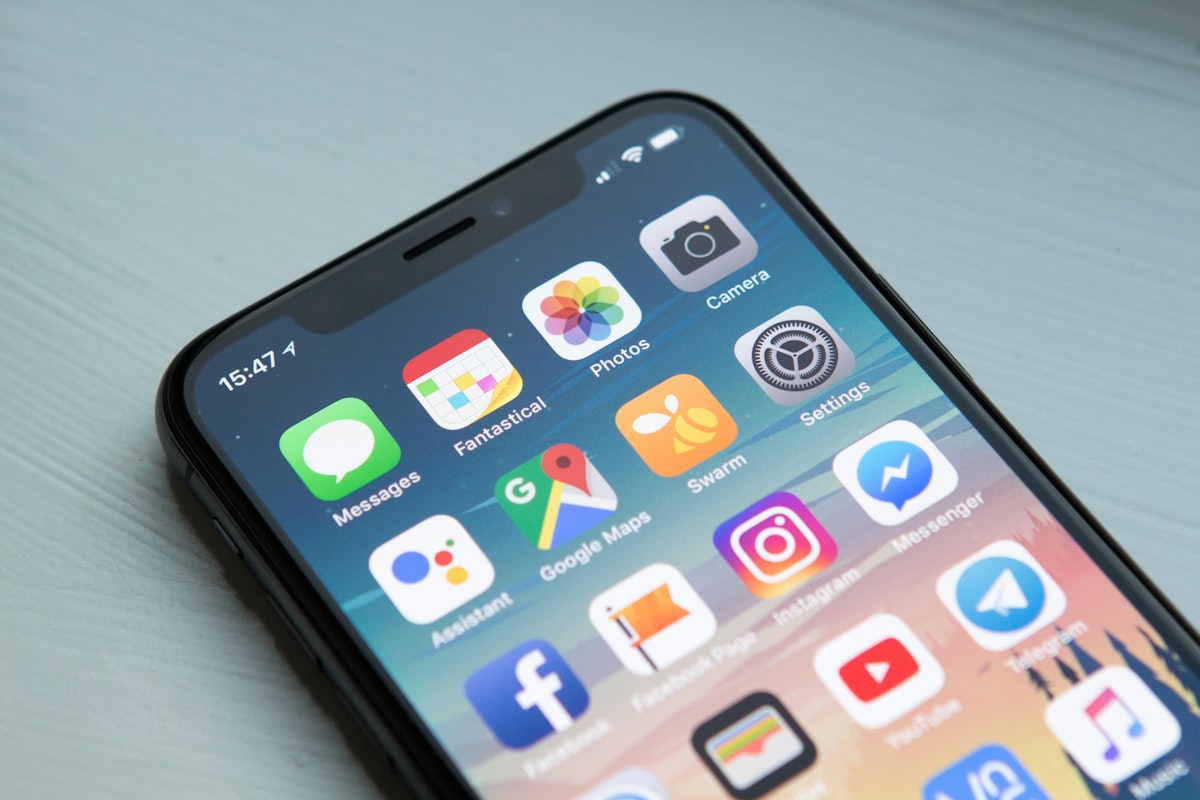
Android Overtakes Symbian — The Moment Everything Changed
In Q4 2010, Android OS unit sales surpassed Symbian for the first time on a quarterly basis — a milestone that, in retrospect, marked the definitive end of the pre-smartphone era. Google's strategy of partnering with multiple hardware manufacturers simultaneously — Samsung, HTC, Sony Ericsson, LG, Motorola — gave Android an insurmountable distribution advantage that no single-vendor OS could replicate. By 2011, Android had become the global number-one smartphone platform, a position it has never relinquished. The combined market share of Android and iOS has stood at 99.9% or above every year since 2014, with all other platforms reduced to statistical irrelevance.
Samsung's Decade: Galaxy Dominance, Apple's Premium Moat, and the Chinese Emergence
The period from 2012 to 2016 was defined by Samsung's extraordinary ascent to global market leadership and its bruising rivalry with Apple over the premium segment. Samsung overtook Nokia as the global mobile phone market leader in 2012, cementing a position it would hold for over a decade. The Korean giant's Galaxy S and Note series established Android's viability in the premium tier, while the Galaxy A and J series captured extraordinary volumes across emerging markets in Asia, Africa, and Latin America. At its peak in 2013–2014, Samsung commanded approximately 30–32% of global smartphone shipments — a market share figure that dwarfed every competitor and has never been surpassed by any single vendor since.
Apple's response was strategic rather than volumetric. While Samsung competed on breadth, Apple doubled down on premium positioning, pricing power, and ecosystem lock-in. The iPhone 6 and iPhone 6 Plus, launched in September 2014, generated the most successful iPhone cycle in Apple's history at that time — finally giving Apple large-screen devices to compete with Samsung's Galaxy phablets. Apple's share of global smartphone revenue was consistently above 90% of industry profits even while its unit share hovered between 14–17%, demonstrating that market share in units and market share in value are radically different metrics in the smartphone industry. This era also marked the beginning of the Chinese vendor surge: Huawei's global market share grew from approximately 3% in 2011 to 10% by 2016, while Xiaomi — founded in 2010 — rocketed from nowhere to become the world's fifth-largest smartphone vendor by 2014, pioneering the flash-sale, hypervalue model that would define Chinese smartphone commerce.
Quarterly Market Share — Key Historical Milestones by Vendor
| Period | Vendor / Event | Market Share / Milestone |
|---|---|---|
| Q4 2009 | Nokia (Symbian) | ~40% — Last dominant quarter |
| Q4 2009 | RIM / BlackBerry | ~20% — Peak enterprise dominance |
| Q4 2009 | Apple (iOS) | ~16% — Fast-growing third place |
| Q4 2010 | Android vendors (Samsung/HTC) | Android overtakes Symbian Q4 quarterly |
| 2011 | Google Android | Becomes #1 global smartphone OS — a position held to this day |
| 2012 | Samsung | Overtakes Nokia as global #1 vendor — Samsung era begins |
| 2013–2014 | Samsung | ~30–32% global share — all-time peak for any single vendor post-2009 |
| Q4 2014 | Apple (iPhone 6/6 Plus) | Biggest iPhone launch in history at the time; Apple captures #1 spot Q4 |
| 2016 | Samsung Galaxy Note 7 | Battery crisis causes global recall — first major market share disruption from product failure |
| 2016–2018 | Huawei | Grows from 10% to ~15% — becomes credible global #3 |
| 2018–2019 | Huawei | Overtakes Apple in unit shipments in 2019 for first time; reaches 16% share |
| 2020 | Huawei | US trade ban — Huawei loses Google Play access; rapid decline begins |
| Q4 2020 | Apple (iPhone 12 5G) | First 5G iPhone drives Apple to #1 globally for single quarter with ~23% share |
| 2021 | Xiaomi | Briefly overtakes Apple to become #2 globally in Q2 2021 |
| 2022–2023 | Samsung | Holds #1 for full year with ~20–22% share; Apple closes gap steadily |
| Full Year 2023 | Apple | First time Apple tops full-year global shipments — overtakes Samsung |
| Full Year 2024 | Apple | Second consecutive year as #1; global market grows 6.4% to 1.24 billion units |
| Full Year 2025 | Apple | Third year as #1 with record 247.8M shipments and 19.7% market share |
The Chinese Surge, Huawei's Rise and Fall, and the 5G Transition
The period from 2017 to 2022 brought three seismic forces to the smartphone vendor landscape: the extraordinary rise of Chinese manufacturers beyond Samsung and Huawei, the weaponisation of trade policy as a market share instrument, and the 5G transition that created the most powerful smartphone upgrade supercycle of the modern era. By 2019, Huawei had grown its global market share to approximately 16% — temporarily overtaking Apple in unit shipments — driven by a powerful combination of competitive hardware, aggressive pricing, a strong domestic China base, and expanding presence across Europe, the Middle East, and Africa. Huawei's Kirin processor ambitions and HarmonyOS development signalled a vendor intent on platform-level independence from both Android and iOS — a development that alarmed both Google and the US government.
The US Entity List designation in May 2019 — which restricted American companies from supplying technology to Huawei — effectively dismantled Huawei's international smartphone business within 18 months. Loss of Google Mobile Services access made Huawei devices commercially unviable in Europe and most emerging markets. Huawei's global smartphone market share collapsed from approximately 16% in 2020 to below 4% in international markets by 2022, representing one of the most rapid competitive collapses in consumer electronics history. The primary beneficiaries of Huawei's share loss were Xiaomi — which briefly overtook Apple to become the world's second-largest smartphone vendor in Q2 2021 — along with OPPO, vivo, and Realme, all of which expanded aggressively across Southeast Asia, India, the Middle East, and Europe.
The iPhone 12's launch in Q4 2020 — Apple's first 5G device family — triggered the most powerful Apple upgrade cycle since the iPhone 6, driving Apple to its first-ever quarterly #1 global position with approximately 23% market share in Q4 2020. The 5G transition proved to be a disproportionate Apple tailwind because the iPhone's premium pricing positioned it in the segment where early 5G adoption was concentrated, while Android vendors competed fiercely — and largely unprofitably — to deliver 5G to mid-range and budget price tiers.
Apple's Three-Year Reign: Record Shipments, iPhone 17 Super-Cycle, and the AI Smartphone Revolution
The 2024–2025 period cemented a new competitive equilibrium in the global smartphone industry. Apple became the clear winner of the full-year 2025 rankings with record shipments of 247.8 million units and a 19.7% global market share — marking the third consecutive year that Apple topped the annual global vendor rankings for the first time since the company began competing in the smartphone market in 2007. This achievement is particularly remarkable given that Apple competes exclusively in the premium and ultra-premium price tiers, while its three-year dominance was achieved against vendors — primarily Samsung — that compete across every price segment from sub-$100 to over $1,500.
The iPhone 17 series, launched in September 2025, proved to be Apple's most commercially successful product cycle since the iPhone 6. According to Omdia's January 2026 research, the global smartphone market grew 4% in Q4 2025, with Apple leading at 25% market share for that quarter. Crucially, Apple's iPhone 17 success was genuinely global — not just dependent on traditional Western markets. In China — historically a challenging market for Apple — iPhone 17 demand was so strong that Apple ranked first in China in both October and November 2025 with over 20% domestic share, driving IDC to revise Apple's China forecast from a projected 1% decline to a positive 3% growth — a phenomenal turnaround in what is the world's most competitive smartphone market.
Apple is set to have a record year in 2025 with shipments forecast to cross 247 million units, thanks to the phenomenal success of its latest iPhone 17 series. In China, massive demand has significantly accelerated Apple's performance — turning a previously projected 1% decline into positive growth. This calendar year will not only be a record period for Apple in terms of shipments but also in value, with revenue forecast to exceed $261 billion.
— Nabila Popal, Senior Research Director, IDC Worldwide Quarterly Mobile Phone Tracker, December 2025Q4 2025 Market Share — Latest Available Quarterly Data
| Rank | Vendor | Q4 2025 Shipments | Q4 2025 Share | Full Year 2025 Units | Full Year Share |
|---|---|---|---|---|---|
| 1 | Apple | 81.3M | 24.2% | 247.8M | 19.7% |
| 2 | Samsung | ~79M | ~23.5% | 241.2M | 19.1% |
| 3 | Xiaomi | 37.8M | 11.2% | 165.3M | ~13.1% |
| 4 | vivo | 27.0M | ~8.0% | ~100M+ | ~8% |
| 5 | OPPO | 26.9M | ~8.0% | ~100M+ | ~8% |
| 6 | Transsion | ~22M | ~6.5% | ~115M+ | ~9% |
| — | Others | ~60M | ~18% | ~390M | ~31% |
Q3 2025 in Detail — Samsung Leads Volume, Apple Leads Value, Transsion Surges in Africa
The third quarter of 2025 provided a revealing snapshot of the structural dynamics reshaping the global smartphone vendor landscape. IDC's Q3 2025 data showed global shipments of 325.7 million units — up 3.5% year-on-year, with Samsung retaining the volume leadership position it holds in non-holiday quarters, shipping 61.4 million units for an 18.8% share. Apple followed with 59.4 million units (18.2%), ahead of the iPhone 17 launch. Xiaomi held third place with 43.4 million units and 13.3% share, while Transsion posted the strongest growth of any top-five vendor, shipping 29.2 million units for a 9.0% share — reflecting a 13.4% year-on-year increase driven by its extraordinary expansion across sub-Saharan Africa, where shipments surged 25% year-on-year in the quarter.
Regional dynamics in Q3 2025 were sharply divergent. Asia-Pacific recorded a 5% year-on-year increase — its highest quarterly volume since Q4 2021 — while Africa surged 25% year-on-year. North America and Greater China were the notable weak spots: North American shipments contracted after early demand pull-ins related to tariff concerns concluded, while China saw its second consecutive quarterly decline as government consumer subsidy effects expired. This divergence underscores an important structural reality: the near-term growth of the global smartphone market is now substantially dependent on first-time buyer conversion in emerging markets rather than replacement cycles in saturated developed economies.
| Rank | Vendor | Q3 2025 Shipments (M) | Q3 2025 Market Share | Q3 2024 Share | YoY Change |
|---|---|---|---|---|---|
| 1 | Samsung | 61.4M | 18.8% | 18.3% | +6.3% |
| 2 | Apple | 59.4M | 18.2% | 18.1% | +4.1% |
| 3 | Xiaomi | 43.4M | 13.3% | 13.6% | +1.4% |
| 4 | Transsion | 29.2M | 9.0% | 8.2% | +13.4% |
| 5 | vivo | 28.8M | 8.9% | 8.9% | +3.5% |
Six Forces Reshaping the Global Smartphone Vendor Landscape
On-device AI capabilities — from Apple Intelligence to Google's Gemini integration and Samsung's Galaxy AI — have become the dominant marketing proposition driving smartphone upgrades in 2025–2026. Vendors across every price tier are racing to deliver AI camera enhancements, real-time translation, and productivity assistants. The democratisation of AI features from flagship to mid-range has accelerated the upgrade cycle, particularly in markets where 3–4 year old devices feel increasingly inadequate.
Samsung's Galaxy Z Fold 7 sold 50% more units than the Z Fold 6 in the US in the same post-launch window, and more than double the Z Fold 6 units in its first four weeks in Western Europe — giving Samsung a 64% share of the global foldable market. Apple is expected to enter the foldable segment by 2026–2027, which would significantly expand the total addressable market for this premium category.
Africa, South Asia, and Southeast Asia are the primary growth frontiers. Transsion's 13.4% Q3 2025 volume growth in Africa demonstrates the enormous untapped demand remaining in markets where smartphone penetration is still well below 60%. Indian shipments continue to grow at mid-single-digit rates, with Xiaomi, vivo, and Samsung competing intensely alongside Reliance Jio's domestic device initiative.
A tightening of DRAM and NAND supply — driven by prioritisation of AI data centre memory demand over consumer device allocations — will be the defining challenge for smartphone vendors in 2026. Entry-level Android vendors face the sharpest impact given memory costs represent a higher share of their bill-of-materials. Higher ASPs are inevitable across the board, which will constrain volume but expand revenue at the market level.
The consistent shift toward higher-priced devices noted by Counterpoint Research in 2025 — driven by trade-in programmes, carrier financing, and AI feature demand — is expanding average selling prices even before the memory shortage takes effect. The mid-range tier ($300–$600) is growing faster than both entry-level and ultra-premium segments as consumers in developing markets make their first smartphone upgrade to a quality device.
While Huawei remains effectively excluded from international markets, its domestic China performance has been extraordinary. Huawei reclaimed the #1 position in China in 2025 with 46.7 million units and 16.4% domestic share — narrowly ahead of Apple's 46.2 million units (16.2%). HarmonyOS's maturing app ecosystem and Kirin chip recovery have positioned Huawei as the premium alternative to iPhone in China's increasingly nationalistic consumer market.
2026 Projections — Unit Decline, Record ASPs, and $579 Billion Market Value
IDC has revised its 2026 global smartphone forecast to a 0.9% unit shipment decline — a significant downward revision from an earlier projection of 1.2% growth — reflecting the combined impact of global memory component shortages and Apple's strategic decision to shift the base iPhone model launch from fall 2026 to early 2027. Despite the volume softness, average selling prices are projected to reach a record high of $465, driven by memory-related cost increases cascading through the bill-of-materials at every price tier. The net effect is a record total market value of $578.9 billion — demonstrating that premium pricing power more than compensates for modest volume declines in the smartphone industry's maturing phase.
Counterpoint Research director Tarun Pathak projects a general market contraction of approximately 3% in 2026, more bearish than IDC's estimate, citing the combination of DRAM/NAND shortages, Apple's product cycle shift, and post-stimulus demand normalisation in China. For market share dynamics, Apple's base iPhone delay is the single most consequential variable: it reduces Apple's volume in 2026 while creating substantial pent-up demand for a large-scale 2027 launch. Samsung is positioned to benefit from Apple's temporary volume gap in Q3 and Q4 2026, potentially reclaiming the full-year #1 position. Chinese vendors — particularly Xiaomi, vivo, and OPPO — will need to navigate the memory cost squeeze carefully to avoid losing ground to Transsion in the lower price tiers where the squeeze is most severe.
Key 2026 Growth Drivers and Headwinds
The Complete Story — Smartphone Market Share Era by Era
Frequently Asked Questions
In Q4 2009, Nokia held approximately 40% of the global smartphone market through its Symbian OS platform. Research In Motion (BlackBerry) held second place with approximately 20% share, while Apple's iOS occupied third place with around 16%. Android was still a nascent platform accounting for 2–3% of the market. Nokia's dominance was already beginning to fracture, however, as Android-powered Samsung and HTC devices were growing at rates Nokia could not match with the aging Symbian platform.
Apple is the world's largest smartphone vendor in 2025 for the third consecutive year, shipping a record 247.8 million iPhones with a 19.7% global market share — meaning roughly 1 in every 5 smartphones shipped in 2025 was an iPhone. Samsung finished a close second with 241.2 million units and 19.1% share, posting 7.9% year-on-year growth. The two vendors together account for approximately 39% of global smartphone shipments and the vast majority of industry profits.
Apple achieved a 24.2% global market share in Q4 2025, shipping over 81.3 million units — its strongest holiday quarter performance on record. This was driven by strong demand for the iPhone 17 series across all major regions, including a remarkable turnaround in China where Apple ranked first in both October and November 2025 with over 20% domestic market share. The Q4 performance was confirmed by both IDC (2.3% market growth) and Omdia (4% market growth in Q4 2025).
Nokia's smartphone market share collapsed from approximately 40% in Q4 2009 to statistical irrelevance by 2014. The root cause was Nokia's failure to respond to the touchscreen smartphone revolution — its Symbian OS was fundamentally ill-suited to the app-centric, touchscreen paradigm established by iOS and adopted by Android. Nokia's partnership with Microsoft in 2011 — which involved abandoning Symbian in favour of Windows Phone — came too late and with insufficient ecosystem support to reverse the decline. Microsoft acquired Nokia's handset division for $7.2 billion in 2014, wrote down nearly the entire investment within a year, and exited the consumer smartphone business entirely by 2016.
IDC forecasts a 0.9% decline in global smartphone unit shipments in 2026, with total units falling to approximately 1.24 billion. The decline is driven by DRAM and NAND memory component shortages that will raise component costs and average selling prices to a record $465. Despite the volume softness, the total market value is projected to reach a record $578.9 billion. Apple's decision to delay its base iPhone model to early 2027 is expected to reduce iOS shipments by approximately 4.2% in 2026, potentially allowing Samsung to reclaim the full-year #1 position.
Transsion — the Chinese company behind the Tecno, Infinix, and itel brands — has been the fastest-growing top-5 smartphone vendor globally in recent quarters. In Q3 2025, Transsion posted 13.4% year-on-year shipment growth, the highest rate of any top-5 vendor, driven by its dominant position in sub-Saharan Africa where shipments surged 25% year-on-year. Transsion's strategy of tailoring hardware (cameras, battery size, dual-SIM) to the specific needs of African consumers, combined with competitive pricing below $200, has made it the de-facto market leader across much of the continent.
Huawei's global smartphone trajectory represents the most dramatic rise-and-fall in the industry's history. Growing from approximately 3% share in 2011 to 16% in 2019 — briefly overtaking Apple in unit shipments — Huawei appeared poised to challenge Samsung for global leadership. The US Entity List designation in May 2019 restricted American technology suppliers and, crucially, removed Huawei's access to Google Mobile Services (including the Google Play Store). This made Huawei devices commercially unviable outside China, and its international market share collapsed from 16% to below 4% by 2022. Domestically, however, Huawei has staged a remarkable recovery — reclaiming the #1 position in China in 2025 with 16.4% domestic market share ahead of Apple.
Primary: IDC Worldwide Quarterly Mobile Phone Tracker — Q3 2025 & Full Year 2025 Data
Historical OS Data: Statista / Gartner — Global Smartphone Vendor Market Share Since 2009
Additional: Counterpoint Research · Omdia Q4 2025 · GSMArena IDC Summary · TechInsights · Canalys Smartphone Market Pulse · Gartner Historical Mobile Device Data