
Liberation Day: The Tariff Shock That Changed Everything
On April 2, 2026 — dubbed "Liberation Day" by the White House — President Trump signed the broadest tariff order in modern U.S. history. A 10% baseline tariff hit virtually every country on earth, with country-specific reciprocal rates stacked on top for major trading partners. No peacetime administration has moved this aggressively on trade since Smoot-Hawley in 1930.
Economists scrambled to revise their models. Markets moved immediately and violently. The tariffs touch every corner of the economy — from the NASDAQ's tech-heavy composition to consumer prices and global supply chains.
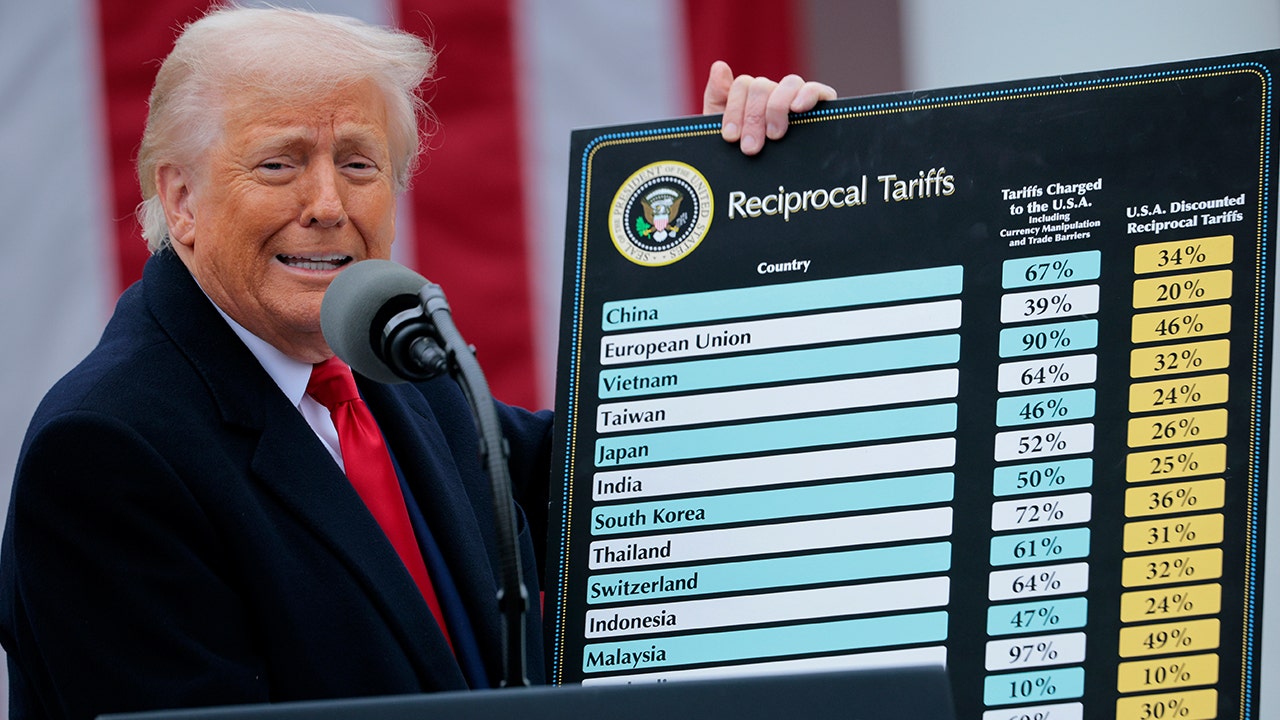
The Numbers: How High Did Tariff Rates Actually Go?
The headline number — 145% on China — is what defines this era. But the full picture of rates across trading partners reveals the true scope of the policy shift. These are the key rates as of April 10, 2026.
- 145% — China: Effective rate after multiple escalation rounds from January 2025 through April 9, 2026. A 700%+ increase from the roughly 20% starting rate.
- 46% — Vietnam: One of the highest non-China rates, threatening the Southeast Asian supply chains companies built to avoid Chinese tariffs.
- 25% — Steel & Aluminum: Applied globally to all trading partners, extended from earlier Section 232 measures.
- 25% — Automobiles & Auto Parts: New April 3, 2026 rate hitting every car import regardless of origin country.
- 20–26% — EU, Japan, Canada, India: Country-specific reciprocal rates stacked above the 10% baseline.
- 10% — Baseline: Applied to virtually every country not subject to higher rates.
- 50+ countries: Number facing rates above the 10% baseline under the reciprocal tariff formula.
$3,800 Per Year: What Tariffs Are Costing American Families
Tariffs are not paid by foreign governments — they are paid by U.S. importers and passed to consumers. Multiple independent analyses now agree: the average American family is paying thousands more per year. The burden is not evenly distributed — lower-income households, who spend more of their income on goods, are hit proportionally harder.
According to the Yale Budget Lab, a median U.S. household faces $3,800 in additional annual costs. The Tax Foundation puts the floor at $1,900. For context on how wealth is already distributed before tariffs, see our data on millionaires in the U.S..
GDP Forecasts Slashed: What Every Major Bank Is Now Projecting
In January 2026, most forecasters expected U.S. GDP growth of 2.3–2.5% for the year. By April 10, those numbers had been slashed across the board — and some models now show outright contraction. The world's largest economies are repricing their own outlooks in parallel.
- Goldman Sachs: Revised 2026 U.S. GDP from 2.4% to 1.3% — a 1.1 percentage point cut after Liberation Day.
- JPMorgan: Downgraded from 2.3% to 1.6%, most optimistic of the major bank revisions.
- Penn Wharton Budget Model: Projects a -2.8% long-run GDP reduction if all tariffs remain permanently.
- 700,000+ U.S. jobs at risk from retaliatory tariffs on American exports, per Economic Policy Institute modeling.
$8.2 Trillion Gone in 48 Hours: How Wall Street Responded
The market reaction to Liberation Day was immediate and historic. Both sectors heavily reliant on cross-border supply chains and global enterprise investment were hit disproportionately hard alongside traditional industrials.
- S&P 500: -10.5% over two sessions (April 3-4, 2026) — worst back-to-back days since March 2020.
- NASDAQ: -12.3% over the same period — tech's concentration in China-reliant supply chains amplified losses.
- $8.2 trillion in U.S. market cap erased in 48 hours — the fastest total-dollar wealth destruction in history.
- VIX: 52 — the fear index spiked to near-pandemic levels.
- +15% partial recovery on April 9 after the 90-day pause — but markets remain below pre-April 2 levels.
The World Fights Back: Retaliatory Tariffs and Trade Disputes
No major economy accepted the new tariff regime without response. The collective retaliatory measures announced in the days following Liberation Day represent the largest counter-tariff action in history by total trade value affected.
- China: 84% retaliatory tariff on U.S. goods, announced April 4, 2026.
- EU counter-tariffs: 25% on American whiskey, motorcycles, and selected agricultural products.
- Canada & Mexico: Both invoked CUSMA/U.S.MCA dispute mechanisms with counter-tariffs on U.S. agricultural exports.
- $900 billion in U.S. exports now facing retaliation — threatening American farmers and manufacturers.
- 50+ WTO complaints filed against the U.S. in April 2026 — the largest simultaneous wave ever recorded.
90-Day Pause: Breathing Room or a Race Against the Clock?
On April 9, 2026, Trump announced a 90-day pause on country-specific tariffs for nations that had not retaliated — keeping them at the 10% baseline until July 9. China was explicitly excluded and simultaneously raised to 145%. Markets surged 15% on the news, then sobered as analysts digested the details.
- 75 countries received the 90-day pause at the 10% baseline rate.
- July 9, 2026 — the expiration date, when full country-specific rates resume unless deals are signed.
- 0 comprehensive deals finalized as of April 10, 2026 — negotiations ongoing with Japan, South Korea, and India.
- China explicitly excluded — rate raised to 145% simultaneously with the pause announcement for others.
- 90 days is very tight — most WTO-level trade agreements take years, not months, to finalize.
Frequently Asked Questions — Trump Tariffs 2026
As of April 2026, U.S. tariffs range from a 10% baseline on most countries to 145% on Chinese goods. Additional rates include 25% on all steel and aluminum globally and 25% on automobiles and auto parts. Over 50 countries face country-specific reciprocal rates above the baseline.
The Yale Budget Lab estimates $3,800 per year for a median U.S. household. The Tax Foundation's lower-bound estimate is $1,900. Lower-income households bear a heavier proportional burden since they spend more of their income on goods like electronics, apparel, and groceries.
China faces the highest rate at 145%. Vietnam is next at 46%. The EU, Canada, Japan, South Korea, and India face 20-26% above the 10% baseline. Developing countries in Southeast Asia — including Bangladesh and Cambodia — face 37-49% rates threatening their entire export economies.
Yes. The S&P 500 fell 10.5% and the NASDAQ dropped 12.3% in two sessions after Liberation Day — their worst back-to-back losses since March 2020. About $8.2 trillion in market cap was wiped out before a partial 15% recovery followed the 90-day pause announcement on April 9.
JPMorgan raised U.S. recession probability to 60% and Goldman Sachs to 65% in April 2026. Consumer confidence hit a 13-year low in March 2026. Preliminary Q1 2026 GDP showed a -0.3% contraction. Most major banks now forecast 2026 U.S. growth below 1.5%.
On April 9, 2026, Trump paused country-specific tariffs for 75 non-retaliating nations until July 9, 2026, at the 10% baseline. China was excluded and simultaneously raised to 145%. Negotiations with Japan, South Korea, and India are ongoing but no comprehensive deals have been finalized.
At current rates, tariffs could theoretically generate up to $600 billion annually. However, actual collections will be significantly lower — as trade volumes shrink in response to higher rates, the taxable import base contracts. High rates can paradoxically yield less revenue than moderate ones.